“For every Southern boy fourteen years old, not once but whenever he wants it, there is the instant when it’s still not yet two o’clock on that July afternoon in 1863, the brigades are in position behind the rail fence, the guns are laid and ready in the woods and the furled flags are already loosened to break out and Pickett himself with his long oiled ringlets and his hat in one hand probably and his sword in the other looking up the hill waiting for Longstreet to give the word and it’s all in the balance, it hasn’t happened yet.”
I’m pleased to announce the latest issue of Tales from the Crosstimbers is now available on Amazon. It includes my story “A Rookie Mistake.”
Deputy Malcolm Lamb, the newest member of the marshal’s office on the rowdy mining asteroid Psyche, gets a chance to prove himself to the older deputies when he’s sent to find a stolen minebot. But when he finally catches up with the culprit, he’s forced to question where his duty lies. The choice he makes shows heroic action can spring from simple kindness, from our realization we are connected to others.
I’ve long imagined what mining would be like in the asteroid belt, a vast region rich with precious metals, yet forbidding and treacherous. To me, the combination of grizzled prospectors of the Old West and space exploration is endlessly fascinating. My first foray to the asteroid Psyche was “The Calculus of Karma,” the cover story in the June, 2020 issue of Mystery Weekly Magazine.
The return trip there was long overdue, and I’m thrilled with the result. Check it out! It’s available on Amazon as a Kindle or paperback.
Here’s a picture of me from 1975. I’m at the video board at WGHP TV in High Point, North Carolina. Weekends and summers in high school and college, I worked at the local TV station, running the projector and editing films. I got to see a lot of classic movies, especially the horror and science fiction films we featured on Shock Theater, which aired Saturday at midnight.
That first job makes a lasting impact, often in ways we don’t recognize. Like many truths about ourselves, it often takes an outsider to point that out. For example. I was pleasantly surprised by this review of Aztec Midnight, my first book:
“Tuggle skillfully ends most of his sections with hooks redolent of the weekly movie suspense serials that provided filler between Saturday matinee double features.” — Gordon Osmond, author of Slipping on Stardust
As soon as I read it I realized Osmond was right. I’d absorbed many of the tropes from the science fiction movies I’d edited, and as a kid, loved watching “B” serial films like Rocket Man.
Recreating the fun and adventure of those old classics remains my goal in the stories I write today. And if they get published? Why, that’s just icing on the cake.
Earth Day reminds us there are responsibilities to being the apex predator. Many fool themselves into believing being on top means we have the right to gorge ourselves. It does not.
Others imagine we’re ghosts trapped in physical form who should dominate and use the Earth according to our will.
Those are delusions. Harmful delusions.
For one thing, Homo Sapiens’ self-serving narrative of being nature’s capstone is as fanciful as the name we gave ourselves. (Man the wise? Spare me.) Dinosaurs dominated the planet for 165 million years. Homo Sapiens has been around for about a quarter million years, and for most of that time, struggled to cling to a precarious existence.
Maybe a little prudence and humility are in order.
Instead of making choices based on other-worldly criteria –what should be, instead of what really is — maybe we should take the time to reevaluate our goals and choices so they contribute to long-term survival rather than short-term gain.
Here’s an article and some stories to spur that reevaluation:
The Barbarian and the Playwright – We’ve tried fooling ourselves about our true nature, and look where that brought us. In this essay, I suggest it’s time to look at ourselves realistically, with help from the unlikely team of Robert Ardrey and Robert E. Howard.
Hunting Ground – A fantasy tale exploring the dangers of fracking and the mindset that Earth exists to supply us with raw materials.
A Tree Amid the Wood – An inventor finds a way to meet human needs while protecting that which sustains us – if only he could remember it.
Notes from the Underground – A rock-music dystopian tale exploring what could happen to a species that fouls its own nest.
Mirrors – Earth Day shouldn’t be all doom and gloom – we as a species have some good qualities we can build on.
“A language is not just words. It’s a culture, a tradition, a unification of a community, a whole history that creates what a community is. It’s all embodied in a language.”
Chomsky is telling us that language is fundamental to establishing social order. And I’m not the only one who agrees. When Confucius was asked what a good ruler should do, he replied, “It would certainly be to correct language.” He added:
“If language is incorrect, then what is said does not concord with what was meant, what is to be done cannot be effected. … Therefore the gentleman uses only such language as is proper for speech, and only speaks of what it would be proper to carry into effect. The gentleman in what he says leaves nothing to mere chance.”
Getting the words right is not just the writer’s greatest joy, but also the greatest responsibility.
“Civilized man is in danger of losing all contact with the world of instinct — a danger that is still further increased by his living an urban existence in what seems to be a purely man-made environment. This loss of instinct is largely responsible for the pathological condition of contemporary culture.” Carl Jung
According to Norse mythology, all Nine Realms of the cosmos either hung from its branches, or else grew from its massive roots. As the source of cosmic structure, Yggdrasil commanded enormous respect. The Norse revered it as the giver and taker of life and order.
Occasionally I’m asked, “Why would a nice, conservative naturalist like you write stories about ghosts, demons, and space aliens?”
Good question. I usually refer to a famous quote from Flannery O’Connor:
“When you can assume that your audience holds the same beliefs you do, you can relax a little and use more normal ways of talking to it; when you have to assume that it does not, then you have to make your vision apparent by shock — to the hard of hearing you shout, and for the almost blind you draw large and startling figures.”
After all, two of my favorite authors, Robert E. Howard and H. P. Lovecraft, wrote about magic, monsters, and ghosts. Neither author believed in such things, but crafted gripping tales with captivating and evocative characters.
“I have come to think of surrealism/fantasy/the supernatural/magical realism as a kind of steroid, bulking things up and bringing certain perceptions into clearer relief. The distortions I create in a narrative can be thought of as tools that amplify the material, much as an astronomer employs a telescope, or a biologist uses a microscope.”
Lovely. And insightful. Reading and writing are ways of playing with the world, of experimenting with reality to test and clarify one’s beliefs. That’s the challenge and joy of literature.
What to do about growing illiteracy in America? It’s a problem behind a host of other social ills, including unemployment, crime, and mental illness. Frederick Hess, a former teacher, has a suggestion:
One reason that boys read less than girls may be that we’re not introducing them to the kinds of books they may like. There was a time when schools really did devote too much time to generals and famous battles, but we’ve massively overcorrected. Indeed, I find that too many “diverse, inclusive” reading lists feature authors who may vary by race and gender but overwhelmingly tend to write introspective, therapeutic tales that read like an adaptation of an especially heavy-handed afterschool special.
Sadly, our schools are not helping this problem. In some ways, they’re making things worse. Reading is often shoved at students as a burden, if not punishment. Plus, the approved reading list often fails to snag interest. Too many of the folks running public education believe “real” literature is, as Hess writes above, introspective and therapeutic. In a word, dull. This highbrow view of literature is the legacy ofWilliam Dean Howells, the influential author and editor of The Atlantic Monthly. Here’s Howells’ view of what literature should be:
Yet every now and then I read a book with perfect comfort and much exhilaration, whose scenes the average Englishman would gasp in. Nothing happens; that is, nobody murders or debauches anybody else; there is no arson or pillage of any sort; there is not a ghost, or a ravening beast, or a hair-breadth escape, or a shipwreck, or a monster of self-sacrifice, or a lady five thousand years old in the whole course of the story…. Yet it is all alive with the keenest interest for those who enjoy the study of individual traits and general conditions as they make themselves known to American experience.
The Realist literary movement Howells pushed decreed that instead of action and heroism, literature should focus on interior tension and the experience of ordinary people. To impart the real life of real people, Realist authors focused on gritty detail. However, devotion to the mundane often produced boring and sordid tales. Ambrose Bierce defined “Realism” in his Devil’s Dictionary as “The art of depicting nature as it is seen by toads. The charm suffusing a landscape painted by a mole, or a story written by a measuring-worm.”
Of course, the antidote is to read and promote tales of adventure, intrigue, and heroism, stories that illustrate a virile and heartening sense of life. That’s what both young and old need today. There’s plenty available, but first we have to unburden ourselves of the notion that self-appointed highbrows get to tell us what real literature is.
Poe’s influence on world literature is profound and far reaching. He inspired many writers, including H. P. Lovecraft, Stephen King, and Ray Bradbury, and also defined modern horror, science fiction, and crime fiction.
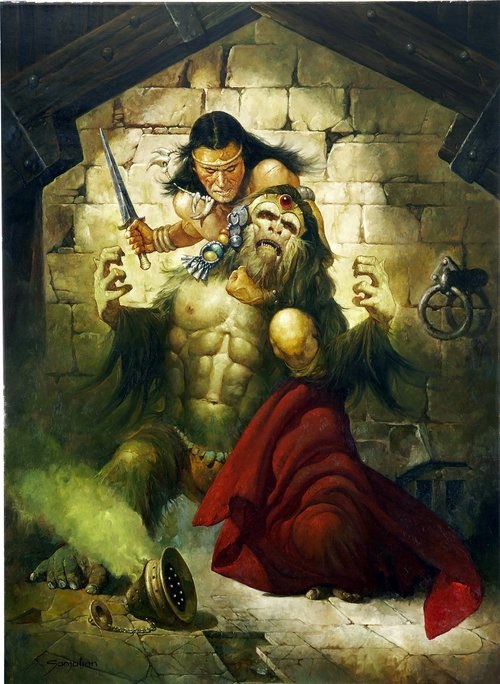
Fans of Robert E. Howard know the timeless appeal of his greatest creation, Conan the Barbarian. As David Smith puts it, Conan is “the natural man, ourselves begun again, reborn in a world as we secretly know our own world to be beneath its layers of hypocrisy and pretense.”
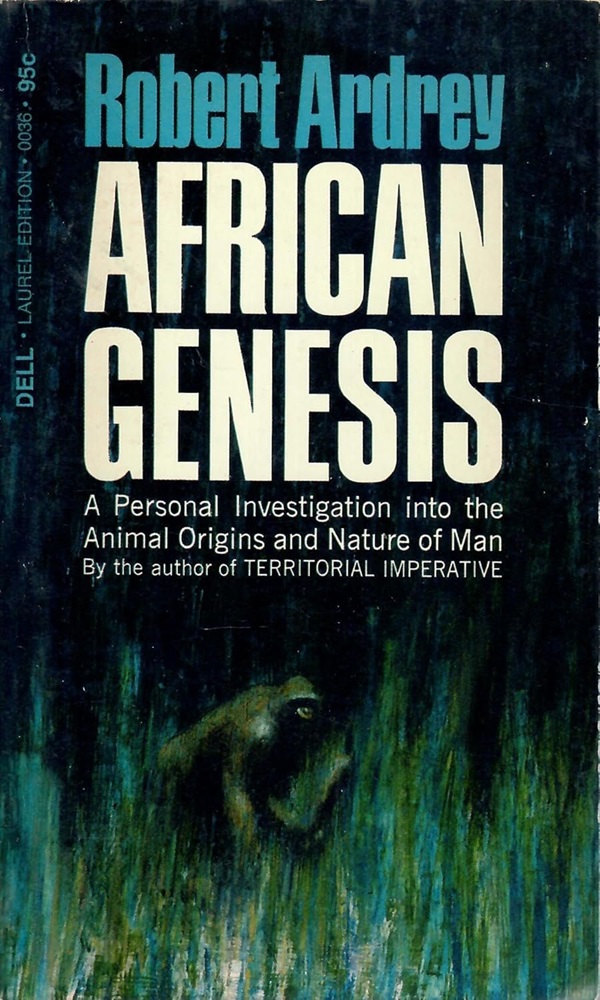
In my latest guest post at the DMR Books blog, I examine the parallels between recurring themes in the Conan stories and the works of dramatist and science writer Robert Ardrey.
In African Genesis and subsequent books, Ardrey examines the anthropological evidence for what “the natural man” actually is, as opposed to the myths we are told, or worse, tell ourselves. Ardrey’s works provide a deeper understanding of Howard’s tales celebrating the heroic, enduring qualities that make us human.





 M.C. Tuggle, Writer
