All posts by Mike

Adventures and mishaps in science fiction, fantasy, and mystery

“Rowdy” Roddy Piper Versus Cthulhu!

Portal to Hell!

This evening, The Charlotte Film Society featured two shorts and a full-length film. My wife and I agreed the main film, Nina Forever, was an unfocused hot mess. However, the short Portal to Hell!!! was a blast.

Ex-pro wrestler Roddy Piper plays Jack, a patient, over-worked, and under-appreciated building super. Jack’s so stressed by his job that he ignores a lady who’s obviously interested in him. One day, while checking out a power loss in the old building’s creepy basement, he discovers that two elderly male tenants dressed in tighty whities have invoked none other than the dreaded Cthulhu from his undersea hideout in R’lyeh. Jack just wants to do his job, but he’s pretty sure the men’s actions violate their lease, and doesn’t hesitate to tell them.

The Old One, being who he is, strikes out from his portal and kills everyone in his reach, then wraps a tentacle around Jack and s-l-o-w-l-y drags our hero toward certain doom. But the lady who has a secret crush on Jack finds the book the old men used to summon Cthulhu. Will she find the correct spell in time? And is that spell permanent or just a temporary fix?

Great special effects, great acting, lots of laughs, and plenty of hidden treasures for Lovecraft fans.

One sad note: Roddy Piper passed away shortly before the film was nominated for the Toronto International Film Festival.

Through Wendell Berry’s Looking Glass

Berryphoto via http://www.theseerfilm.com

Laura Dunn’s new documentary of Wendell Berry lets us meet a true American original. Produced by Robert Redford and Nick Offerman (Parks and Rec), The Seer introduces viewers to the work and thought of Berry, whose writing grapples with the question of how we can remain human in an increasingly flattened, urbanized, and technological world.

From a review by Gracy Olmstead:

Berry is a Kentucky-born farmer and philosopher, essayist and poet, environmental activist and localist. He’s written fiction, nonfiction, and poetry, and has been the recipient of a Guggenheim fellowship, the National Humanities Medal, and the Richard C. Holbrooke Distinguished Achievement Award. Those familiar with Berry’s work know that he is an outspoken advocate for “flyover country”—for towns and communities, farmers and farms neglected or even maltreated by modern politics and culture. His nonfiction work lauds a loyalty to place, to family, and to community that we’ve largely forgotten. His poetry exudes a reverence for the created world, for the glory of quotidian rituals and objects. His novels combine both these things in characters that love their towns and land. Through this immense body of work, Berry has appealed to a wide range of readers, transcending political and personal biases.

What makes Wendell Berry so refreshingly different as a social critic is that his starting point is not some pre-packaged, other-worldly ideology. Instead, Berry lives and writes within a close-knit community of people making their living on family farms. As Olmstead points out, Berry’s independent point of view has “angered people on both left and right—but it’s also enabled him to bridge ideological barriers and appeal to a large set of people. He’s tapped into a yearning that lies in the heart of so many: a love of home, of place, of traditions that are worth preserving and communities that are worth celebrating.”

We live in an artificial world where the use of anti-depressants is “skyrocketing.” Wendell Berry’s battle cry for reclaiming human connections may be just what we need.

The Clincher

The Clincher

The Flash Fiction Press has published my story The Clincher, now available online.

The idea for this story came to me while reading William Lind’s introduction to Fourth Generation Warfare. Lind predicts that future battles will hinge on public perceptions of the combatants:

Fourth generation adversaries will be adept at manipulating the media to alter domestic and world opinion to the point where skillful use of psychological operations will sometimes preclude the commitment of combat forces. A major target will be the enemy population’s support of its government and the war.

Propaganda has long served as a “Fifth Column” for invading armies. During the 1968 Prague Spring uprisings against the Soviet Union, Czech communists assured their restless population that Soviet troops entering Prague weren’t really invading — they were just dropping by to preserve order and stop “counter-revolutionaries,” thereby ensuring Czechoslovakia’s peace and prosperity.

Prague Spring“We’re from Moscow, and we’re here to help.”

Lind argues that in future conflicts, warring groups will clash over narrative even more than over territory, making the control of public opinion “the dominant operational and strategic weapon.” It occurred to me that 4GW will weaponize the advertising industry. That made me think about Don Draper, Roger Sterling, and the other rapacious but fascinating characters from Mad Men. I wondered how they’d react if space aliens asked them to handle a PR campaign to prepare the Earth for invasion.

Yeah, they’d take that account.

Please leave comments at The Flash Fiction Press. Thanks!

Best Fiction and Writing Blogs

Howard

The best fiction and writing blog posts from around the ‘net, all guaranteed to make you a literary cult figure. Compiled by bob.

Bob MayerGive Your Protagonist An Anomaly
Jami GoldStory Description: Finding the Right Balance
LionAroundWritingThe Perfect Story
June Lorraine RobertsChain gang: authors/writers talk about their work
GeekritiqueThe Most Anticipated Science Fiction and Fantasy Books of 2016
Nicholas ConleyThe Writer’s Role in Society
CreativeWriter3 Quotes, 3 Days Challenge
Tony TulathimutteHow to name your fictional characters

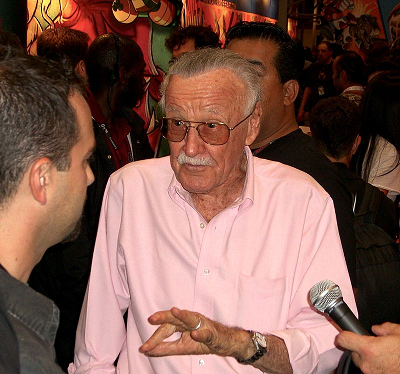
Stan Lee: the greatest storyteller in history?

Stan LeePhoto by Luigi Novi

Sci-fi/fantasy writer Damien Walter makes his case in The Guardian:

Before Lee, heroes were all supermen, or strutting John Waynes, who triumphed through strength or ruthlessness. Lee’s heroes triumph through brains, invention, innovation and most of all, SCIENCE. It’s all oddly prescient of what geek culture would become 50 years later, with hackers and tech giants wielding enormous power for good and ill. Given the vast popularity of Marvel among geeks, it’s not inconceivable that Lee helped inspire a lot of those people who are reshaping our world today.

But Stan Lee’s stories are all just weird fantasy and make-believe! They’re not real. Yes, but as we move from what physicist Michio Kaku calls “the age of scientific discovery to the age of scientific mastery”, Lee’s super-science fantasies seem less preposterous and more prophetic. Like all great mythical worlds, the Marvel universe speaks to us in metaphors, symbols and other non-literal truths. And as the dreamer who brought these modern myths into reality, Stan Lee may well be remembered as one of literature’s greatest heroes.

Lee’s other radical innovation was to give his characters depth. Marvel super-heroes had to fight self-doubt before they could fight the bad guys. Some, such as Benjamin J. Grimm, felt their powers were a curse. And most startling of all, Marvel super-heroes sometimes fought each other, and even changed sides. When I discovered Marvel comics as a pre-teen, I felt like I’d found an illustrated guide to many of life’s mysteries.

And Marvel stories were intelligent, insightful, and full of delicious twists. Fantastic Four 51 is a prime example. The story, titled “This Man, This Monster,” was not just an exciting tale but emotionally compelling. Such a plot and character arc could only come from an authentic and serious talent. The reason Stanley Lieber changed his name to Stan Lee was because, as Lee himself put it, “I felt someday I’d write ‘The Great American Novel’ and I didn’t want to use my real name on these silly little comics.”

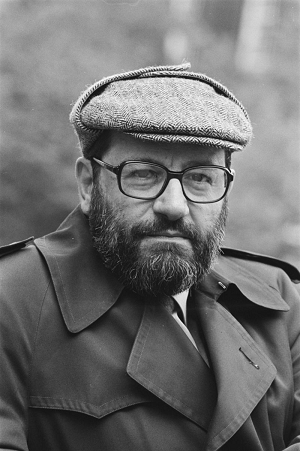
Those who turn their noses at comics (or pulp fiction or sci-fi and fantasy) are missing some great, worthwhile stories. As the recently departed Umberto Eco observed, “Mickey Mouse can be perfect in the sense that a Japanese haiku is.” A well-crafted story is to be appreciated for what it is, no matter the genre.

Quote of the day

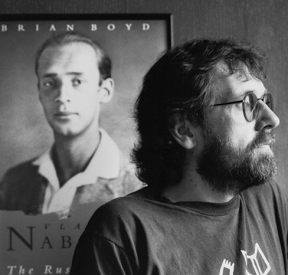
Brian Boyd

“Everything is humanities. The sciences are a form of the humanities. They involve traditions of inquiry; they involve social engagement with ideas. They do not happen with a naked brain going out and encountering a nonhuman world. And the better we understand ourselves, the better we can do science, as well. So I don’t see them—the sciences and the humanities—as being at all different.” Brian Boyd, author and Professor of English at the University of Auckland.

The spirit of C. P. Snow lives!