Category Archives: Fiction

Best Fiction and Writing Blogs

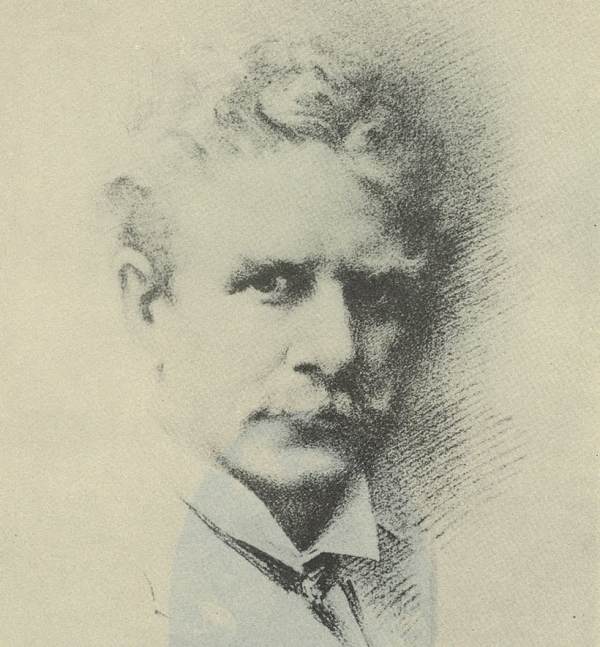
Bierce

The best fiction and writing blog posts from around the ‘net, all guaranteed to make you a literary adventurer. Compiled by ambrose.

Michael Chabon and Neil Gaiman: Video Tribute to Terry Pratchett
P.J. Parrish: What does your character want?
Alice Osborn: 5 Tips on How to Make a Living as an Author
Rod Dreher: First You Change the Language…
James Machin: H. P. Lovecraft’s pivotal moment
Jami Gold: Write what you want to learn about
Stephen Masty: Awareness of the Past Heightens Creativity
Jacqueline Seewald: Overcoming Writer’s Block (Part 2)

Best Fiction and Writing Blogs

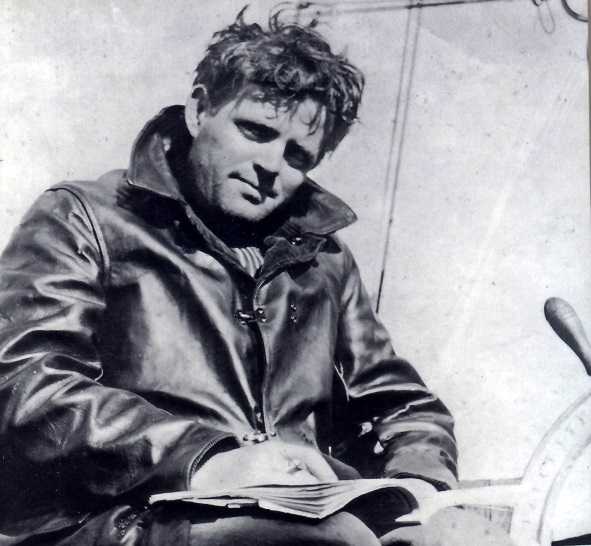
Jack London

The best fiction and writing blog posts from around the ‘net, all guaranteed to make you a literary adventurer. Compiled by jack.

Andrew Solomon: Advice for Young Writers
Coastal Mom: The Way We Write
Jeff Wills: A Winter’s Morning Walk [Beautiful. Don’t miss!]
Dave’s Corner of the Universe: Geek Obscura: UFO
James Scott Bell: Top Ten Things You Need to Know About Characters
In My Cluttered Attic: Its National Visit MY Blog Day!
A Vase of Wildflowers: Links for Readers and Writers
Clare Langley-Hawthorne: Reimagining the Past

INFOGRAPHIC: A Map of the Literary Genres

ElectricLit has a downloadable map of all the literary genres plus representative books for each category. A few designations may be confusing — I’ve never thought of Southern Gothic as a branch of horror, and some may question putting C.S. Lewis’ The Lion, the Witch, and the Wardrobe under Christian rather than fantasy (most Christian novelists and readers would reject the magic in both Lewis’ and Tolkien’s works). But you’ll have a blast rambling around and even getting lost in this maze of literary geography. Enjoy!

Why would a character do that?

Over at Kill Zone, editor extraordinaire Jodie Renner discusses a fault she sees all too frequently in manuscripts she reviews:

Have you ever been reading a story when suddenly the protagonist does or says something that makes you think, “Oh come on! Why would he do that?” or “This is crazy. Why doesn’t she…?” or “But I thought he…!” or “I didn’t know he/she could [insert extraordinary ability].” The character seems to be acting illogically, to be making decisions with little motivation or contrary to his personality, abilities, or values.

Renner is right — there’s no better way to lose a reader than to force a character to do something brainless or out of character just to advance the plot. But it happens, and some writers get away with it. In my opinion, the worst example of a character suddenly behaving both out of character and illogically is in The Girl With the Dragon Tattoo.

SPOILER ALERT!

Lisbeth Salander, a plucky computer hacker, figures out that Martin Vanger is the serial killer she and journalist Mikael Blomkvist have been trying to identify. Meanwhile, Blomkvist has also figured out Martin is the killer, but the wily Martin captures Blomkvist and prepares to torture and kill him in his dungeon. Fortunately, Lisbeth sneaks into Martin’s dungeon just in time. Martin, who’s coldly and methodically killed dozens of victims, totally panics and RUNS AWAY from a 90-pound girl armed with — a golf club. Now, Martin’s in his fortress, with guns and other weapons all over the place, but for some mysterious reason, he decides to abandon it by running upstairs and out of the house to his Volvo. Okay.

But it gets worse! Lisbeth chases Martin on her little motorbike. As they race down the mountain, all Martin has to do is tap the brakes, and his pursuer would squish against the rear of his Volvo (which I think is Swedish for “Tank for Civilian Use.”) But no, instead our previously calculating and unflappable villain crashes and ends in a fiery wreck.

And millions found this believable? Give me a break!
A Conversation with Adam Long of the Hemingway-Pfeiffer House

Hemingway2

Here’s a little treasure for all of us Hemingway fans, an interview with Adam Long, the director of the Hemingway-Pfeiffer House. Mr. Long knows what he’s talking about. He comes to the job with a background in American modernism and a PhD in literature. Long shares his knowledge about the author’s time at his second wife’s family home, a period of Hemingway’s life many of us aren’t familiar with. Great insights into Hemingway’s writing habits and thought.

My only gripe with the interview is this prologue: “Hemingway once explained: ‘There’s nothing to writing. All you do is sit down at a typewriter and bleed.'”

It’s very unlikely Hemingway said that. That vivid quote probably came from Red Smith, a sportswriter. Hemingway’s weapon of choice was the pencil (See A Moveable Feast), and he wrote standing.

The power of story

BrickSculpture

Why do all human cultures create and pass on stories? We know that shared stories — histories — unite a people,  just as a person’s life history unifies one’s many experiences into a coherent narrative and defines that person. But that’s only part of it.

Now we are learning that a shared story creates a connection much deeper than we ever suspected.  Writing in Aeon Magazine, Elizabeth Svoboda tells us how neuroscience is uncovering how stories help us connect to other people:

In a 2010 Proceedings of the National Academy of Sciences study, the psychologist Uri Hasson and his Princeton University colleagues had a graduate student tell an unrehearsed story while her brain was being scanned in an fMRI machine. Then they scanned the brains of 11 volunteers listening to a recording of the story. As the researchers analysed the data, they found some striking similarities. Just when the speaker’s brain lit up in the area of the insula – a region that governs empathy and moral sensibilities – the listeners’ insulae lit up, too. Listeners and speakers also showed parallel activation of the temporoparietal junction, which helps us imagine other people’s thoughts and emotions. In certain essential ways, then, stories help our brains map that of the storyteller.

We already knew stories let us break through our normal limits, allowing us to transport ourselves into deep space, the deep sea, or life as it was lived thousands of years ago. But they also enable us to free ourselves of those most alienating and harmful barriers, the self-made blockades meant to protect, but which actually isolate us from other people.

So it’s not just entertainment, and it’s more than imparting valuable lessons. It’s a basic human need.

I often have trouble speaking in public and getting up the nerve to meet people. But at certain times in critique groups, open readings, or when I receive kind notes from readers, I feel I’ve shaken loose my usual inhibitions and fears and have managed to connect. It’s a wonderful feeling.

Best fiction and writing blogs

DreamCreature

The best fiction and writing blogs, compiled by Treebeard

Sweating to Mordor: Creepy Boromir and Black Swans on the River
A Vase of Wildflowers: Artist Interview: John Holcroft
Ms. Toy Whisperer: Tested Faith
Fantasy Book Review: An interview with Patrick Rothfuss
The Silent Eye: Spokes on the wheel
Thoughts on Fantasy: The Special Effects You Don’t See (You’ve GOT to see the trailer!)
Ipuna Black: Life’s Little Moments
Confessions of a Readaholic: Ernest Hemingway’s reading list for all the Young Writers

The Police in Fact and Fiction

Jacqueline Seewald notes the pressures on police today in her latest blog post. They’re only human, so they’re going to make mistakes. But does that make police less heroic? And can we admire what they go through and still properly scrutinize their acts so we can weed out the bad ones?