 Sue Vincent at the Daily Echo generously allowed me to guest-post on her blog. “It’s Not A Human!” addresses man’s self-defeating alienation from nature and how literature can restore the connections that make us human.
Category Archives: Nature
Unbound II: Changed Worlds

Award-winning DAOwen Publications has just released its latest anthology, Unbound II: Changed Worlds.
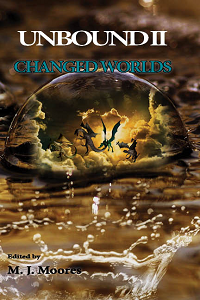
It features my story “Hunting Ground,” which is set in a brooding wetland in rural North Carolina. I grew up in the country, and the farm next to ours had a two-acre marsh where I stomped and rambled and dreamed away many an afternoon. It teemed with exotic plants, frogs, copperheads, and dark, mysterious pools. Now those were the days …
In my story, police discover the body of a fracking engineer buried near the marsh where he’d been working, and they arrest an anti-fracking activist who’d threatened him. Buddy Vuncannon, the defendant’s attorney, discovers the marsh hides a bizarre secret that could clear his client — if there were a way he could prove it in court.
My fascination with all things swampy and a Science Alert article about a mysterious stretch of land near Lake Michigan inspired the story. “Hunting Ground” is lively and entertaining, but its topic is serious. Fracking involves pumping a cocktail of chemicals and water deep underground where it cracks open layers of shale to unleash natural gas. The threat to the local water supply is profound.
Exposing the truth about fracking is all well and good, but the real goal is to renew respect and appreciation for nature. No one understands this better than poet/novelist/activist Wendell Berry. In his fiction and essays, Berry argues that the excesses of industrialism, from environmental piracy to the over-concentration of wealth, can be countered only by a rebirth of affection for the local, by which he means love and loyalty for the land we live on and for the people we live with.
Here’s how the National Endowment for the Humanities describes Berry’s literary/political mission:
In the debate that set Thomas Jefferson against Alexander Hamilton—and rural farms against cities, and agriculture against banking interests—Berry stands with Jefferson. He stands for local culture and the small family farmer, for yeoman virtues and an economic and political order that is modest enough for its actions and rationales to be discernible. Government, he believes, should take its sense of reality from the ground beneath our feet and from our connections with our fellow human beings.
And it is my passionate belief that one way we can strengthen or even restore those connections is through a good story. I hope you enjoy “Unbound II: Changed Worlds.”
The Linguist as piñata
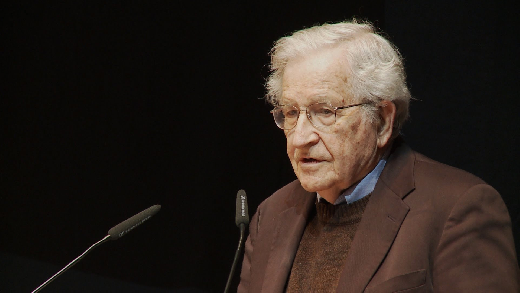
From Scientific American:
Noam Chomsky’s political views attract so much attention that it’s easy to forget he’s a scientist, one of the most influential who ever lived. Beginning in the 1950s, Chomsky contended that all humans possess an innate capacity for language, activated in infancy by minimal environmental stimuli. He has elaborated and revised his theory of language acquisition ever since.
It’s a great article, and includes an interview with another accomplished linguist, Steven Pinker. Pinker concludes that even after decades of brutal examination and criticism, Chomsky’s famous thesis best explains how children master language. The alternatives boil down to arguing that language is an artificial construct of the rational mind that children, starting from a blank slate, must learn.
This vindication of Chomsky’s universal grammar theory is interesting on two counts, and both impact my writing. First, I’m fascinated by language. More important, scientific support of language as an inborn capability bolsters the view that people are naturally social, as opposed to the atomistic, rationalistic view of humanity pushed by both Hobbesians and Marxists.
We’re not plopped on this planet to enrich ourselves and consume; we are born to experience the world and find ourselves in it. That’s the worldview that animates everything I write.
Quote of the day
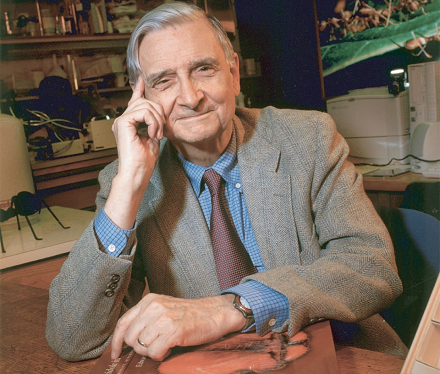
“You start by loving a subject. Birds, probability theory, explosives, stars, differential equations, storm fronts, sign language, swallowtail butterflies—the odds are that the obsession will have begun in childhood. The subject will be your lodestar and give sanctuary in the shifting mental universe.” E. O. Wilson
Through Wendell Berry’s Looking Glass
 photo via http://www.theseerfilm.com
Laura Dunn’s new documentary of Wendell Berry lets us meet a true American original. Produced by Robert Redford and Nick Offerman (Parks and Rec), The Seer introduces viewers to the work and thought of Berry, whose writing grapples with the question of how we can remain human in an increasingly flattened, urbanized, and technological world.
From a review by Gracy Olmstead:
Berry is a Kentucky-born farmer and philosopher, essayist and poet, environmental activist and localist. He’s written fiction, nonfiction, and poetry, and has been the recipient of a Guggenheim fellowship, the National Humanities Medal, and the Richard C. Holbrooke Distinguished Achievement Award. Those familiar with Berry’s work know that he is an outspoken advocate for “flyover country”—for towns and communities, farmers and farms neglected or even maltreated by modern politics and culture. His nonfiction work lauds a loyalty to place, to family, and to community that we’ve largely forgotten. His poetry exudes a reverence for the created world, for the glory of quotidian rituals and objects. His novels combine both these things in characters that love their towns and land. Through this immense body of work, Berry has appealed to a wide range of readers, transcending political and personal biases.
What makes Wendell Berry so refreshingly different as a social critic is that his starting point is not some pre-packaged, other-worldly ideology. Instead, Berry lives and writes within a close-knit community of people making their living on family farms. As Olmstead points out, Berry’s independent point of view has “angered people on both left and right—but it’s also enabled him to bridge ideological barriers and appeal to a large set of people. He’s tapped into a yearning that lies in the heart of so many: a love of home, of place, of traditions that are worth preserving and communities that are worth celebrating.”
We live in an artificial world where the use of anti-depressants is “skyrocketing.” Wendell Berry’s battle cry for reclaiming human connections may be just what we need.
We’re all miracles

Sometimes it takes a brush with personal tragedy to open our eyes to the surprising beauty and resilience of life. Author A. E. Stueve experienced this. His online account of what he and his family recently endured, and what he learned about himself and the stark but elegant reality we too often fail to grasp, is a must-read.
Can Literature Heal?

“If a nation’s literature declines, the nation atrophies and decays.”
Ezra Pound
Signs of atrophy and decay are inescapable these days. The coarseness of mass entertainment, the malignancy of political discourse, the creeping alienation affecting young and old alike which swells up and all too often releases itself in violence — all point to the realization that we have lost our way.
Before we can propose a way back, we have to figure out how we got lost.
I’m reminded of a flash of insight from one of my favorite nature writers, Charlene Spretnak. In The Resurgence of the Real, she noted that in our frenzy to reconstruct the world to cater to endless consumption and personal gratification, we have become our own Frankenstein monsters:
Ten years ago, I attended an all-day presentation by two of our finest writers on the natural world, Barry Lopez and Richard Nelson. A love of language and nature–and a humility before both–permeated their comments, but one observation in particular lodged vividly in my memory. After speaking about the ways in which wild animals are so acutely aware of minute events in their considerable range of attention that their consciousness extends far beyond their fur into the sensate forest, Lopez observed that a bear taken out of its habitat and put into a zoo is still a form of mammalian life, but it’s not a bear.
It’s not a bear.
It’s not a human if its felt connections with the unfolding story of the bioregion, the Earth community, and the cosmos are atrophied, denied, and replaced. It’s not a human if it can no longer experience awe and wonder at the beauty and mystery of life, seeing nothing but resources and restraints. It’s not a human if it is socialized to be oblivious to the unity of life, so lonely that it is vulnerable to all compensatory snares.
The destruction of community connections is not an accident. So-called “liberals” want to free the individual from social constraints, while so-called “libertarians” seek to free the individual from government constraints. But rather than feeling free, the individual is left psychologically isolated, aware of no obligations or duties, but insistent on his growing list of rights.
No wonder so many are resentful and distrustful of others. Meanwhile, the cultural ideal is individual differentiation as an end in itself. One who isn’t sufficiently differentiated is not authentic. Authenticity, however, is available on the retail level. We are what we buy.
So what can be done to break the barriers we’ve erected around ourselves? Literary critic Gary Saul Morson proposes a process that can be described as literary therapy:
It is really quite remarkable what happens when reading a great novel: By identifying with a character, you learn from within what it feels like to be someone else. The great realist novelists, from Jane Austen on, developed a technique for letting readers eavesdrop on the very process of a character’s thoughts and feelings as they are experienced. Readers watch heroes and heroines in the never-ending process of justifying themselves, deceiving themselves, arguing with themselves. That is something you cannot watch in real life, where we see others only from the outside and have to infer inner states from their behavior.
In other words, sharing a character’s joys, fears, and triumphs nurtures our natural impulse to empathize with others, thus breaking down the solipsistic illusion that none but the One True Self thinks, feels, and exists.
Is it possible to rediscover our humanity by freeing ourselves from our addiction to iPods, iPads, and shoot-’em-up video games, and instead spend our precious free time with good books? I think it’s worth a try.
Therapeutic Superstition

Here is a heartbreaking — and, sadly, true — story of a man who was too much in tune with nature to be left alone and allowed to be happy. From First Things:
At any rate, the thing I want chiefly to emphasize about Reuben is that he was a remarkably happy man: harmless, kind, and always in good spirits. In fact, I do not think I have ever known anyone else who took such evident delight in the world. He told me he had felt himself surrounded at all times by friends, human and otherwise: A walk in the country for him was a visit to the companions of his childhood. He spoke of “creation” (he rarely used the word “nature,” it seems to me) as an essentially “amiable” reality if one approaches it correctly. He may have been one of the few truly happy souls I have known in my life.
Reuben’s fate reminds me of this little story.
Quote of the day
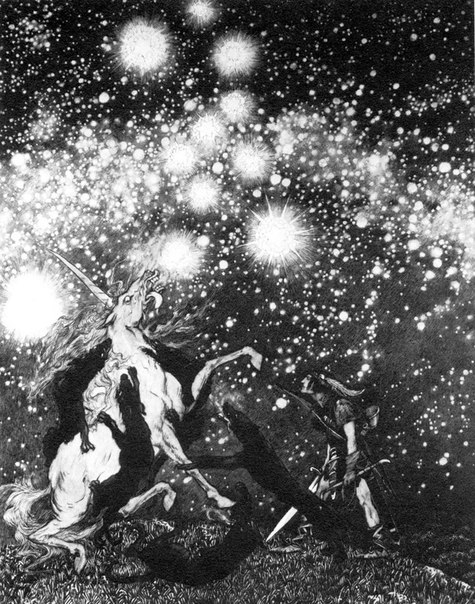
“The ancient rhythms of the earth have insinuated themselves into the rhythms of the human heart. The earth is not outside us; it is within: the clay from where the tree of the body grows.” ― John O’Donohue, Beauty: The Invisible Embrace
A Conversation with Steve Himmer, author of Fram

Steve Himmer writes about bleak, alien landscapes and the surprising complexity his characters discover in those places. The critical quote:
“I guess I wouldn’t say we’re at odds with nature so much as befuddled by an insistence on seeing ourselves as the most important thing—the only thing, more often than not—that matters in any particular landscape.”
 M.C. Tuggle, Writer