Category Archives: Nature

Beauty and the Ideal Man

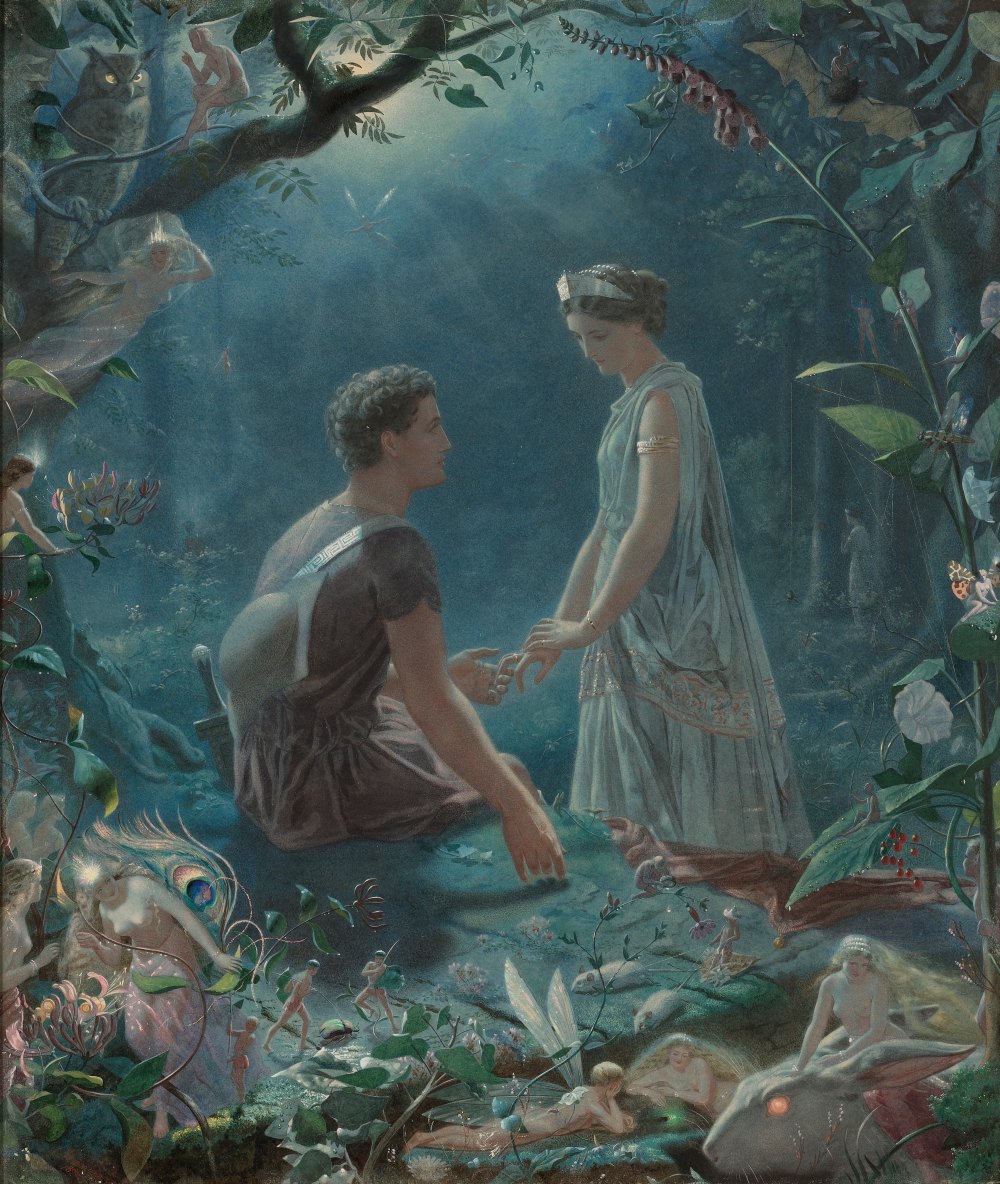
MidsummerDream

Far from making him appear “sissy,” an appreciation of beauty is essential to channeling a man’s natural inclinations into supporting vital social goals and making him a better man, says Jared Silvey:

This stronger inclination to fighting is not, in itself, automatically directed to either good or evil. It has the potential to go either way. It can be directed to good, as in the case of fighting to defend one’s country against unjust aggression, or to evil, as in the cases of murder, rape, and other acts of unjust violence.

Beauty here enters the picture by helping to direct this male inclination to aggression and fighting to a worthy end. This is because real beauty is always found wherever there is truth and goodness, and it strengthens the attraction these other two values exert on the human person. It moves a man to defend whatever is good and true. The beautiful maiden is a potent spell which carries the knight into the field of battle. It can be said that there is no one the enemy should fear more than a man who enters into battle with his lady in his heart. Beauty makes men fighters because it first makes them lovers.

Silvey observes that even the caveman found time to make cave paintings, whereas “today’s tech-savvy, fast-food fed, materialistic West places more emphasis on money, things, efficiency, and instant gratification.” Modern consumerism transforms everything into a commodity, even sex. To salvage the humanity within us, we need to slow down, stop envying what we’re told we’re supposed to have, and rediscover the joy of simple, direct living.

Jon Barrett, the hero of my novella Aztec Midnight, feels a mystical connection to the beauty of ancient weapons when he enters the vault at the Instituto Nacional de Antropología e Historia in Cuernavaca:

I stepped into a long, darkened room full of rows of tables. The only illumination came from ultraviolet lamps. It took a few moments for my eyes to adjust to the relic-friendly lighting. I slowly recognized piles of Aztec, Mayan, Toltec, and Spanish colonial artifacts on each table. As I gazed at the long rows of deadly and finely crafted weapons from four heroic cultures, my heart beat just a bit faster than normal. It felt like Christmas morning.

I think Jon Barrett would agree with Dostoevsky’s observation that “Beauty will save the world.” Appreciating beauty, like striving for a sound mind in a healthy body, is a vital part of being a whole man.
The Complex Sense of Place

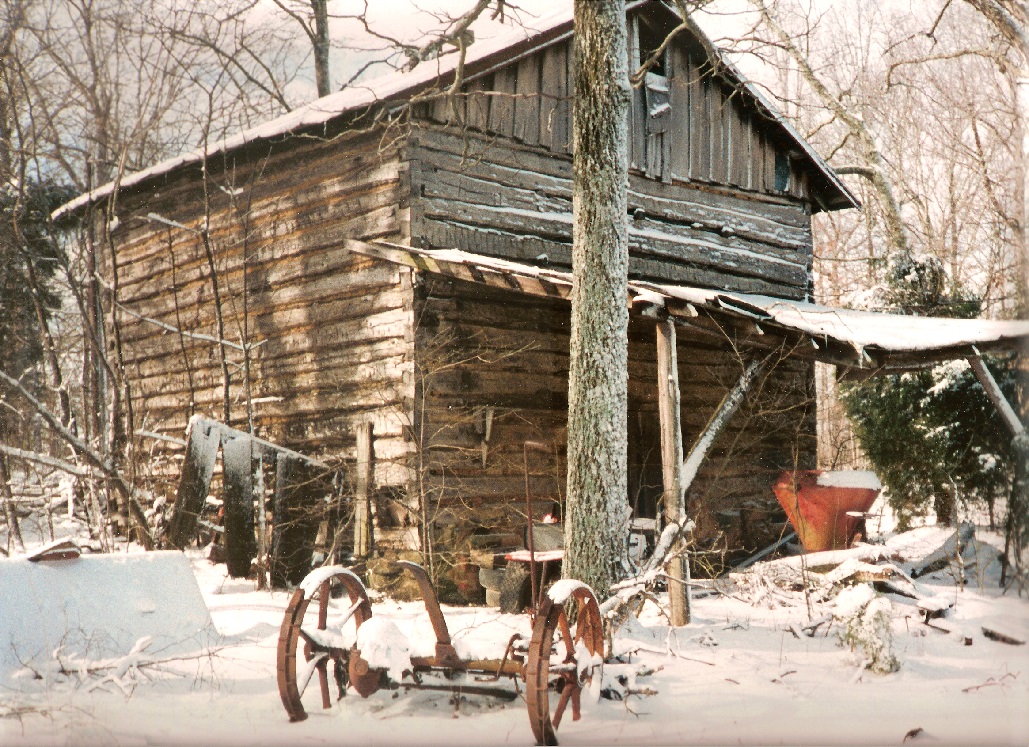
Tobacco Barn

“The deconstuctionist postmodern analysis asserts that we never actually know anything about our local patch of the biosphere because we can know only the concepts our particular society has invented … All this seems exceedingly odd–and more than a little pathological–to traditional native peoples, for instance. From an early age, they pay a great deal of attention to the dynamics of the natural world, both individually and collectively. They observe with great sensitivity the dramas, rhythms, and presence of place.” Charlene Spretnak, The Resurgence of the Real, p. 27.

Worthwhile writing, like any other product of a living culture, arises from a people’s strivings, tragedies, and victories as experienced in a particular place. This is an insight that animates the fiction of Tolkien, and I think he would agree that the sense of alienation that afflicts so many these days is the result of our loss of feeling for the dramas, rhythms, and presence of place. Tolkien certainly knew that a vivid setting could be as strong a character in a good story as the protagonist, and no one could create a living, dynamic backdrop like he could.

The Body Keeps the Score

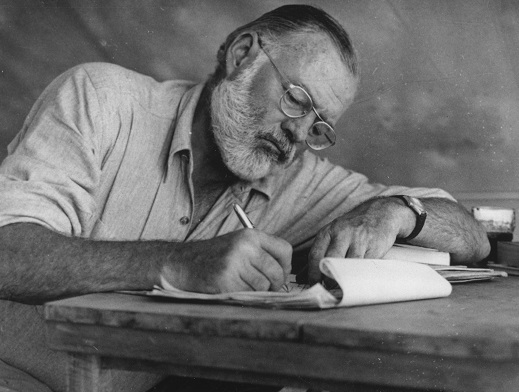
Hemingway Writing

There’s an old saying that nothing bad can happen to a writer because it’s all inspiration. We’ve heard about writers pouring their hearts onto the page to confront and expel inner demons. Edgar Allen Poe. H.P. Lovecraft. Ernest Hemingway. For them, writing was therapy.

Now we have science that confirms that insight:

It is now widely accepted that stressful experiences — whether divorce or final exams or loneliness—have a negative effect on immune function, but this was a highly controversial notion at the time of Pennebaker’s study. Building on his protocols, a team of researchers at the Ohio State University College of Medicine compared two groups of students who wrote either about a personal trauma or about a superficial topic. Again, those who wrote about personal traumas had fewer visits to the student health center, and their improved health correlated with improved immune function, as measured by the action of T lymphocytes (natural killer cells) and other immune markers in the blood. This effect was most obvious directly after the experiment, but it could still be detected six weeks later.

Numerous experiments have since replicated Pennekbaker’s findings. Writing experiments from around the world, with grade-school students, nursing-home residents, medical students, maximum-security prisoners, arthritis sufferers, new mothers, and rape victims, consistently show that writing about upsetting events improves physical and mental health. This shouldn’t surprise us: Writing is one of the most effective ways to access an inner world of feelings that is the key to recovering from genuine trauma and everyday stress alike.

The goal is a sound mind in a sound body. It’s not either/or. I’ve long felt that Cartesian dualism is as wrong-headed as it is mechanistic and dehumanizing, and that living and feeling and thinking as a whole person rather than as a ghost in a machine is the path to fulfillment. That theme often inspires my writing.

Rather than rejecting the body and nature as lowly, and the mind as somehow imprisoned in dumb matter, we need to grasp the unity of both and live — and write — accordingly.

A Sociobiologist Looks at Veterans Day

I’m fascinated by tales of devotion to others, or risking all for a cause or a loved one, which inspires much of my fiction. Dr. Edward O. Wilson has made a career out of studying that mysterious, burning force that drives heroes and martyrs of all shapes and sizes — and species.

Wilson was born in Birmingham, Alabama. He’s a bug man. That’s what he calls himself. But he’s not an exterminator. He’s a scientist who studies bugs. Dr. Wilson is a Harvard professor who founded the study of sociobiology, which focuses on the biological basis of behavior. Wilson wanted to explain altruism, that is, the sacrifice of oneself for others. Why do soldier ants fight and die for their colony? Why do parents risk their lives for their children? Why do warriors risk their lives for their tribe? Wilson’s research has influenced not only the fields of biology and ecology, but also psychology, sociology, and political theory.

In Naturalist, Wilson’s autobiography, he confesses that his scientific study of altruism is spurred by deep emotional reactions to unexpected displays of valor:

I have a special regard for altruism and devotion to duty, believing them virtues that exist independent of approval and validation. I am stirred by accounts of soldiers, policemen, and firemen who have died in the line of duty. I can be brought to tears with embarrassing quickness by the solemn ceremonies honoring those heroes. The sight of Iwo Jima and Vietnam Memorials pierces me for the witness they bear of men who gave so much, and who expected so little in life, and the strength ordinary people possess that held civilization together in dangerous times. (p. 25)

I will confess to the same. My eyes stubbornly go misty when I watch Saving Private Ryan. Same with 300. Heck, even Bruce Willis puts me to tears every time I see the scene in Armageddon when he realizes he must sacrifice himself to save the human race.

Anyway, here’s to the real heroes. God bless, fellas.

Saying goodbye to an old friend

“The soil is the great connector of lives, the source and destination of all. It is the healer and restorer and resurrector, by which disease passes into health, age into youth, death into life. Without proper care for it we can have no community, because without proper care for it we can have no life.”  Wendell Berry

Farm

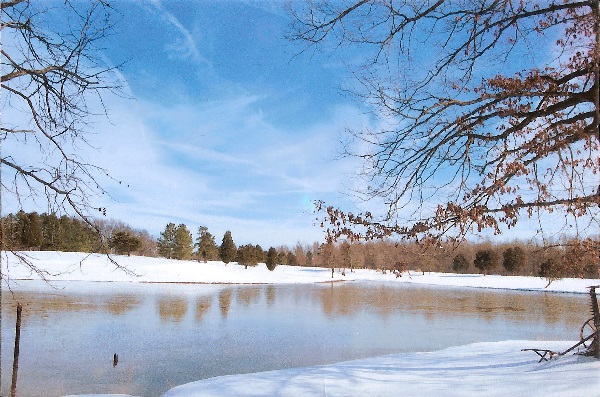
The lake at my grandparent’s farm. Photo by Hiro Takase

The farm where I grew up has been sold. With four heirs squabbling over what to do with it, the family decided to sell the land.

This is bitter news for me. It was here that I learned to hunt, to slop hogs, to raise vegetables, to pick and hand tobacco. In my grandparents’ home, which sat on the highest point of that 60-acre farm, our families gathered for Christmas Eve. Beside the house stood a tall cedar decked with colored lights, back then, the largest Christmas tree in the county.

That farm was its own world of work, food supply, social life, and recreation. We swam in the lake. In the plowed earth, just after a rain, a few minutes of careful searching would reward you with an arrowhead. This is where I began my collection, as well as a fascination with ancient history. I will never forget the awe I felt when I identified the style of a perfect little arrowhead I’d found and learned it was a Kirk dating back to 7800 BC.  That fascination inspired two works, Gooseberry and Aztec Midnight.

So I guess you could say the imprint of the land I grew up on will never leave me.

Mary Fahl’s Going Home pretty well expresses my hope for this lost piece of my life:

They say there’s a place where dreams have all gone
They never said where but I think I know
It’s miles through the night just over the dawn
On the road that will take me home

I know in my bones, I’ve been here before
The ground feels the same though the land’s been torn
I’ve a long way to go the stars tell me so
On this road that will take me home

Love waits for me ’round the bend, leads me endlessly on
Surely sorrows shall find their end and all our troubles will be gone
And I’ll know what I’ve lost and all that I’ve won
When the road finally takes me home

Charlene Spretnak on Modernism

north-pole-sun-moon

“Today corrective challenges to some of the most destructive dynamics of “progress” are coming from entirely unexpected directions, the very areas that were marginalized by the modern age: the knowing body, the creative cosmos, and the complex sense of place.  … Our understanding of nature is now radically shifting, however, because of recent discoveries in the new sciences. Studies known as “complexity science” have revealed that properties emerge creatively within systems, while chaos theory has shown that nature moves in and out of patterns of self-organization. Nature at large – -from the turbulence of streams in an ecosystem to the self-organizing abilities of galaxies throughout the universe — is now understood to function much more like a creative unfolding than a mechanistic play of stimulus and response.”

Charlene Spretnak, The Resurgence of the Real