Category Archives: Science fiction

Review of Former

Former

The world A. E. Stueve creates in his just-released novel Former is warped, chilling, and bristling with menace. Battered and terrified from the Infection War, the survivors distrust one another. Their greatest fear is of formers, people who were once infected with a man-made disease that takes over the mind and fills the victim with one over-powering urge, to attack and eat other people. A shadowy and powerful pharmaceutical firm, Profine, which invented the cure, now houses the formers in compounds where it protects them and works to return them to something close to normal lives.

But the jumpy population outside Profine’s protective compounds is vulnerable to canny and unscrupulous media manipulators. One popular blogfeed is Zex Starshine’s Unreality, where master rabble-rouser Zex Starshine beguiles and horrifies his audience with startling revelations about corporate greed, government conspiracy, and the secret threat of another former uprising. (What are those people planning in those sprawling compounds?)

I know what you’re thinking — this horrifying world sounds like today’s venomous climate of mutual demonization and seething hatreds. In both our world and the world of Former, the Internet, that impossible-to-kill cockroach of misinformation overload, fairly throbs with voices screaming about what “those people” are up to now.

For Billy Dodge, the protagonist of Former, things go from dystopian to apocalyptic when he storms out of a group therapy session for formers like himself and ends up accused of complicity in murder. His only chance of clearing himself is to trust the mysterious figures within Profine. Billy has already lost much, including his wife, who killed herself rather than succumb to the dread disease. His brush with death and survivor guilt have made Billy world-weary, yet he is driven to prove to himself he’s still alive, sometimes in ways that only make things worse.

This novel manages to be both bleak and breathtaking, grim and darkly comical. It’s impossible not to sympathize with Billy Dodge despite his impulsiveness and semi-suicidal urges and bad choices. Billy’s determination to convince himself he’s not only a human being, but still himself, despite the disease that once made him a monster, reminds me of the works of Philip K. Dick.

I’ll make a prediction: This book will be used in writing classes to illustrate the right way to create an unforgettable atmosphere, one that perfectly suits the story that emerges from it. Highly recommended.

You may also be interested in the reviews at Kirkus and Foreword Reviews.

Quote of the day

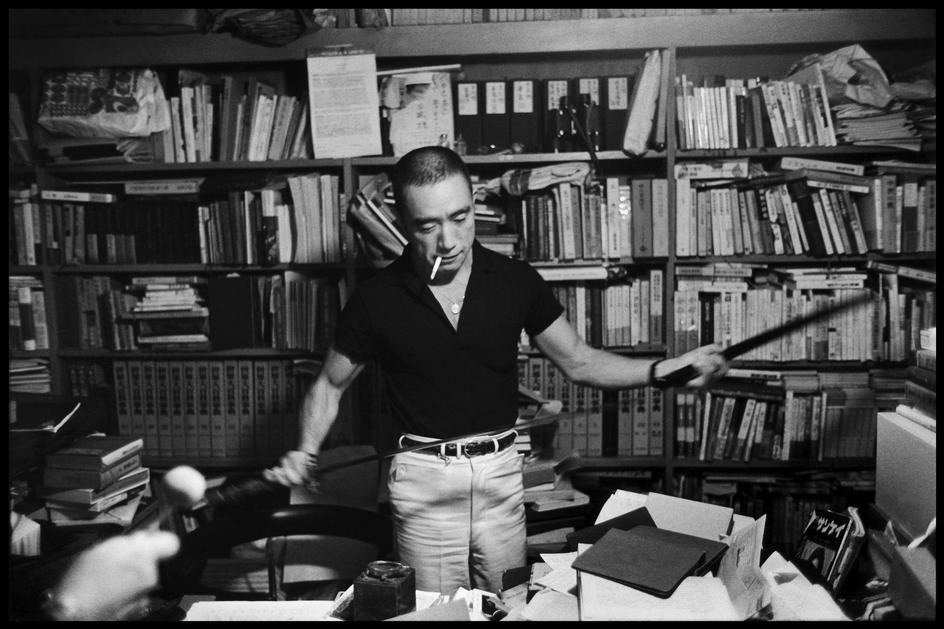
MishimaOffice

“It’s convenient to have a science fiction and fantasy section, it’s convenient to have a mainstream literary fiction section, but these should only be guides, they shouldn’t be demarcated territories where one type of reader belongs and another type of reader does not belong.” – David Mitchell

Former Is Coming!

Stueve

The latest from writer A. E. Stueve sounds like fun — and it’ll be published in January:

About Former

Unlike his wife, his family, and his friends, Billy Dodge is alive. Profine, an international pharmaceutical and defense conglomerate, has cured him of an infection that has ravaged the Earth for over a decade. Life isn’t easy for former infected, however, and despite Profine’s help Billy is struggling to cope in a less than welcoming world. When Billy and a friend are blamed for an unfortunate death, things only become more difficult, and Billy finds himself at the center of a global crisis. As Billy wrestles with his inner demons and the strife around him, society struggles with an important question: are formers human, and should they be allowed to live?

About A.E. Stueve

A.E. Stueve was born on a bend in the Mississippi River in Southern Illinois in the late 70s. Currently he resides in Omaha, Nebraska where he is a writer, teacher, father, and husband. He holds several degrees in teaching and writing including an MFA in Creative Writing from the University of Nebraska. His novels, The ABCs of Dinkology: Life and The ABCs of Dinkology: Time In-Between from EAB Publishing are available wherever good books are sold.

Best Fiction and Writing Blogs

LovecraftThe best fiction and writing blog posts from around the ‘net, with advice and inspiration guaranteed to make you a literary sensation. Compiled by lovecraft.

Alice OsbornHow to Set Better Boundaries
A. J. Humpage Why Character Actions/Reactions Are Important
Angela AckermanKiller Resources for Drafting Our Story
Jonathon SturgeonAn Introduction to Cosmic Horror (Wait – Lovecraft again?) Oh, yes.
James Scott BellThe Power of Voice
Jordan DaneAdding Depth to Your Fictional Relationships
Charlie AndersThe Philosophical Roots of Science Fiction

Remembering Bob Gordon

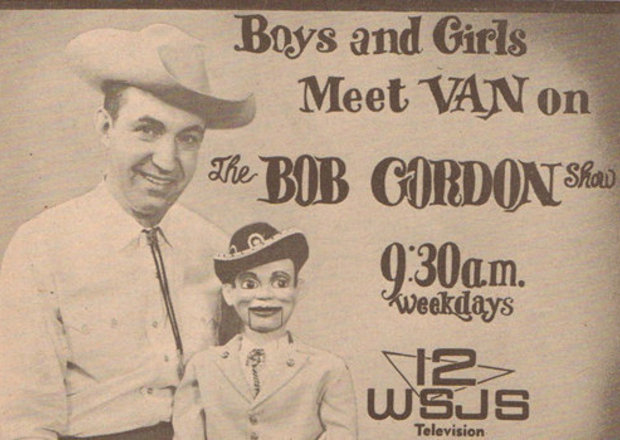
Bob Gordon

Robert Gordon Van Horn, November 16, 1924 – September 11, 2015

Now this brings back some memories:

Robert (“Bob”) Gordon Van Horn was an unassuming man, not given to boasting, and devoid of any ego. If you spoke with him, you’d never know that he was a popular TV personality, a creative innovator, or a war hero. As our mutual friend Dave Plyler told me, “Bob saw fierce combat in World War II at the Battle of the Bulge for which he earned a purple heart and a bronze star, but he never discussed his service.”…

Bob is preceded in death by North Carolina’s other legendary children’s TV show hosts: George Perry (WFMY’s Old Rebel); Fred Kirby (WBT’s singing cowboy); Uncle Paul Montgomery (WRAL’s jazz artist); and Brooks Lindsay (WSOC’s Joey the Clown). His passing earlier this month should serve as a reminder of the pioneering work they all did to make growing up just a little more fun.

Saturday afternoons, I’d plant myself in front of our black-and-white TV and watch those wonderful “B” serials Bob Gordon featured on his show in between rope and magic tricks. Rocket Man was my favorite.

Rocket Man

Those cliffhanger serials were my first introduction to science fiction, and no doubt influenced my approach to story telling.

Thanks for the memories, Bob.

The Future of Dystopian Literature

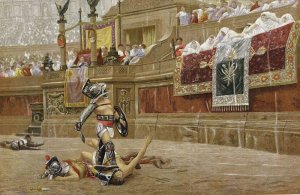
Gladiators

One of the writer’s vital functions is to advise readers about the possible dangers of certain actions and beliefs, just as doctors warn their patients about unhealthy behaviors and attitudes.

In that spirit, Dr. Bradley Birzer argues in The Imaginative Conservative that the current interest in dystopian science fiction is not a sign of degeneracy, but a cause for hope. As he puts it, “At their best, dystopias allow us—through the faculty of imagination—to see not only inhumanity, but the motives behind inhumanity.”

I believe such warnings are necessary and apropos. Modern life is characterized by radical transformations that are being imposed without consideration for basic human needs. Charlene Spretnak summarizes the worldview behind those transformations in her classic, The Resurgence of the Real:

In the modern worldview, a salvational sense of progress places economic expansion and technological innovation at the center of importance. Modern government, whether socialist or capitalist, is charged with safeguarding and furthering that expansion because social and cultural development is believed to follow in its wake. Thanks to modern advances, traditional concerns stemming from the human condition have been largely conquered, managed, or replaced altogether: Modern life promised freedom from the vagaries of the body, the limits of nature, and the provincial ties to place. The body came to be seen as a biological machine, the natural world as a mere externality in modern economies, and the sense of place as a primitive precursor to cosmopolitan sophistication.

In my mind, such an agenda guarantees an anti-human dystopia. So, as Birzer says, let the short stories, novels, and graphic novels that depict dystopia go forth and spread their warnings. We need them.