Category Archives: Writing

Like a waterfall

Greenville2

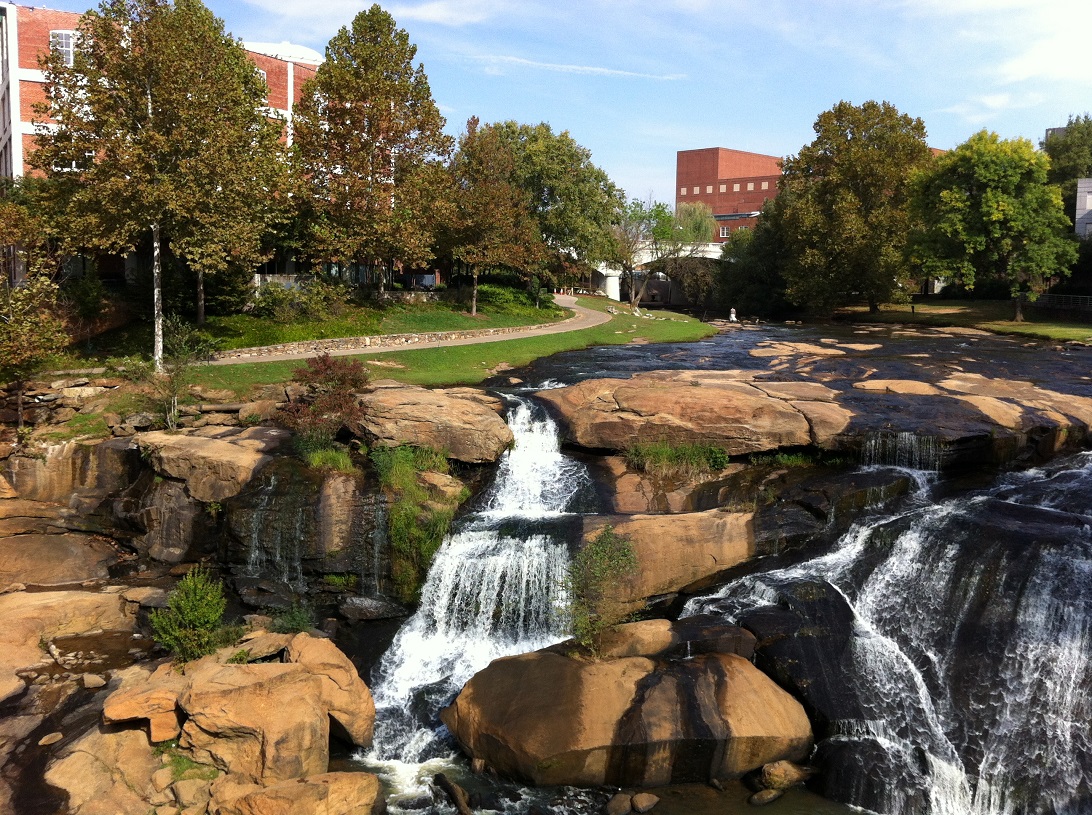
I’m in the Zone, folks. It’s finally come together. I’ve achieved cruising speed on my latest wip, as ideas, dialogue, and action are flowing onto the laptop like a waterfall. My characters and I are finally on speaking terms, even to the point where they nudge me to point out what I need to have them say and do next. Man, what a feeling. This is what writers live for.

Gone are the gruesome hours of agonizing over the major plot points. You know what it’s like: The protag can’t do that. He wouldn’t react that way. And why the hell would our villain do that? She’s not stupid.

And so on. I’m almost in that other-worldly state you see in movies about painters, song-writers, and authors where they’re possessed by their muse, and their wip just flows out of them in a burst of feverish activity. That’s not the way it really works, but you get the idea. Rent Moulin Rouge ( the one with José Ferrer, not Tom Cruise’s first ex) to see what I mean. Great movie. Lousy role model for writers.

Anyway, my latest wip is about Appalachian folk magic in an urban setting. So far, it’s been a blast. Here’s the list of books I’ve read or re-read as background:

Cracker Culture Grady McWhiney
Albion’s Seed: Four British Folkways in America David Hackett Fischer
At Home in Dogwood Mudhole Franklin Sanders
Grammatical Man Jeremy Campbell
The Story of North Carolina Dr. Alex Arnett
The Other Irish Karen F. McCarthy
Our Father’s Fields James Kibler
The Making of a Cop Harvey Rachlin
A History of the South Francis Simkins & Charles Roland

And last but certainly not least:

The Golden Bough Sir James George Frazer

Underlying all this research is a bit of family history you probably wouldn’t believe, but which I’ll discuss fully once the book is out. Then there are my excursions into Charlotte’s extensive creek walks at weird hours. One thing that’s always fascinated me is how familiar things transform come nightfall. More on that later.

Further updates to follow. Right now, it’s time for bed. Yes, it’s been that intense.
Best Fiction and Writing Blogs

Brundage1
The best fiction and writing blog posts from around the ‘net, all guaranteed to make you a literary adventurer. Compiled by margaret.

Electric LitThe 2015 Hugo Nominees
Alice OsbornHow to Get Back into Writing After a Hiatus
Allison BrennanThink your book is ready to publish? Maybe not.
Jane RisdonThe Black Prince and an Archbishop
Jodi MilnerMedieval Village Anatomy 101
Jack Sutter Screw The Muses
Confessions of a Readaholic22 Things I Learnt By The Time I Turned 22
Peter WellsThe Creative Abyss

Best Fiction and Writing Blogs

Bierce

The best fiction and writing blog posts from around the ‘net, all guaranteed to make you a literary adventurer. Compiled by ambrose.

Michael Chabon and Neil Gaiman: Video Tribute to Terry Pratchett
P.J. Parrish: What does your character want?
Alice Osborn: 5 Tips on How to Make a Living as an Author
Rod Dreher: First You Change the Language…
James Machin: H. P. Lovecraft’s pivotal moment
Jami Gold: Write what you want to learn about
Stephen Masty: Awareness of the Past Heightens Creativity
Jacqueline Seewald: Overcoming Writer’s Block (Part 2)

Best Fiction and Writing Blogs

Jack London

The best fiction and writing blog posts from around the ‘net, all guaranteed to make you a literary adventurer. Compiled by jack.

Andrew Solomon: Advice for Young Writers
Coastal Mom: The Way We Write
Jeff Wills: A Winter’s Morning Walk [Beautiful. Don’t miss!]
Dave’s Corner of the Universe: Geek Obscura: UFO
James Scott Bell: Top Ten Things You Need to Know About Characters
In My Cluttered Attic: Its National Visit MY Blog Day!
A Vase of Wildflowers: Links for Readers and Writers
Clare Langley-Hawthorne: Reimagining the Past

Why I Read

Bret
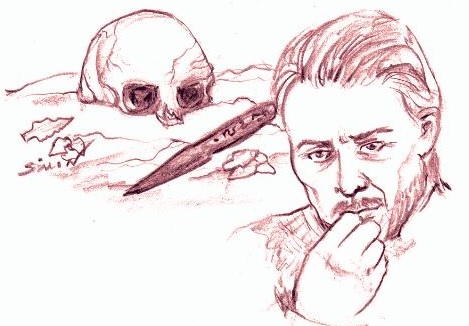
“Bret Lassiter,” by Marge Simon

I think writers are as necessary as doctors. Like a doctor, the writer performs the vital functions of diagnosing patients, advising them, and healing them.

Diagnosing: Through the generations,  writers, like doctors, pretty much say the same things over and over, but in fresh, personal language. That’s because the human condition does not change. We must be told we are mortal, that we can and will get hurt, and that we should take better care of ourselves and loved ones.

Ernest Hemingway’s magnificent tale of war and loss in A Farewell To Arms remains one of the most powerful and vivid tales of the madness of World War I. Of course, its narrative is timeless because humanity is still being dazed and bloodied by conflict and loss. I still recall reading that book in high school, and how it shook me to the core the way it made the abstraction of death real. In the powerful final scene, the protagonist, Frederic Henry, makes the nurses leave the room where his wife has died in childbirth. He is determined to say goodbye. However, something is wrong:

But after I had got them out and shut the door and turned off the light it wasn’t any good. It was like saying good-bye to a statue. After a while I went out and left the hospital and walked back to the hotel in the rain.

Feel the lid of the coffin slamming down? The “statue” image chilled my marrow at age 17. An invaluable lesson.

Advising: Because death and suffering are real, the writer, like a good doctor, must caution readers about what they should and should not do. Sometimes we don’t listen, and need to be slapped in the face and reminded there are certain risks we’re taking without thinking about the possible consequences. Larry Niven’s “Bordered in Black” is one breathtaking example. I won’t give away the plot, but the story begins with Earth’s most famous astronaut destroying the first faster-than-light ship, from which he’s just explored the farthest reaches of space. Niven’s advice is this: Out there in the dark unknown, in alien places where the light from the nuclear fires we call stars cannot reach, there may have arisen Beings that are nothing like the cuddly ET. Nothing at all.

Something to think about before we broadcast more “Come on down!” messages from our radio telescopes.

Healing: And finally, no matter how well we take care of ourselves, pain and loss will find us. One story I enjoy re-reading is Yukio Mishima’s “Death in Midsummer,” which is about the accidental drowning of two children. The parents struggle to recover, and are finally able to return to the beach where their children died:

From beneath the clouds, the sea came toward them, far wider and more changeless than the land. The land never seems to take the sea, even its inlets. Particularly along a wide bow of coast, the sea sweeps in from everywhere.

The waves came up, broke, fell back. Their thunder was like the intense quiet of the summer sun, hardly a noise at all. Rather an earsplitting silence. A lyrical transformation of the waves, not waves, but rather ripples one might call the light derisive laughter of the waves at themselves – ripples came up to their feet and retreated again.

Those lines, I think, illustrate the surprising and timeless beauty that can emerge from harsh reality. By confronting our mortal condition, we appreciate more intently what it means to live. Finding that beauty is often difficult and fleeting, but it is possible, and literature helps us see it.

And those are the reasons I read. And write.

Best Fiction and Writing Blogs

JeffnBev
The best fiction and writing blog posts from around the ‘net, all guaranteed to make you a literary rock star. Compiled by the dude.

James Scott Bell: Where Do You Get Your Ideas?
Stephen King: Everything you need to know to write successfully
Bob Mayer: What is your process as a writer?
Sue Vincent: How to make a living as a writer
Jacqueline Seewald: How to overcome writer’s block
Jeff Wills: Finding your style
A.D. Martin: Symbolism in novels
Lincoln Michel: Literary Links from Around the Web

Best Fiction and Writing Blogs

Ezra Chair
The best fiction and writing blog posts from around the ‘net, all guaranteed to make you a literary rock star. Compiled by old ezra

A.E. Stueve: Rethinking the Plot Pyramid, Part 2
A Vase of Wildflowers: Links for Readers and Writers
Sue Vincent: How to write wrinkles
Elizabeth Preston: Writing a Kissing Scene
Alice Osborn: 6 Tips for Creating Knock-out Book Trailers
Jami Gold: Planning your Story
James Scott Bell: The Ten Commandments of Writing Failure
Ryan Britt: How Leonard Nimoy’s Spock Taught Me to Be a Writer

Why would a character do that?

Over at Kill Zone, editor extraordinaire Jodie Renner discusses a fault she sees all too frequently in manuscripts she reviews:

Have you ever been reading a story when suddenly the protagonist does or says something that makes you think, “Oh come on! Why would he do that?” or “This is crazy. Why doesn’t she…?” or “But I thought he…!” or “I didn’t know he/she could [insert extraordinary ability].” The character seems to be acting illogically, to be making decisions with little motivation or contrary to his personality, abilities, or values.

Renner is right — there’s no better way to lose a reader than to force a character to do something brainless or out of character just to advance the plot. But it happens, and some writers get away with it. In my opinion, the worst example of a character suddenly behaving both out of character and illogically is in The Girl With the Dragon Tattoo.

SPOILER ALERT!

Lisbeth Salander, a plucky computer hacker, figures out that Martin Vanger is the serial killer she and journalist Mikael Blomkvist have been trying to identify. Meanwhile, Blomkvist has also figured out Martin is the killer, but the wily Martin captures Blomkvist and prepares to torture and kill him in his dungeon. Fortunately, Lisbeth sneaks into Martin’s dungeon just in time. Martin, who’s coldly and methodically killed dozens of victims, totally panics and RUNS AWAY from a 90-pound girl armed with — a golf club. Now, Martin’s in his fortress, with guns and other weapons all over the place, but for some mysterious reason, he decides to abandon it by running upstairs and out of the house to his Volvo. Okay.

But it gets worse! Lisbeth chases Martin on her little motorbike. As they race down the mountain, all Martin has to do is tap the brakes, and his pursuer would squish against the rear of his Volvo (which I think is Swedish for “Tank for Civilian Use.”) But no, instead our previously calculating and unflappable villain crashes and ends in a fiery wreck.

And millions found this believable? Give me a break!

Best Fiction and Writing Blogs

mishima
The best fiction and writing blog posts from around the ‘net, all guaranteed to make you a literary ninja. Compiled by yukio
 
James Scott Bell: Top Ten Things You Need to Know About the Writing Life
Publishing Insights: Writing Partnership & Blogging
Graham Moore: How to Write About Characters Who Are Smarter Than You
Tom Knighton: Captain Kirk’s duty and other considerations
Connemara James: 5 Websites to Help Aspiring Writers Publish, Not Perish
Nicola Alter: The 10 Popular Types of Fantasy Movies