Category Archives: Writing

Jamaica Kincaid on How to Live and How to Write

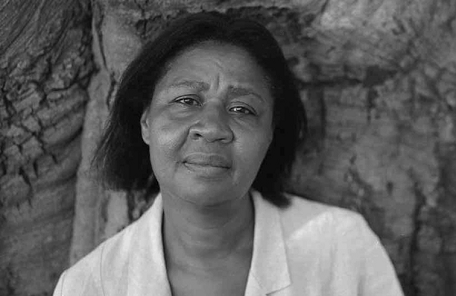
Jamaica Kincaid

I must confess I am not familiar with Jamaica Kincaid or her works, but this collection of her quotes in Literary Hub makes me hunger for more. Here’s a small sample:

  • A professional writer is a joke. You write because you can’t do anything else, and then you have another job. I’m always telling my students go to law school or become a doctor, do something, and then write. First of all you should have something to write about, and you only have something to write about if you do something.
  • Life has a truth to it, and it’s complicated—it’s love and it’s hatred. Love and hatred don’t take turns; they exist side by side at the same time. And one’s duty, one’s obligation every day, is to choose to follow the nobler one.
  • I want to write until I die, and I hope to live a long time. I don’t want to reach a plateau; what I am interested in is living, living.

Ha! Love it. Want to read more? Check out the rest at Literary Hub.

Author Interviews with Cathleen Townsend

Author interviews

Cathleen Townsend’s Author Interviews is a respected online treasure. I’m honored to be included in the company of Dan Alatorre, D. Wallace Peach, and E. E. Rawls, just to name a few of the authors Cathleen has featured over the years.

Frankly, I had to dig deep to answer some of her questions, which revealed genuine insight and appreciation for the writing process. Cathleen asked me about projects that took me out of my comfort zone, my writing heroes, and about my latest book, The Genie Hunt. Here’s Cathleen Townsend’s Interview with M. C. Tuggle.

Traits Writers Have in Common – What I Learned from an Author Panel

I instantly recognized myself in K.L. Kranes’s post on the writing life and knew I had to share it.

klkranesya's avatarK.L. Kranes

20170505_105907_20170505111212159On Saturday I participated in my first author panel with a fellow local writer in the Northern Virginia area, Angela Glascock (Locksmith at the End of the Worldand moderated by another local writer, Lisa Tully.
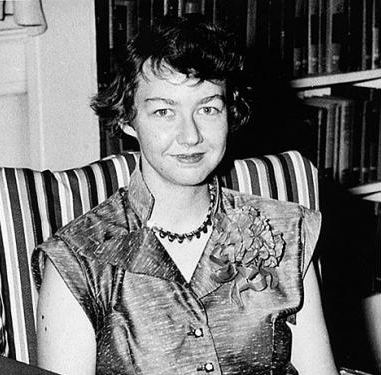
Author panels are meant to give the audience insight on novels, authors and the writing process. But, I learned a few things too, including it seems as though we writers have a lot in common.

Here are some of the commonalities I noticed.

We wrote as children, all the time

As a kid, I remember writing all the time. I filled notebooks with stories and poems. They’d be stuff in drawers and boxes. When we’d clean out my room they’d turn up in random places. It was even an activity with my friends. While other kids were playing with toys or riding bikes, I’d rather be writing a book. Lucky for me I…

View original post 1,035 more words

Best fiction and writing blogs

Flannery O'Connor

The best fiction and writing blog posts from around the ‘net, all guaranteed to make you a literary legend. Compiled by flannery.

D. Wallace PeachWriters’ Critique Groups
Cathleen TownsendPinterest–Tips to Get Started
Sean P. CarlinFoundations of Storytelling: The Logline
Annabelle TroyFiction Gets Brainy
Dave AstorIt’s Earth Day in Some Parts of Literature
Nicola AlterGetting The Last Line
J. C. Wolfe16 Redundant Phrases You Should Simplify in Your Writing
Jay Dee ArcherGenres Helping Other Genres

Nattering About Novel Names

Here’s Dave Astor on one of the most important decisions an author must make.

Dave Astor's avatarDave Astor on Literature

Book titles! They’re important, and the best of them can be quite memorable.

Some titles say a lot about what’s in the novels, as do War and Peace and Crime and Punishment in summarizing Leo Tolstoy’s and Fyodor Dostoyevsky’s respective masterpieces. Others tease you with their intriguing nature (many examples a few paragraphs below).

Titles can be funny, serious, long, short, evocative, descriptive, clever, slangy, punny, and more. They can be drawn from unforgettable phrases in the earlier works of other authors. They can just be the name of a place (as with Jane Austen’s Mansfield Park, Henry James’ Washington Square, and many of James Michener’s novels). Or they can include the year in which the novel is set (witness George Orwell’s Nineteen Eighty-Four, Stephen King’s 11/22/63, and Arthur C. Clarke’s 2001: A Space Odyssey). Or the name of the protagonist, or a description of the…

View original post 760 more words

Best fiction and writing blogs

Jack London
The best fiction and writing blog posts from around the ‘net, all guaranteed to make you a literary adventurer. Compiled by jack.

Ed A. MurrayWhere I find my inspiration to write
Alicia GaileAdding Flavor To Your Characters
Lissa PelzerTop 5 Writing Tips
J. McSpaddenThe Word Magician, the Story Wizard
Melissa TriplettFinding and Organizing Your Story Ideas
Sonyo EstavilloFocusing on the right details
Didi OviattFocusing on content over word count
Jan M. FlynnAvoiding the Draft
Sy & JeiSy & Jei’s Five Writing Tips

How being pessimistic about writing can make you a better writer

Here’s some counter-intuitive but sound advice from an accomplished author.

lissapelzer's avatarYet Another Crime Book Blog

Positive thinking is all over the place and for one good reason – it sells. Telling someone that they can control their own good fortune by simply deciding to think positively is a beautiful idea. And you know what? You think positive – you feel positive. It works, we’ve all experienced it, but isn’t that a little like saying, if you imagine the colour blue you will see the colour blue?

More and more, the evidence is stacking up. Positive thinking can make you happy for a short time, but it can also stop you from reaching achievable goals too.

09-positive-thinking.w710.h473.2x.jpg

Positive thinking alone won’t secure you the job you want that was otherwise unattainable or save a failing relationship. Positive thinking can make you appear to others as a confident and outgoing person, but most jobs and relationships soon dissolve that illusion, leaving positive thinkers in a worse position than…

View original post 705 more words

Hitting that Submit Button

Hitting that Submit Button

Posting has been light lately, but it’s because I’ve been busy with my latest manuscript. For me, getting that first draft down is tough. However, I love revising. (Weird, huh?) I really think I could revise a piece forever, continuously getting charged up from finding boo-boos here and tightening up my prose there.

My wife, who is also a strict critic and proofreader, recently suggested the real reason might be more than the pleasure of “getting the words right,” as Hemingway described the process of revision — it might also be fear of taking that frightening leap of submitting my work.

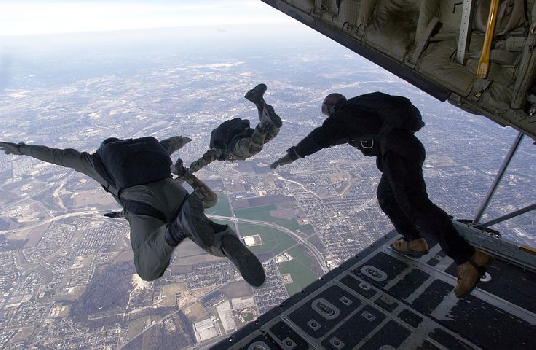
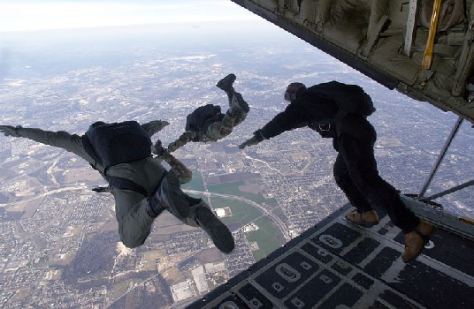
Yikes! She’s probably on to something. I’ll admit it IS scary to hit that submit button. For me, it’s at least as terrifying as that first backward jump in rappelling, or seeing the earth vanish from under your feet when you launch yourself hang gliding. And I’ll also admit to still being touchy about rejection even though intellectually, I know that’s part of the game. Hey, it hurts to offer your heart and have it pushed aside. But again, that’s the nature of the beast.

Here’s a no-nonsense reminder of that cardinal rule of the writer’s life, from alto at Matters of the Art:

You will be rejected. Often. Get over it early, because it never really goes away. Though realize you are not alone. In the course of my MFA, while researching for an assignment, I stumbled upon an article about author rejections. The New Yorker, The Paris Review, The Atlantic, Fiddlehead, and every other high end lit rag has rejected every single famous writer out there countless times. It doesn’t matter who you are. Raymond Carver, Joyce Carol Oates, Alice Walker, all know the sting of rejection.

If misery loves company, I guess knowing you have some high-caliber company eases the hurt just a bit.

BTW, I heartily recommend alto’s article. It’s sound advice I wish I’d read decades ago, not just on dealing with rejection, but on other vital truths about writing.

Anyway, I finally let go and hit that “Submit” button. My latest wip is out there, swimming upstream in a digital slush pile.