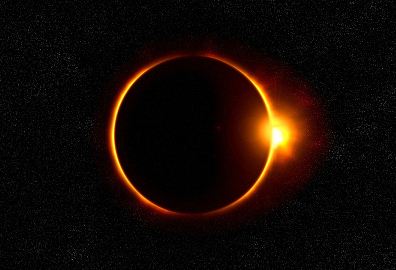
My wife and I went to Congaree National Park just south of Columbia, South Carolina, to view the Totality. It was an experience I’ll never forget.
The park’s eclipse program began with a hike down a nature trail to the Congaree River. But we saw some gorgeous things along the way, including stunning wildflowers and General Greene’s tree.
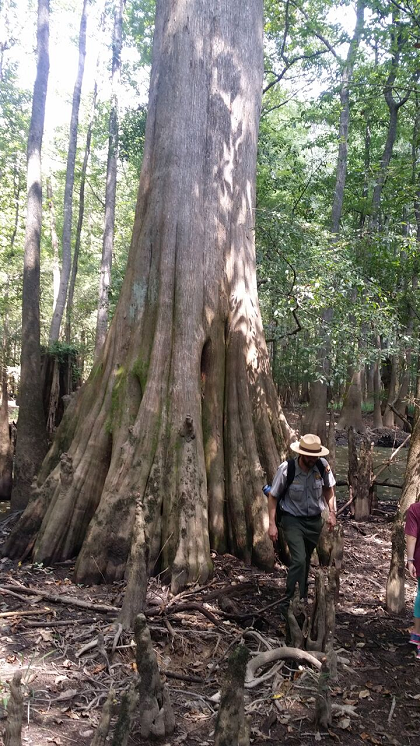
General Nathaniel Greene commanded the colonies’ Southern forces during the Revolutionary War, and crossed the Congaree near this spot on his way to confront the British in Charleston. This tree is over a thousand years old.
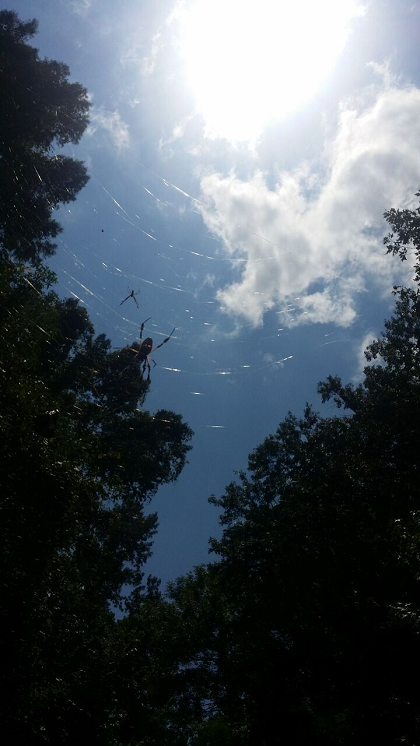
Here are two Golden Orb spiders we stumbled upon during our hike. The large female is just visible against the trees in the background. The hopeful, tiny male is clinging to the web just above her, waiting for the right moment. He probably doesn’t know what happens after the blessed event. We didn’t stick around to witness it.
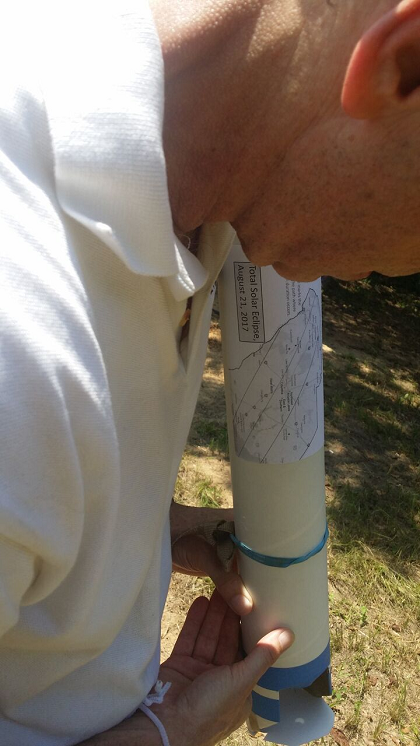
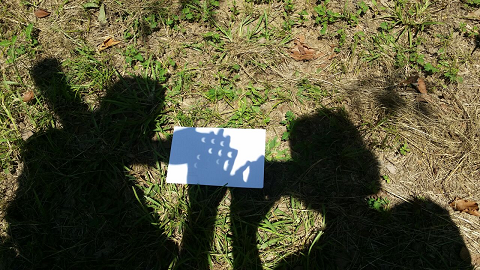
We reached the viewing area on the eastern bank of the Congaree River. Even though we had ISO-approved solar viewing glasses, I relied mostly on my pinhole camera to watch the Moon’s progress. The camera worked great. The big advantage is that you can look at the image as long as you want. Even with the glasses, you should only gaze at the sun less than a minute at a time.
And you can always create your own hand-made crescents!
The light slowly dimmed, casting an eerie glow on the river and surrounding forests. Then, finally, the moon crossed directly in front of the sun, and we were enveloped in Totality. The air turned cool, and crickets began chirping.
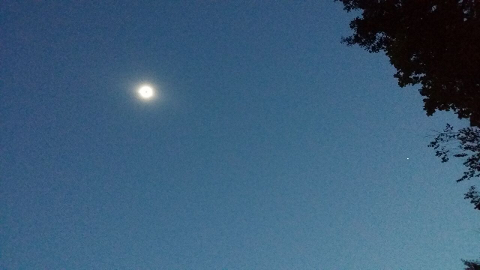
That’s Venus emerging from the sudden darkness to the right of the Sun, now blocked off by the Moon.
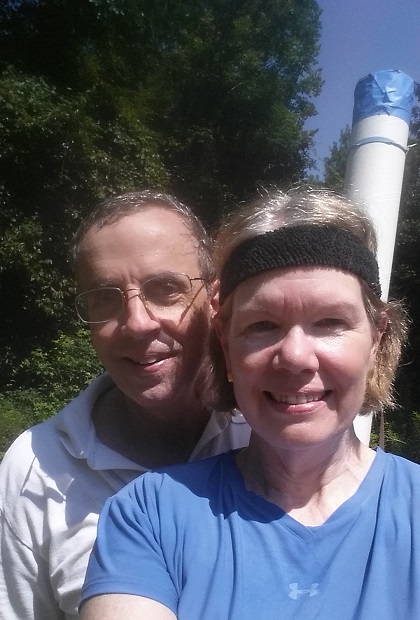
What a show! It was a thrilling, mysterious sight to behold, completely different from the partial eclipses I’ve seen. I’m glad we went.





 M.C. Tuggle, Writer