On Superheroes

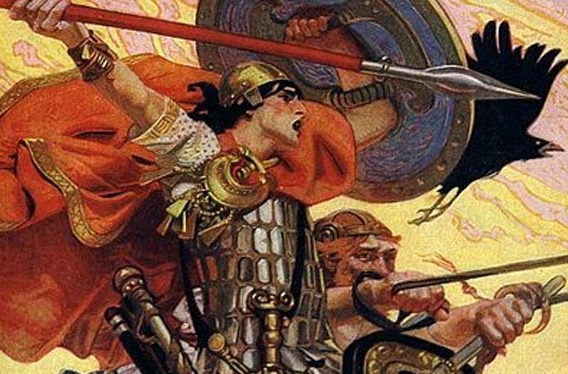
Cuhullin
Cuhullin Riding His Chariot into Battle

Brian Kaller looks at the similarities and differences between the competing blockbusters Captain America: Civil War and Superman vs. Batman, and why Marvel movies are better than DC movies. Along the way, he reveals just what it is about superheroes that continues to fascinate us:

As long as humans have existed, we have told legends of people with super-human abilities, and delighted in stories of how they faced danger and out-fought or out-witted enemies. Gilgamesh for the Sumerians, Odysseus and Jason for the Greeks, Samson for the Hebrews, Beowulf for the Saxons – ancient scriptures, barbarian sagas and oral traditions swell with superheroes. In a more modern era the Scarlet Pimpernel, Zorro, Paul Bunyan, the Lone Ranger, James Bond and Sherlock Holmes are all basically super-heroes, doing things real people can’t do. Every culture has stories like this; our forebears told them around campfires or mead-halls, 20th-century kids read them in comic books.

When societies abandon that heroic ideal, when they acquire the “philosophic indifference” of Gibbon’s latter-day Romans, the culture is in deep trouble. As our country slipped away from the post-war glow into an era of escalating hedonism, it abandoned superheroes save as pablum for children.

Yet Generation X-ers and Millennials, children of the counterculture, embraced them even into adulthood, perhaps desperate for the heroes their culture no longer provided. In this century, as the nation grows ever more troubled, we are turning back to stories that give us heroes to believe in – a sign that there is hope for us.

Yes, we can dismiss superhero movies as unrealistic, childish, and silly. And in a world of hip cynicism, self-serving politicians, and sleazy celebrities, why read or write about stubbornly courageous characters who risk life and reputation for friends or family? In a world where mouthing the easy lies of our time ensures success, why would anyone in his right mind cheer a character who questions, or, heaven forbid, rebels against accepted thought?

Because we must.

Best Fiction and Writing Blogs

Lovecraft

The best fiction and writing blog posts from around the ‘net, with advice and inspiration guaranteed to make you a literary cult figure. Compiled by howard.

Joanne Jeffries and Julian YanoverPoetic WordClouds: These are the most common words in Poetry
Owen Booth24 Rules for Writing Short Stories
Fionn GrantLiterary Agent: Another Step Toward Writer Status
Jami GoldWhat Goes into Building a Movie in Our Mind?
Aerogramme Writers’ StudioOpportunities for Writers: June and July 2016
A.J. HumpageGetting Your Story To Flow
Krishna Prasad Is Poetry Dead?
PenstrickenThe (Im)perfect Protagonist
H. P. Lovecraft11 Tips for Novice Writers

Fictional Atonement

Kanan Mikaya

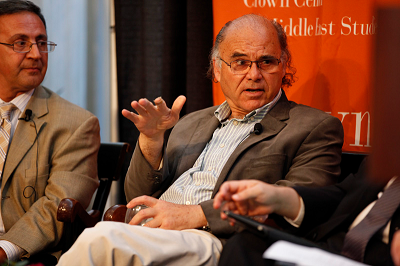
Kanan Makiya is a professor of Islamic and Middle Eastern Studies at Brandeis University who was an early and vocal proponent of the 2003 Iraq War. In fact, he was in the Oval Office with George W. Bush when both received news that Baghdad had fallen to American forces. No doubt the two congratulated each other at the time.

Then came the aftermath, as this New York Times article relates:

For years afterward, as Iraq fell apart, Mr. Makiya’s pen went silent while he struggled to make sense of what happened and his own role in the catastrophe.

As a Middle East scholar at Brandeis University, Mr. Makiya is a man of facts and history. Ultimately, though, he decided the best way to express what he felt became of Iraq was to write fiction. Only with a novel, he says, could he access “the larger meanings and deeper truths about what went wrong post-2003.”

The book is also an apology, and represents a decade of introspection for a man whose life’s work was closely associated with a costly war that was justified by the false assertion that Mr. Hussein had weapons of mass destruction and was a threat to the United States.

That says a lot about the act of writing, doesn’t it? Dr. Mikaya could have written a scholarly account explaining what went wrong in the war he advocated. But that just wasn’t enough. Mikaya had to redo the Iraq War. He had to creatively re-arrange the facts — to play with them. Fiction writing is a type of play, which development psychologists now recognize as a vital part of learning. And play isn’t just for kids — creative exploration of the world around us is both therapy and mental exercise that adults need as well.

There’s a redemptive aspect to fiction writing, also, which I believe Dr. Mikaya would acknowledge. It’s a means of making right those things from our past that still gnaw at us.

[SPOILER ALERT!]

In the novel and movie Atonement, Ian McEwan explored that aspect of writing. It’s the tale of Briony Tallis, a young girl who spitefully and wrongfully accuses her sister’s suitor of rape. That, of course, ends the wedding plans and ruins the life of both the sister, Cecilia, and her suitor, Robbie.

At the end of the story, Cecilia and Robbie are happily reunited. Then comes this admission from an elderly Briony, now a writer:

My sister and Robbie were never able to have the time together they both so longed for, and deserved. And which, ever since, I’ve… Ever since I’ve always felt I prevented. But what sense of hope, or satisfaction, could a reader derive from an ending like that? So, in the book, I wanted to give Robbie and Cecilia what they lost out on in life. I’d like to think this isn’t weakness or evasion, but a final act of kindness. I gave them their happiness.

I think Flannery O’Connor was right when she said, “There is something in us, as storytellers and as listeners to stories, that demands the redemptive act, that demands that what falls at least be offered the chance to be restored.” Atonement, whose meaning includes both paying what’s owed and seeking forgiveness, is at the heart of writing.
Don’t Derail Your Writing Career Before it Starts: 8 Ways New Writers Sabotage Themselves

Derail

Anne R. Allen has a must-read post for both new and intermediate writers. She lists and discusses self-defeating practices of many newbies, such as: relying on well-meaning but uninformed advice from friends and family, overlooking the advantages of seeking out other writers for support and mutual critiquing, and failing to create and regularly UPDATE a writer’s blog.

But the mistake that stood out for me was “Writing Novels Exclusively.” Here’s what Anne says:

Once I decided I wanted to have a writing career, I dove right into writing novels. I left short stories and poetry behind. People told me they were for amateurs. …

I was short-sighted. If I’d had more publishing credits and contest wins, I would have found a publisher for my longer fiction faster.

I’d also now be sitting on a goldmine, since short stories, novelettes and novellas are hot commodities.

Anne’s absolutely right about this. I’m not claiming prescience here; in fact, I started out writing novels as well. (And I have the rejection slips to prove it!) I turned to short stories as a way to get the hang of writing for an audience as well as learning how to make my manuscripts stand out from the slush pile. I have to say it was a winning strategy — after getting a half-dozen short stories published, I tried long fiction again, and my book Aztec Midnight was finally accepted. Now, in addition to writing short stories, I’m again working on longer pieces.

But there’s another value to publishing short stories, one I learned in my previous career as a manager in the insurance industry. The most important thing you look for when you interview potential employees is a history of getting hired and promoted. A good record tells the interviewer that other professionals in the industry have put their stamps of approval on the person under consideration. Similarly, a consistent publishing history is a testament to a writer’s dedication and ability to write stories other editors like.

Seeing that other editors have accepted your previous manuscripts doesn’t guarantee an editor will accept your next submission, but it might just tip the scales in your favor.

Quote of the day

Gregory Wolfe

“Whereas I once believed that the decadence of the West could only be turned around through politics and intellectual dialectics, I am now convinced that authentic renewal can only emerge out of the imaginative visions of the artist and the mystic. This does not mean that I have withdrawn into some anti-intellectual Palace of Art. Rather, it involves the conviction that politics and rhetoric are not autonomous forces, but are shaped by the pre-political roots of culture: myth, metaphor, and spiritual experience as recorded by the artist and the saint.” – Gregory Wolfe

Witch Flambé

Witch Flambe

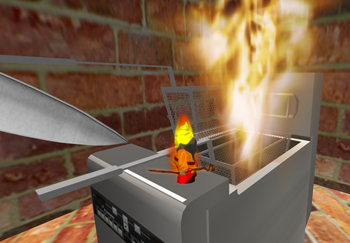
The latest edition of Aurora Wolf features my short story “Witch Flambé.” Set in and around modern-day High Point, North Carolina (my home town), it’s about two old friends now in vastly different circles who team up to clear a young lady who’s accused of setting fires at her employer’s “guerilla dinners.” Someone’s casting spells on the “underground dining” events, and our protagonists must seek out the help of a Scots-Irish granny witch.

Appalachian Granny Magic is one of those old Southern ways that have recently enjoyed renewed interest:

The tradition is a very old one, dating all the way back to the first settlers of the magical Appalachian Mountains who came over from Scotland and Ireland in the 1700’s. They brought along their even older Irish and Scottish Magical Traditions with them. Those two ‘old world’ Traditions were then blended with a dash of the local tradition of the Tsalagi (Now, called the Cherokee Indians.)

Because of the rural and secluded nature of the Appalachian community, the old customs, wisdom, and practices were not as often lost, forgotten, or ‘modernized’ as the ‘old world’ traditions that came over to other, more urban areas of the ‘new world.’ Therefore, one will often find that ancient Irish or Scottish songs, rhymes, dances, recipes, crafts, and ‘The Craft,’ are more accurately preserved in Appalachia than even in Ireland or Scotland.

This story was a blast to write. It has just about everything I love: good food and drink, old friends, the surprisingly enduring power of the past, nature’s astonishing ability to rejuvenate — all topped off with a delightfully scary confrontation at the end. I hope you enjoy it.

Quote of the day

Van Gogh

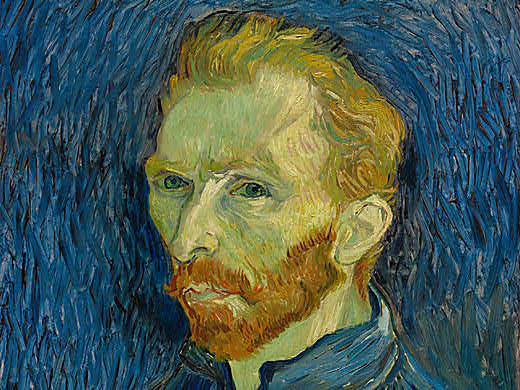
“What am I in the eyes of most people – a nonentity, an eccentric or an unpleasant person – somebody who has no position in society and never will have, in short, the lowest of the low.

All right, then – even if that were absolutely true, then I should one day like to show by my work what such an eccentric, such a nobody, has in his heart.

Though I am often in the depths of misery, there is still calmness, pure harmony and music inside me. I see paintings or drawings in the poorest cottages, in the dirtiest comers. And my mind is driven towards these things with an irresistible momentum.”

Vincent Van Gogh, in a letter to his brother

“If you’re a writer, declare yourself the best writer!”

Here’s an inspirational scene from one of my favorite movies, Midnight in Paris. Gil Pender, a young writer on vacation in Paris, climbs into a cab at the stroke of midnight, and when he gets out, he finds himself in 1920s Paris, where he encounters many literary and artistic legends. In the following clip, Gil gets to discuss writing with Ernest Hemingway. Gil can’t resist asking for a small favor:

Gil: Would you read it?

Ernest Hemingway: Your novel?

Gil: Yeah, it’s about 400 pages long, and I’m just looking for an opinion.

Ernest Hemingway: My opinion is I hate it.

Gil: Well you haven’t even read it yet.

Ernest Hemingway: If it’s bad, I’ll hate it because I hate bad writing, and if it’s good, I’ll be envious and hate it all the more. You don’t want the opinion of another writer.

Gil: You know what it is? I’m having a hard time getting somebody to evaluate it.

Ernest Hemingway: You’re too self-effacing; it’s not manly. If you’re a writer [slams table with his fist], declare yourself the best writer.

Ha! Yeah, that sounds like Ernie. And he’s right: It takes more than a little self-confidence to put your heart into a story and hit that “Send” key. You don’t know what the person judging your work is going to think. That’s scary — definitely not for the weak of heart.

Jami Gold recently addressed this in a great blog post titled “What Helps You BE a Writer?”:

Outside of any writing skill that we may or may not have, we also bring other aspects of ourselves to the writing-journey table. We might have personality traits that help us want to be a writer, such as a love of storytelling or a desire to entertain, educate, or inspire others.

Or we might have personality traits that help us stick with writing, even during the bad times. As Delilah mentioned in her post, stubbornness (tenacity, perseverance, determination, etc.) ranks high in many of the replies.

We might have enough of an ego that we think others are interested in what we have to say. Or we might have a desire to prove ourselves worthy of being listened to.

Jami and Ernie are on to something: If you’re going to write, go big. Go brazen. And keep going.

Suspense, Mystery, and Romance Make “Aztec Midnight” a Must-Read

Manhattan

The Manhattan with a twist blog offers readers “an all-encompassing perspective on living in New York City.” The site’s book review section, The Twisted Library, features this reaction to Aztec Midnight:

The novella follows Dr. Jon Barrett, an American archaeologist who was asked to come down to Mexico and retrieve an ancient, valuable (Aztec) weapon before the drug cartels get to it first. I found myself thinking, “well, this is fun to read” while reading, often, and, given the subject matter, that is a feat. Not many people would view a book that combines history, violence, criminals, and mystery as “fun,” but it truly was. Each page was like another step on an exciting journey, and, as a reader, I really did not have any idea where the story would turn next.

I also particularly enjoyed how the author throws in little romantic parts between the narrator and his wife. For example, when Jon returns home from a tiresome excursion, he walks in on his wife relaxing on the couch, and he takes a moment to simply admire the way she looks. He said it even temporarily alleviated him from the stressful thoughts and events that made up his day. This was a very nice touch, in my opinion. It reminds the readers that although there is a great deal taking place, and whole lot of drama, Dr. Barrett’s number one priority at the end of the day (literally and figuratively) is his wife and his love for her. This knowledge of his character plays an important role when, later, a few of his most prized possessions are put in jeopardy.

This novella is short, but filled to the brim with action and intrigue. Tuggle blends edge-of-your-seat scenarios with realistic and genuine dialogue. The characters are authentic and believable, while the story is unique and undoubtedly fascinating. No matter what your usual genre of books may be, “Aztec Midnight” is worth checking out.

Aztec Midnight is available in ebook and paperback. Check it out!

Best Fiction and Writing Blogs

MishimaOffice

The best fiction and writing blog posts from around the ‘net, with advice and inspiration guaranteed to make you a literary black belt. Compiled by yukio.

Cady VishniacSome Myths About Your Submissions
A. J. Humpage Focusing On Small Details
Marcy KennedyHow To Evoke Emotions In Readers
Elizabeth SvobodaHow Stories Change Our Brains
Ryan LanzWriting With Heart: Creating An Emotionally Engaging Character
Brett and Kate McKayWhy Every Man Should Study Classical Culture
Whitney CarterWorldBuilding: Crafting Magic
Yukio MishimaAbout Life And Writing

Adventures and mishaps in science fiction, fantasy, and mystery