“Science is not only compatible with spirituality; it is a profound source of spirituality. When we recognize our place in an immensity of light years and in the passage of ages, when we grasp the intricacy, beauty and subtlety of life, then that soaring feeling, that sense of elation and humility combined, is surely spiritual.”
K.M. Weiland is one of my favorite writing coaches, and I never miss her posts. I learn something every time I check her blog. Her latest is on the craft of writing emotional fiction. She acknowledges it’s a difficult art, but there are good reasons for working to master it:
“The good news is that because fiction is an inherently emotional experience, it is well-suited to helping us access and process the very emotions we’re seeking to convey in our stories. … I recognize that my lifelong love of stories has certainly been influenced by their cathartic power to help me feel things in a safe container. For both readers and writers, stories offer the scientifically proven opportunity to expand the nervous system’s capacity to feel and process emotion—and, by extension, to experience life more expansively.”
That’s a worthy endeavor, one I’ve worked on for many years. But then came this:
“If you’re cut off from emotions, it’s because you’re cut off from your body. The act of vocally naming sensations helps promote a mind-body neural connection that makes it easier and easier to raise real-time emotional awareness.”
Absolutely. But why is this so?
The barrier to the emotional awareness that allows us to write honest, evocative fiction is the philosophical dualism that permeates the arts and sciences. Dualism asserts that mind and body are fundamentally different things unnaturally yoked together, with the rational mind trapped in an inferior, unintelligent body. That interpretation of human existence has been critiqued as “the ghost in the machine.” Charlene Spretnak, an ecowriter with compelling insights about the relationship between our bodies and the rest of nature, traces the development of dualism in her book The Resurgence of the Real:
“Rational thought could be exercised only if sealed off from ‘corrupting’ influences of the body (sensations, emotions, desires) and if properly isolated from ‘lowly’ nature. Plato felt that we, that is, our minds, are imprisoned in the dumb matter of our bodies.”
Plato believed the mind was a supernatural entity that made humans separate and above the rest of nature. Nature, according to dualism, is inherently inferior, worthy only of contempt and exploitation. Descartes cast this notion in concrete when he asserted that the mind defines humans. Sensations and emotions, rather than instant, crucial alerts from a knowing body, were regarded as confused, irrational reactions which should be ignored.
I examined the impact of dualism in my latest story, “Due Diligence.” Yes, it’s fantasy, but it gave me the freedom to explore what the unnatural separation of mind and body does to one’s ability to cope and find meaning.
The latest developments in neuroscience show us that thinking is grounded in the body. We now know much more about how neural networks in the brain store and retrieve memories. And if dualism were correct about the mind being fundamentally separate from the body, why are there so many studies confirming that physical exercisestrengthens our ability to remember and solve problems?
The art of writing is more than a craft or a hobby, it’s a path toward making oneself and the world around us a little better. I love the way Weiland put it:
“Learning how to write emotional fiction is, at its core, a journey into the heart of our shared humanity. It is not just an artistic endeavor; it’s an exploration of the human experience.”
Years ago, the opening scene of A Wizard of Earthsea captured my imagination and hooked me into this little classic. All who appreciate the power and beauty of words can’t help but feel the wonder Duny experiences as his gift for magic expands with his mastery of language. When his aunt, a witch, tells Duny the “true name” of falcons, he discovers this gives him control over them. This whets his appetite for more:
“When he found that the wild falcons stooped down to him from the wind when he summoned them by name, lighting with a thunder of wings on his wrist like the hunting-birds of a prince, then he hungered to know more such names. … To earn the words of power he did all the witch asked of him and learned of her all she taught, though not all of it was pleasant.” p. 5
Ordinary mortals feel the same rush when they learn the names of things. My eyes always tear up when I watch the water scene from The Miracle Worker. Anyone who isn’t moved when young Helen Keller learns that words represent reality has a heart of stone. Leicester Hemingway wrote that by the time his brother Ernest was eight, he “knew the names of all the birds, all the trees, flowers, fish, and animals found in the Middle West.” Knowing the names of things connects you to them. It elevates and empowers you.
As beautiful as this truth is, it isn’t romanticism, but hard practicality. Faithful communication was our distant ancestors’ most important adaptation to a harsh environment, as Robert Ardrey illustrated in The Social Contract:
“The bipolar nature of hominid society … became the cradle of language as we know it. Things had to be told. A hunter was injured, a child was sick. Hunters returning empty-handed had to tell apologetically of the big one that got away. Leopards menacing the home-place had to be described by the women, numbered, placed on the map if the group was to be defended.” p. 327
That’s why telling the truth evolved into an ancient virtue. Lying not only disrupted social bonds, but also threatened survival. Accurate, truthful communication alerted one’s family and neighbors to both dangers and opportunities.
Modernity hasn’t changed this basic fact. Writers offer the world an ideal of precise transmission of ideas and emotions. That’s what Ernest Hemingway meant when he reminded himself that he had to write “the truest sentence that you know.” In other words, a writer must discipline himself to express his truth with conviction and stand by his words.
Clear, honest communication remains a goal for the individual and society. Ezra Pound once declared that “Good art cannot be immoral. By good art I mean art that bears true witness, I mean the art that is most precise.” Asked what he would do if he were governor, Pound’s mentor Confucius vowed to “rectify the names.” By “rectify,” he meant to restore, to purify, to correct, so that words would correspond to reality. That’s a discipline, an art, and a calling.
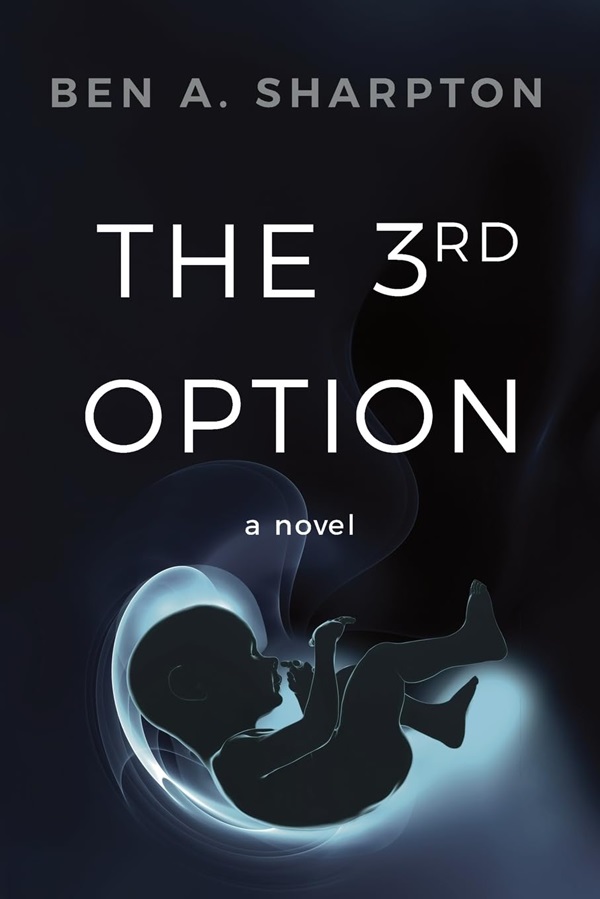
Allan Chappel arrives for a job interview primed for a second chance in life. Single, disillusioned, and stuck in a corporate cubicle, he’s an ex-cleric hoping to join an old college friend in a start-up business that, his friend has assured him, will “change the world.” But the moment he opens the door to his new venture, the building explodes.
In the hospital, Chappel is questioned by an aggressive police inspector. Troubled by the policeman’s insinuations, as well as the slow return of haunting images of the disaster, Chappel sneaks out of the hospital. But as soon as he returns home, he’s brutally attacked. Through desperation and dumb luck, he escapes his mysterious, would-be killer and takes to the streets and alleys of Atlanta. Aided by a scientist on the run, a despondent minister, and a psychic aunt, Allan Chappel must evade his pursuers while trying to discover why someone is determined to kill him.
The pursued quickly becomes both pursuer and sleuth. Chappel discovers the conspirators behind the bombing that killed his friend are powerful and politically connected. The deadly odyssey forced upon this innocent man harkens to such classics as “The Fugitive” and “North by Northwest.”
There’s more to this novel than your typical thriller. In between breathless dashes to hiding places, Chappel’s search for answers leads him into the tangled, emotion-filled conflict over abortion, an explosive issue that seems to have no resolution. As one character observes, “Everyone believes so passionately in their own side that they never seek an alternative, right?” To which Chappel responds, “How can there be an alternative? Either you’re pro-life or pro-choice.”
That’s the core of this intriguing novel. Despite the graphic action and language, this is a humane tale that explores alternatives to the win-lose scenarios we imagine prevent either discussion or compromise. Further, it seeks reconciliation and mutual understanding instead of revenge and the crushing of opponents. Well-written and timely, The 3rd Option is a voyage of hope.
It’s Edgar Allan Poe’s 215th birthday! In memory of this great writer of science fiction, fantasy, and mystery, I’m offering my observations about Poe’s creepiest tales, the ones that deal with the ultimate terror of human existence — being buried alive.
My tribute to Poe, “The Premature Burial,” is featured in the latest post at the DMR Books blog.
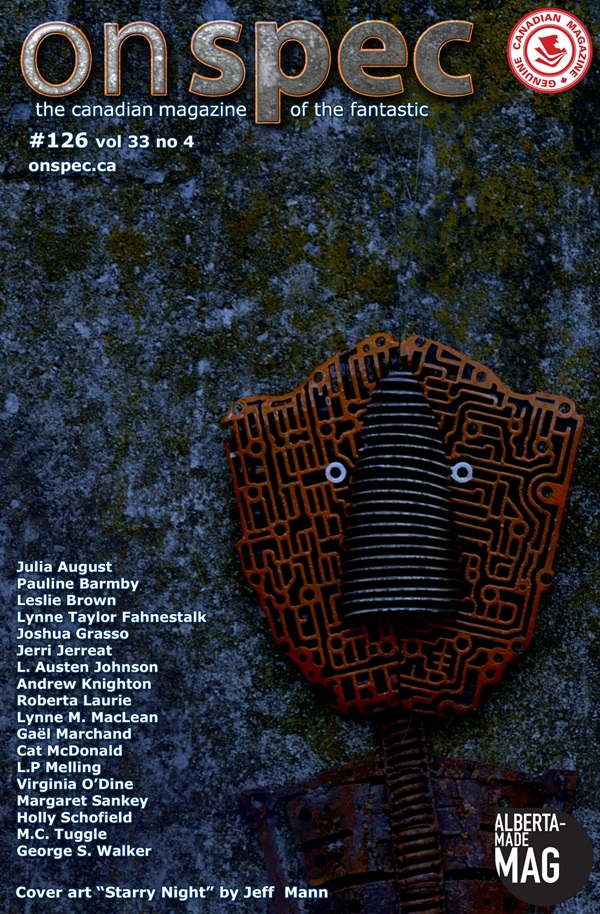
On Spec Magazine has just released its Winter 2023 issue, and I am pleased to announce it includes my short story “Due Diligence.”
Lucille Moon is not your ordinary realtor. Born with the ability to sense the presence of ghosts, she specializes in finding haunted houses for her buyers, mostly rap singers and movie stars looking for the ultimate thrill. However, Grayson and Eve Sterling have their own reasons for moving in with a ghost, which they hide from their realtor. Lucille can’t read the minds of the living, but the ghost haunting the mansion the Sterlings want to buy can. And deceit makes this ghost angry.
A frequent winner of the Aurora Award,On Spec prides itself for being more of a literary magazine than the typical science fiction and fantasy magazine. It is Canada’s longest-running, and, according to Hugo-winning author Robert J. Sawyer, most successful speculative fiction magazine. Since their goal is to highlight mostly Canadian writers, it’s a special honor to have my work appear here.
Two of my beta readers told me this was the saddest tale I’ve ever written. Maybe so, but it ends with a promise of hope and healing. The loss of a loved one is an unending emotional ache, something we cannot conquer or ignore. All we can do is deal with it the best way we can. Writing this story was my way.
Click here to buy On Spec #126 (and support your favorite author).
One of the more colorful naval traditions Americans inherited from Mother England is the initiation of sailors and passengers the first time they cross the equator. Think of it as a baptism at sea.
My father, Clayton Tuggle, served on the USS Birmingham in World War II. Seriously battered and burned in the Battle of Okinawa, the Birmingham limped to Guam and later to Honolulu for extensive repairs. The sailors enjoyed their shore leave, but knew the ship was being prepared for the final invasion of Japan. However, Japan’s surrender on August 15 changed everything. The Birmingham’s new mission was to sail to Brisbane to serve as the flagship for the Commander of U. S. Naval Forces in Australia.
On September 15, 1945, as the Birmingham steamed toward Leyte Gulf, Captain R. H. Cruzen received an urgent request from King Neptune, the monarch of the sea. Neptune was greatly troubled that the ship was infested with Polywogs who had never before crossed the equator. Captain Cruzen graciously accepted the King and his consort, Salacia, the lovely goddess of the sea (in photo above).
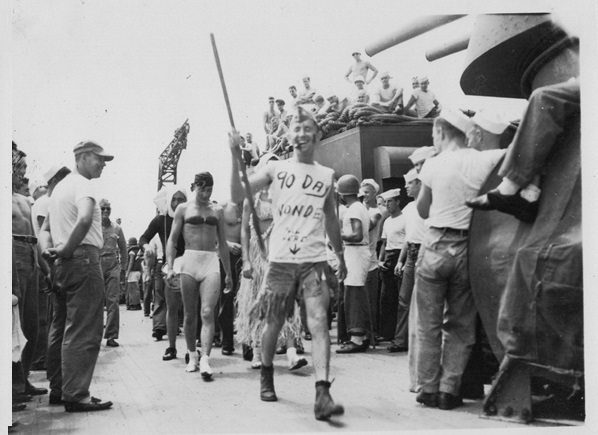
The Polywogs were so numerous and so green that King Neptune summoned the Devil to oversee the purification process. The Devil enthusiastically administered the proper cure to the Polywogs, including immersion in seawater, crawling through kitchen refuse, and wearing women’s clothes.
Officers were not spared. Above, a recent Midshipman School graduate (90-day wonder) marches cheerfully to his doom. Sailors who had previously been initiated – Shellbacks – look on approvingly.
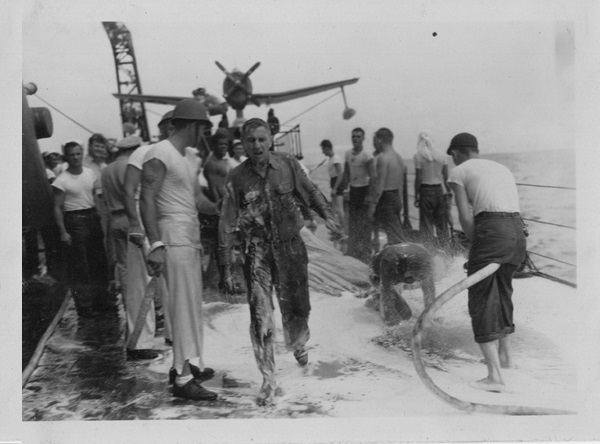
Not even the pilot of the Birmingham’s single seaplane was spared from the Devil’s not-so-tender mercies.
With their sins forgiven, their greenness thoroughly washed away, and their worthiness proven, the Polywogs graduated to the rank of experienced Shellbacks and were inducted into the Solemn Mysteries of the Ancient Order of the Deep. Sailors got to let off steam, and King Neptune acquired hundreds of loyal subjects.
I was intrigued by this observation from author Walter Stephens:
Writing evolved to perform tasks that were difficult or impossible to accomplish without it; at some level, it is now essential for anything that human societies do, except in certain increasingly threatened cultures of hunter-gatherers. Without writing, modern civilization has amnesia; complex tasks need stable, reliable, long-term memory.
Think about the octopus. It’s a remarkably intelligent creature, but its short life span precludes it from creating an enduring civilization. Imagine a human child that had to discover for itself how to make fire, the wheel, or language. As Stephens puts it, “Writing enabled memory to outlast the human voice and transcend the individual person.” Tradition, our inheritance from countless forbears, is the infrastructure that makes us fully human. Without it, we’d be in the same boat as the octopus. Except we wouldn’t have boats.
As Stephens reminds us in his thought-provoking article, the written word is the most powerful tool — or weapon — we have yet created. No wonder we view language as a “wondrous, mystic art.”
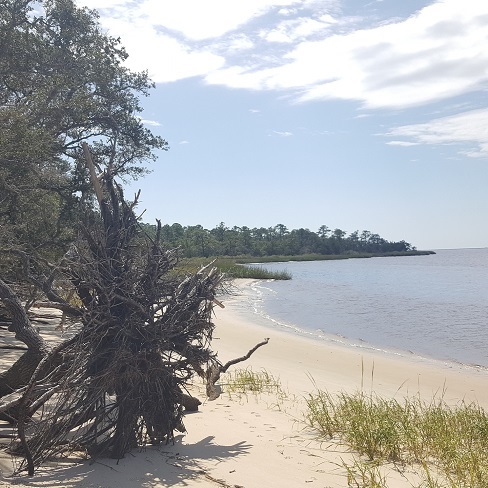
Wondrous indeed. And surely an art. Early on, I was fascinated by stories, and still love reading and writing. Words enable us to connect with the past, the present, and the future, and allow the individual to pass on the things that enchant and delight us. I love describing the joys and terrors of life, from the roar of a storm on Onslow Bay, the smell of a wood campfire at a mountain camp, or the taste of a steamed oyster. And while passing our thoughts and feelings to others is an essential life skill, the art of writing is a life-long pursuit. As Hemingway once put it, “We are all apprentices in a craft where no one ever becomes a master.”
“Those who contemplate the beauty of the earth find reserves of strength that will endure as long as life lasts. There is symbolic as well as actual beauty in the migration of the birds, the ebb and flow of the tides, the folded bud ready for the spring. There is something infinitely healing in the repeated refrains of nature—the assurance that dawn comes after night, and spring after the winter.”







 M.C. Tuggle, Writer