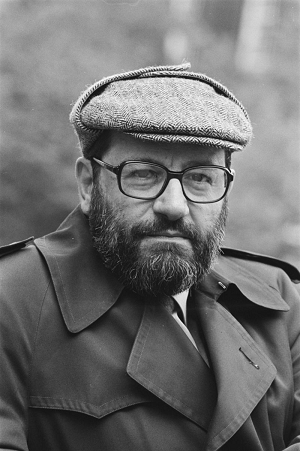
 Photo by Rob Bogaerts
“The person who doesn’t read lives only one life. The reader lives 5,000. Reading is immortality backwards.” – Umberto Eco
Photo by Rob Bogaerts
“The person who doesn’t read lives only one life. The reader lives 5,000. Reading is immortality backwards.” – Umberto Eco

The Flash Fiction Press has published my story The Clincher, now available online.
The idea for this story came to me while reading William Lind’s introduction to Fourth Generation Warfare. Lind predicts that future battles will hinge on public perceptions of the combatants:
Fourth generation adversaries will be adept at manipulating the media to alter domestic and world opinion to the point where skillful use of psychological operations will sometimes preclude the commitment of combat forces. A major target will be the enemy population’s support of its government and the war.
Propaganda has long served as a “Fifth Column” for invading armies. During the 1968 Prague Spring uprisings against the Soviet Union, Czech communists assured their restless population that Soviet troops entering Prague weren’t really invading — they were just dropping by to preserve order and stop “counter-revolutionaries,” thereby ensuring Czechoslovakia’s peace and prosperity.
 “We’re from Moscow, and we’re here to help.”
Lind argues that in future conflicts, warring groups will clash over narrative even more than over territory, making the control of public opinion “the dominant operational and strategic weapon.” It occurred to me that 4GW will weaponize the advertising industry. That made me think about Don Draper, Roger Sterling, and the other rapacious but fascinating characters from Mad Men. I wondered how they’d react if space aliens asked them to handle a PR campaign to prepare the Earth for invasion.
Yeah, they’d take that account.
Please leave comments at The Flash Fiction Press. Thanks!

The best fiction and writing blog posts from around the ‘net, all guaranteed to make you a literary cult figure. Compiled by bob.
Bob Mayer – Give Your Protagonist An Anomaly
Jami Gold – Story Description: Finding the Right Balance
LionAroundWriting – The Perfect Story
June Lorraine Roberts – Chain gang: authors/writers talk about their work
Geekritique – The Most Anticipated Science Fiction and Fantasy Books of 2016
Nicholas Conley – The Writer’s Role in Society
CreativeWriter – 3 Quotes, 3 Days Challenge
Tony Tulathimutte – How to name your fictional characters

Dan Brown, please call your office.
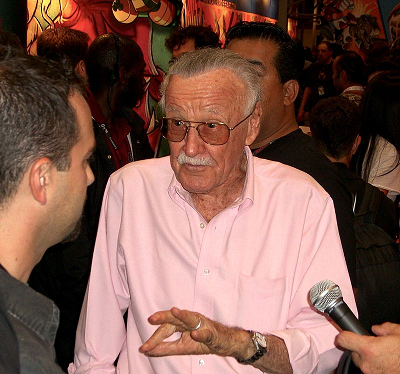 Photo by Luigi Novi
Sci-fi/fantasy writer Damien Walter makes his case in The Guardian:
Before Lee, heroes were all supermen, or strutting John Waynes, who triumphed through strength or ruthlessness. Lee’s heroes triumph through brains, invention, innovation and most of all, SCIENCE. It’s all oddly prescient of what geek culture would become 50 years later, with hackers and tech giants wielding enormous power for good and ill. Given the vast popularity of Marvel among geeks, it’s not inconceivable that Lee helped inspire a lot of those people who are reshaping our world today.
But Stan Lee’s stories are all just weird fantasy and make-believe! They’re not real. Yes, but as we move from what physicist Michio Kaku calls “the age of scientific discovery to the age of scientific mastery”, Lee’s super-science fantasies seem less preposterous and more prophetic. Like all great mythical worlds, the Marvel universe speaks to us in metaphors, symbols and other non-literal truths. And as the dreamer who brought these modern myths into reality, Stan Lee may well be remembered as one of literature’s greatest heroes.
Lee’s other radical innovation was to give his characters depth. Marvel super-heroes had to fight self-doubt before they could fight the bad guys. Some, such as Benjamin J. Grimm, felt their powers were a curse. And most startling of all, Marvel super-heroes sometimes fought each other, and even changed sides. When I discovered Marvel comics as a pre-teen, I felt like I’d found an illustrated guide to many of life’s mysteries.
And Marvel stories were intelligent, insightful, and full of delicious twists. Fantastic Four 51 is a prime example. The story, titled “This Man, This Monster,” was not just an exciting tale but emotionally compelling. Such a plot and character arc could only come from an authentic and serious talent. The reason Stanley Lieber changed his name to Stan Lee was because, as Lee himself put it, “I felt someday I’d write ‘The Great American Novel’ and I didn’t want to use my real name on these silly little comics.”
Those who turn their noses at comics (or pulp fiction or sci-fi and fantasy) are missing some great, worthwhile stories. As the recently departed Umberto Eco observed, “Mickey Mouse can be perfect in the sense that a Japanese haiku is.” A well-crafted story is to be appreciated for what it is, no matter the genre.
Friends don’t let their writing friends down! Great advice from A. E. Stueve.
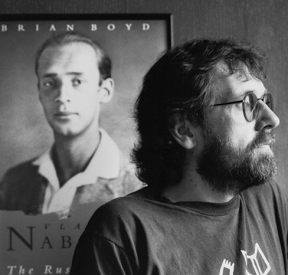
“Everything is humanities. The sciences are a form of the humanities. They involve traditions of inquiry; they involve social engagement with ideas. They do not happen with a naked brain going out and encountering a nonhuman world. And the better we understand ourselves, the better we can do science, as well. So I don’t see them—the sciences and the humanities—as being at all different.” Brian Boyd, author and Professor of English at the University of Auckland.
The spirit of C. P. Snow lives!

“I believe as an actor you are absolutely the servant of the writer and it’s your job to be an efficient channel between the writer and the audience.” – Alan Rickman
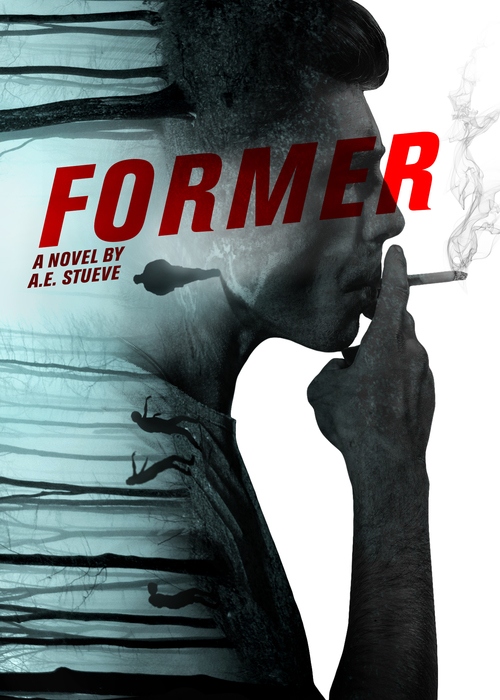
The world A. E. Stueve creates in his just-released novel Former is warped, chilling, and bristling with menace. Battered and terrified from the Infection War, the survivors distrust one another. Their greatest fear is of formers, people who were once infected with a man-made disease that takes over the mind and fills the victim with one over-powering urge, to attack and eat other people. A shadowy and powerful pharmaceutical firm, Profine, which invented the cure, now houses the formers in compounds where it protects them and works to return them to something close to normal lives.
But the jumpy population outside Profine’s protective compounds is vulnerable to canny and unscrupulous media manipulators. One popular blogfeed is Zex Starshine’s Unreality, where master rabble-rouser Zex Starshine beguiles and horrifies his audience with startling revelations about corporate greed, government conspiracy, and the secret threat of another former uprising. (What are those people planning in those sprawling compounds?)
I know what you’re thinking — this horrifying world sounds like today’s venomous climate of mutual demonization and seething hatreds. In both our world and the world of Former, the Internet, that impossible-to-kill cockroach of misinformation overload, fairly throbs with voices screaming about what “those people” are up to now.
For Billy Dodge, the protagonist of Former, things go from dystopian to apocalyptic when he storms out of a group therapy session for formers like himself and ends up accused of complicity in murder. His only chance of clearing himself is to trust the mysterious figures within Profine. Billy has already lost much, including his wife, who killed herself rather than succumb to the dread disease. His brush with death and survivor guilt have made Billy world-weary, yet he is driven to prove to himself he’s still alive, sometimes in ways that only make things worse.
This novel manages to be both bleak and breathtaking, grim and darkly comical. It’s impossible not to sympathize with Billy Dodge despite his impulsiveness and semi-suicidal urges and bad choices. Billy’s determination to convince himself he’s not only a human being, but still himself, despite the disease that once made him a monster, reminds me of the works of Philip K. Dick.
I’ll make a prediction: This book will be used in writing classes to illustrate the right way to create an unforgettable atmosphere, one that perfectly suits the story that emerges from it. Highly recommended.
You may also be interested in the reviews at Kirkus and Foreword Reviews.
Orchestrating Vangelis’ soaring keyboards and Sean Connery’s powerful reading of Cavafy’s poem creates an inspiring and unforgettable experience. Do yourself a favor and listen to it in its entirety. Your challenges will shrink before your eyes.
For a little refresher on the significance of the journey to Ithaca, check out the About section in this review of Robert Fagles’ translation of The Odyssey.
 M.C. Tuggle, Writer