Tag Archives: fantasy fiction

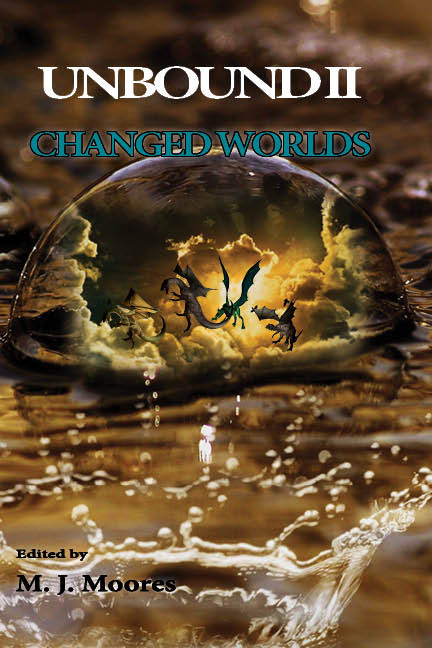
Unbound II: Changed Worlds Anthology

Unbound

Science Fiction and Fantasy Publications will publish Unbound II: Changed Worlds in August. This themed anthology includes my short story “Hunting Ground.” From their web site:

Our second in the groundbreaking collection of short stories with the underlying theme Changed Worlds. The Unbound Anthology series published by Science Fiction and Fantasy Publications started with more than 200 submissions. Carefully, we examined each story and finally ended with the best of the best for your enjoyment.

This collection covers both Science Fiction and Fantasy, taking you around the universe and into worlds beyond your imagination.

And here’s a suggestion for my fellow writers: if you’re looking for a great venue for your work, check out Science Fiction and Fantasy Publications. Editor M.J. Moores was a pleasure to work with, and I must say that her advice made my story stronger.

In other news, I still have five stories submitted to various publishers, all looking for a little slush pile love. Next week I’m meeting with my critique group to hear their ideas on a sixth story, which I’ll submit somewhere after I incorporate their suggestions. My goal this year was to always have at least three active submissions out, and I’ve held to it so far.

Wish me luck!

Witch Flambé

Witch Flambe

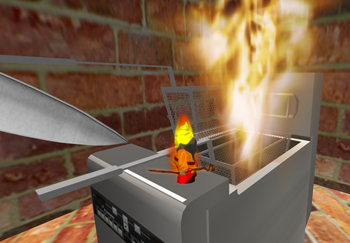
The latest edition of Aurora Wolf features my short story “Witch Flambé.” Set in and around modern-day High Point, North Carolina (my home town), it’s about two old friends now in vastly different circles who team up to clear a young lady who’s accused of setting fires at her employer’s “guerilla dinners.” Someone’s casting spells on the “underground dining” events, and our protagonists must seek out the help of a Scots-Irish granny witch.

Appalachian Granny Magic is one of those old Southern ways that have recently enjoyed renewed interest:

The tradition is a very old one, dating all the way back to the first settlers of the magical Appalachian Mountains who came over from Scotland and Ireland in the 1700’s. They brought along their even older Irish and Scottish Magical Traditions with them. Those two ‘old world’ Traditions were then blended with a dash of the local tradition of the Tsalagi (Now, called the Cherokee Indians.)

Because of the rural and secluded nature of the Appalachian community, the old customs, wisdom, and practices were not as often lost, forgotten, or ‘modernized’ as the ‘old world’ traditions that came over to other, more urban areas of the ‘new world.’ Therefore, one will often find that ancient Irish or Scottish songs, rhymes, dances, recipes, crafts, and ‘The Craft,’ are more accurately preserved in Appalachia than even in Ireland or Scotland.

This story was a blast to write. It has just about everything I love: good food and drink, old friends, the surprisingly enduring power of the past, nature’s astonishing ability to rejuvenate — all topped off with a delightfully scary confrontation at the end. I hope you enjoy it.

Suspense, Mystery, and Romance Make “Aztec Midnight” a Must-Read

Manhattan

The Manhattan with a twist blog offers readers “an all-encompassing perspective on living in New York City.” The site’s book review section, The Twisted Library, features this reaction to Aztec Midnight:

The novella follows Dr. Jon Barrett, an American archaeologist who was asked to come down to Mexico and retrieve an ancient, valuable (Aztec) weapon before the drug cartels get to it first. I found myself thinking, “well, this is fun to read” while reading, often, and, given the subject matter, that is a feat. Not many people would view a book that combines history, violence, criminals, and mystery as “fun,” but it truly was. Each page was like another step on an exciting journey, and, as a reader, I really did not have any idea where the story would turn next.

I also particularly enjoyed how the author throws in little romantic parts between the narrator and his wife. For example, when Jon returns home from a tiresome excursion, he walks in on his wife relaxing on the couch, and he takes a moment to simply admire the way she looks. He said it even temporarily alleviated him from the stressful thoughts and events that made up his day. This was a very nice touch, in my opinion. It reminds the readers that although there is a great deal taking place, and whole lot of drama, Dr. Barrett’s number one priority at the end of the day (literally and figuratively) is his wife and his love for her. This knowledge of his character plays an important role when, later, a few of his most prized possessions are put in jeopardy.

This novella is short, but filled to the brim with action and intrigue. Tuggle blends edge-of-your-seat scenarios with realistic and genuine dialogue. The characters are authentic and believable, while the story is unique and undoubtedly fascinating. No matter what your usual genre of books may be, “Aztec Midnight” is worth checking out.

Aztec Midnight is available in ebook and paperback. Check it out!

Spring tidings

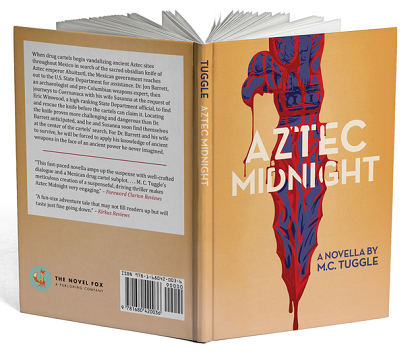
Aztec Midnight

Yes, spring is here, and things are popping out all over. First this from my publisher, The Novel Fox:

Our favorite adventure novella, Aztec Midnight, is now literally a page-turner!

Aztec Midnight is available in both ebook and print. Purchase your paperback copy here

Yes, 2016 is off to a good start. So far, I’ve sold three sci-fi/fantasy short stories to three different publishers. One, The Clincher, came out in early March. A second is due in late May, and another will appear in a print anthology in September. I’ve completed the final edits and signed the contracts, so it looks like full steam ahead. Here’s to a productive 2016!

The Mysterious Presence of Tom Bombadil

Tom Bombadil

Why did J.R.R. Tolkien stick this odd figure into The Lord of the Rings? What’s Tom Bombadil’s purpose in the story?

No doubt he’s a mysterious character. Elrond, the Lord of Rivendell, confesses he knows nothing about Bombadil. Gandalf calls Bombadil “the eldest and fatherless,” and the dwarves refer to him as “the ancient” or “belonging to the ancient past.”

But theologian Dwight Longenecker argues that Bombadil is central to the theme of Tolkien’s sweeping epic, which unites Christian themes with pre-Christian European myths. Longnecker sums up Bombadil’s role in this gorgeous, remarkable paragraph:

Tom Bombadil, like paganism, is there before everything else. He represents therefore the primitive and natural instinct in man. He stands for the Neanderthal gazing in wonder at his sister the moon and his brother the sun. He points to the rustic soul connecting silently with every living thing and knowing that there is something and someone beyond. He is the child trembling at the thunder and smiling with spring rain. As such he stands for mankind, formed from the earth at one with the earth and all that is within it. He is at one with nature and at the same time the steward of creation. Tom Bombadil is simply Tom Bombadil, but if he must be compared to anyone else in the Christian cosmos, then he and Goldberry are Middle Earth’s quaint and beautiful echo of Adam and Eve.

Understanding Bombadil helps us better appreciate Tolkien’s work. By honoring and even celebrating pagan Europe, Tolkien declared that the pagan past is not some gross error or accident, nor a dead realm to be shunned or forgotten, but a vital part of who we are today. The past, says Tolkien, is full of wisdom and genuine feeling we moderns can re-discover and appreciate.

Tolkien’s theology was decidedly different from fundamentalists, such as the Puritans, who intellectualized religion and sought to “purify” themselves and the rest of society of traditional practices and beliefs. In their zeal to rid the world of its backward and sinful ways, the Puritans hung their fellow citizens as witches. How different is that mindset from today’s fundamentalists in ISIS and the Taliban, who have also declared war on what they see as a sinful, fallen world? Whether they’re blasting pre-Islamic statues or butchering “infidels,” they’re acting on their belief that the existing order must be destroyed so the One True Way can prevail.

And aren’t we guilty of the same thing when we beat ourselves up for past mistakes? Or for having made the wrong choice long ago? I’ve always believed that theology and philosophy arise from one’s self-image. Those who loathe themselves are often unforgiving toward others. Accepting your whole self means, as Dickens put it, living “in the Past, the Present, and the Future.” It’s the first step toward self-forgiveness, which leads to forgiving and loving others.

Terrorism, Hope, and Ebenezer Scrooge

Scrooge

I can’t help but think of what Christmas will be like for the 14 families who lost loved ones in the San Bernardino massacre last week, or for the families of the three who were gunned down at the Colorado Springs Planned Parenthood facilities last month.

Even for those of us who were not immediately affected, there is still that haunting reminder of the needless suffering we, as humans, inflict on each other.

And yet — and yet — we should not let ourselves give in to despair. Tempted as we may be to concede that evil appears entrenched in the human heart, we cannot surrender our hope that there is a spark of good in everyone, a spark worth noticing and perhaps even cultivating as best we can. As hard as it is to imagine, I believe the shooters in both tragedies thought they acted for worthy reasons.

Robert Dear, Jr., the Colorado Springs killer, ranted in court, “I’m guilty. There’s no trial. I’m a warrior for the babies.” Twisted? Yes. Egomaniacal? No doubt. But even this murderer believed he was protecting the innocent and helpless.

As for Farook and Malik, we can only speculate that they considered themselves warriors for their faith. Nevertheless, whatever was churning through their minds when they abandoned their six-month-old baby and drove to the San Bernardino County Department of Public Health with two .223-caliber semi-automatic rifles and pipe bombs, their actions certainly warranted the swift and decisive response the SWAT team meted out.

That said, we cannot ignore the powerful forces that work on terrorists such as Dear, Malik, and Farook. Modern alienation devastates the isolated individual, and many dedicate themselves to what appears as a last, desperate effort to accomplish something significant and worthwhile. In his article, The Psychological Sources of Islamic Terrorism, Dr. Michael J. Mazarr of Georgetown University writes:

Mass technological life tranquilizes people, drains us of our authenticity, of our will and strength to live a fully realized life. The result of this process is alienation, frustration, and anger. A few themes stand out from this broad concept.

One has to do with the burdens of freedom and choice. By breaking the chains of tradition and conformity, modern life offers a bewildering, paralyzing degree of choice about everything from career paths to marriage partners to fashion. When you can potentially be anything, the existentialists worry, you may in fact be nothing — and have no identity at all.

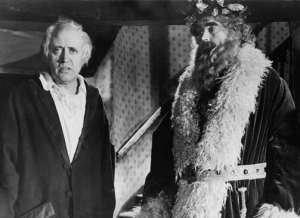
Alienation from tradition and from others is not freedom, but a curse. In our frantic pursuit of material gain, we lose sight of life’s true purpose. No one has better enunciated the antidote than the protagonist of A Christmas Carol, that classic fantasy tale of Christmas. After the three spirits teach him what Christmas means, Ebenezer Scrooge makes his famous vow:

“I will honour Christmas in my heart, and try to keep it all the year. I will live in the Past, the Present, and the Future. The Spirits of all Three shall strive within me. I will not shut out the lessons that they teach!” ― Charles Dickens, from his novella A Christmas Carol

Stubbornly seeking the spark of good that’s buried even in the heart of old Ebenezer Scrooge gives us hope, real hope, because very often we do indeed find that spark if we simply open our eyes to it. That insight into human nature makes for better fiction, too. The best literature can be a means to form and strengthen social ties because it helps us appreciate the hidden feelings of others. In my novella Aztec Midnight, the protagonist, Jon Barrett, must find and deliver an ancient Aztec relic to men who have kidnapped his wife. However, a local militia stands in his way — not because its members are evil, but because the relic will empower the drug cartels that terrorize them. Jon Barrett’s dilemma is one we can all appreciate.

Want to help make Christmas the season of hope it was meant to be? You can start by reading a good book. Or better yet – by giving one.
Salman Rushdie on Fantasy

Rushdie

Salman Rushdie, who was knighted in 2007 for his contributions to literature, will speak here in Charlotte at Queens University tomorrow night. He’s earned his honors. Because of Rushdie’s unblinking portrayal of what he deemed religious fanaticism, both Ayatollah Khamenei and Al-Qaeda have called for his murder. In London a few years back, only dumb luck saved him from a fanatic’s book bomb (a real one, not to be confused with one of Larry Correia’s book bombs!).

This is a man who has risked his life for his art. So when Rushdie speaks, he’s worth paying attention to. His observations on fantasy fiction deserve wide circulation:

I think that magical realism is one version of a kind of literature that is found all over the world. It is much older form with, in many ways, a richer tradition than the realist tradition.

These stories are very old. I just thought one of the things I like about the old stories is while they are full of flying carpets and ogres and dragons and things like that, they are completely realistic about human beings. The people you find in the stories are beautifully drawn.

“Ogres and dragons and things like that.” Works for me. And Rushdie’s comment about the power of satire struck me as pitch-perfect: “Satire is the classic weapon that artists have always had against hypocrisy and tyranny.”

Jonathan Swift and Ambrose Bierce would be proud.

Messages on missiles: Here is a Sugar Plum for You!

Sling bulletsAncient Greek sling bullets with engravings. One side depicts a winged thunderbolt, and the other, the Greek inscription “take that” in high relief.

Ancient Origins has a great introductory article on slings.

I’ve long been fascinated by primitive weapons, and I think every fantasy author should know the basics of the ones he writes about. Not only does such knowledge add authenticity to the story, but helps the author get a feel for the artistry and discipline involved in mastering such a weapon. You don’t just pick up a sling and start hitting your target. The video below of a slinging competition will give you an idea of the deadliness of this elegant and simple weapon:

In my novella Aztec Midnight, the protagonist, Jon Barrett, learned how to use the sling from an elderly Mescalero Apache in Texas. Alone and defenseless in Cuernavaca, he must track down the drug cartel members who have kidnapped his wife. Barrett constructs a sling on the run, and approaches the cartel’s hideout. It’s night, and he can hear a guard treading back and forth on the dark front porch. How can Barrett take the guard down without alerting the others inside?

Precious minutes slipped by. Nothing stirred. In the distance, another train approached Cuernavaca station. Its whistle barely rose above the subdued rumble.

A ghostly silhouette appeared at the end of the porch. I realized the guard had moved in front of a shaded window. Its glow barely formed an outline. I had to take my chance. After placing the roundest rock in the pouch, I stepped forward and swung the sling. The release felt perfect.

The outlined figure did not react. Then the speeding rock tore into bushes and trees on the other side of the yard, and the guard jerked his head toward the sound.

This was my last chance. I took another step forward, slipped a rock into the pouch, swung as smoothly as I could, and released the string.

That passage still makes my blood pump.

Okay, I’ve worked at the computer long enough. Time to change, grab my sling kit, and jog down to the park for some target practice.

Therapeutic Superstition

Moonrise

Here is a heartbreaking — and, sadly, true — story of a man who was too much in tune with nature to be left alone and allowed to be happy. From First Things:

At any rate, the thing I want chiefly to emphasize about Reuben is that he was a remarkably happy man: harmless, kind, and always in good spirits. In fact, I do not think I have ever known anyone else who took such evident delight in the world. He told me he had felt himself surrounded at all times by friends, human and otherwise: A walk in the country for him was a visit to the companions of his childhood. He spoke of “creation” (he rarely used the word “nature,” it seems to me) as an essentially “amiable” reality if one approaches it correctly. He may have been one of the few truly happy souls I have known in my life.

Reuben’s fate reminds me of this little story.

Russell Kirk on Fantasy

Russell Kirk

Russell Kirk was a literary critic, historian, and political theorist. He passionately believed that literature was an essential part of one’s education, since it exposes students to “splendor and tragedy of the human condition, to constant moral insights, to the spectacle of human history, to love of community and country, to the achievements of right reason.”

Here are his reasons for reading and teaching fantasy, along with a few recommendations. From The Intellectual Conservative:

If young people are to begin to understand themselves, and to understand other people, and to know the laws which govern our nature, they ought to be encouraged to read allegory, fable, myth, and parable. All things begin and end in mystery. Out of tales of wonder comes awe—and the beginnings of philosophy. The images of fantasy move us lifelong. Sir Osbert Sitwell, when asked what lines of poetry had most moved him in all his life, replied candidly, “Froggie would a-wooing go, whether his mother would let him or no.”

So here are my fantastic recommendations—

John Bunyan, The Pilgrim’s Progress (1678-84)

William Shakespeare, A Midsummer Night’s Dream (1596-96)

Nathaniel Hawthorne, The House of the Seven Gables (1851) or (perhaps preferably) The Marble Faun (1860)

Robert Louis Stevenson, Kidnapped (1886) or one of his volumes of short stories

Ray Bradbury, Something Wicked This Way Comes (1962) or Dandelion Wine (1957) (Bradbury is something far better than an accomplished “science fiction writer;” he is a man of remarkable ethical insights and great power of style.)

Walter Scott, Old Mortality (1816) or The Heart of Midlothian (1818), (These are much more important romances than is Ivanhoe (1819), so commonly taught).

Select poems of Spenser, Burns, Coleridge, Wordsworth, Shelley, Tennyson, Whittier, Longfellow, Chesterton, Kipling, Masefield, Yeats, Frost, and others—selected with and eye to the marvelous and the mysterious.