Tag Archives: Southern Fiction

What Is A ‘Southern Writer’?

HowardRobert E. Howard

Laura Cooper makes the case that we can better understand and appreciate Marcel Proust if we consider him in the Southern literary tradition. She begins by offering a handy introduction to what constitutes Southern writing:

Eudora Welty thought it came from the cultural habit of tight, specific focus, on the land and the people close at hand:

“The Southerner is a local person – to a degree unknown in other sections of the United States. The Southerner always thinks of himself as being from somewhere, as belonging to some spot of earth.”

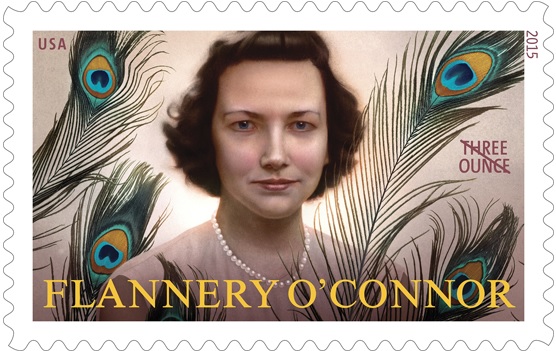
Then there’s our collective past, what Willie Morris called the “burden of memory and [the] burden of history” we all carry “in our bones.” We’re the writers we are, [Flannery] O’Connor explained, because we have had our Fall. We have gone into the modern world with an inburnt knowledge of human limitations and with a sense of mystery which could not have developed in our first state of innocence – as it has not sufficiently developed in the rest of our country.

In Walker Percy’s blunter terms, Southerners write like we do because “we lost the War.”

I occasionally hear the argument that regional styles are confining, but I disagree. You can’t write without having something to say, and nothing propels a story forward like a clear and urgent worldview. The acknowledgement of human limitations is a much-needed brake on a society racing down the dead-end road of conquering and re-engineering nature through gene splicing, Frankenfoods, and Posthumanism.

Walker Percy’s assertion that Southerners write the way we do because “we lost the War” not only ties in with O’Connor’s point about accepting human limitations, but also recognizes what gives Southern fiction its universal appeal. The history of the rest of the world includes the bitterness of losing a war and being occupied; the North never experienced that.

Identifying and embracing the local is not limiting at all, but the starting point for discovery and learning. As George Eliot once observed, “A human life, I think, should be well rooted in some spot of native land, where it may get the love of tender kinship for the face of earth, for the labors men go forth to, for the sounds and accents that haunt it, for whatever will give that early home a familiar unmistakable difference amidst the future widening of knowledge … The best introduction to astronomy is to think of the nightly heavens as a little lot of stars belonging to one’s own homestead.”
Best Fiction and Writing Blogs

Ron Rash

The best fiction and writing blog posts from around the ‘net, all guaranteed to make you a [insert adjective for your region] Shakespeare. Inspired by ron.

Joanne Jeffries and Julian YanoverPoets University Infographic
Erin Beth LilesCreating Lifelike Fictional Characters
Distance LandaverdeA Love Affair with Organic form
Miguel Olmedo MorellThree representations of the fall in Lovecraft’s dream cycle
PenstrickenTen Writing Commandments
J. B. HenryInterview With Tom Abrahams
Ron RashHow I Write

New Words, New Worlds

sunrise

Novelist and teacher M. Thomas Gammarino experienced an epiphany when he taught two courses in the same semester, one on science fiction, and another in modernism. Gammarino expected the two genres to clash, but happily discovered they supplemented each other. The reason, he explains in this Omni article, is that all art aims to enable us to see the world more intently by presenting it in unfamiliar and challenging ways:

In his 1917 essay “Art as Device,” Russian formalist poet Viktor Shlovky gave us the term ostranenie to describe the primary function of art. The term is usually translated as “defamiliarization,” though it literally means “strange-making.” The job of art, in other words, is to renew our eyes by making the familiar appear strange. Other modernists had— or would— put forth variations on this idea, from Mallarmé’s “Donner un sens plus pur aux mots de la tribu” (purify the words of the tribe) to Ezra Pound’s “Make it new,” and modernist critics regularly invoke this idea to illuminate the sorts of linguistic experiments writers like Gertrude Stein and James Joyce were up to.

I heartily agree. Both fantasy and sci-fi renew one’s sense of wonder in ways literary fiction cannot. That’s not to say literary fiction is incapable of reawakening the awe we felt as a child discovering our shiny, new world. Energetic, evocative writing in any genre helps us re-imagine the world around us, forcing us to see it anew. But literary fiction tends to focus on the inner world, while fantasy and sci-fi direct us toward the outer world — or even toward new, imagined worlds. Speculative fiction always goes big, reminding us of our role in society, the world, and the universe itself.

That’s what makes fantasy and sci-fi such powerful springboards for the imagination.

Quote of the day

Faulkner

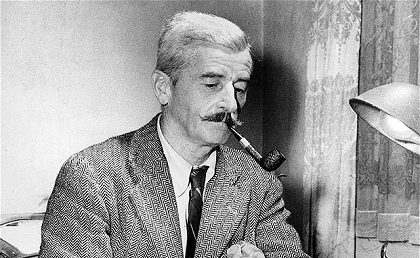
“The aim of every artist is to arrest motion, which is life, by artificial means and hold it fixed so that a hundred years later, when a stranger looks at it, it moves again since it is life. Since man is mortal, the only immortality possible for him is to leave something behind him that is immortal since it will always move. This is the artist’s way of scribbling ‘Kilroy was here’ on the wall of the final and irrevocable oblivion through which he must someday pass.” – William Faulkner

Witch Flambé

Witch Flambe

The latest edition of Aurora Wolf features my short story “Witch Flambé.” Set in and around modern-day High Point, North Carolina (my home town), it’s about two old friends now in vastly different circles who team up to clear a young lady who’s accused of setting fires at her employer’s “guerilla dinners.” Someone’s casting spells on the “underground dining” events, and our protagonists must seek out the help of a Scots-Irish granny witch.

Appalachian Granny Magic is one of those old Southern ways that have recently enjoyed renewed interest:

The tradition is a very old one, dating all the way back to the first settlers of the magical Appalachian Mountains who came over from Scotland and Ireland in the 1700’s. They brought along their even older Irish and Scottish Magical Traditions with them. Those two ‘old world’ Traditions were then blended with a dash of the local tradition of the Tsalagi (Now, called the Cherokee Indians.)

Because of the rural and secluded nature of the Appalachian community, the old customs, wisdom, and practices were not as often lost, forgotten, or ‘modernized’ as the ‘old world’ traditions that came over to other, more urban areas of the ‘new world.’ Therefore, one will often find that ancient Irish or Scottish songs, rhymes, dances, recipes, crafts, and ‘The Craft,’ are more accurately preserved in Appalachia than even in Ireland or Scotland.

This story was a blast to write. It has just about everything I love: good food and drink, old friends, the surprisingly enduring power of the past, nature’s astonishing ability to rejuvenate — all topped off with a delightfully scary confrontation at the end. I hope you enjoy it.

Quote of the day

Ron Rash

“I was almost 40 when my first book was published, and I’d been getting rejection slips and rejection slips. But ultimately, it was not about getting published. It’s about doing this thing that I feel like is part of who I am. My life would be incomplete if I weren’t doing this.” – Ron Rash, author of Serena.

About those literary labels …

Bottom line: They’re all useful. And like anything useful, they can be misused.

Over at Thoughts on Fantasy, Nicola Alter argues for the necessity of literary labels:

As a reader, I love genre. I love that there are labels in the different parts of the book store, or labels on Goodreads, that help me find the kind of story I’m looking for.

As a writer, I love genre, because it allows me to convey the kind of story I am writing with a few simple words. I love to think about stories I could write that use elements of different genres, or that subvert or fulfill genre expectations in interesting ways.

Alter also weighs in on the debate she calls “The Myth of Genre Fiction vs Literary Fiction.” It’s true they are distinct categories, but they are not castes. One is not superior to the other. There are good and bad examples of each. Plot and characterization are vital in both.

I can relate. I’ll get an occasional raised eyebrow for considering both Hemingway and Howard as mentors. But I learned a great deal from reading Hemingway and Howard. Both authors crafted great stories that still crackle with energy.

That said, another label that generates more heat than light among readers and writers involves region. Dannye Romine Powell dismisses regional labels as restrictive, even dismissive. But I tend to side with Hailey Foglio on this:

Lately, I’ve been thinking about the identity of writers and how we define ourselves. Writers label themselves based on location, genre, themes, etc. Personally, I refer to myself as a Young Adult writer because that’s what I love and that’s what I do. A couple weeks ago, we had a wonderful writer visit us at WVU named George Singleton. George is from South Carolina, and during his visit, George told us that he had been invited to an Appalachian writing conference. But he distinctly argued, “I don’t consider myself an Appalachian writer; I’m a Southern writer.”

I consider myself a Southern writer primarily writing fantasy fiction, and I see nothing incongruous in adapting the wild and fantastic to traditional themes. The best apologist for this approach was Flannery O’Connor, who famously said, “You have to make your vision apparent by shock — to the hard of hearing you shout, and for the almost blind you draw large and startling figures.”

Works for me.