Tag Archives: writing

Sunset Boulevard

Sunset Boulevard

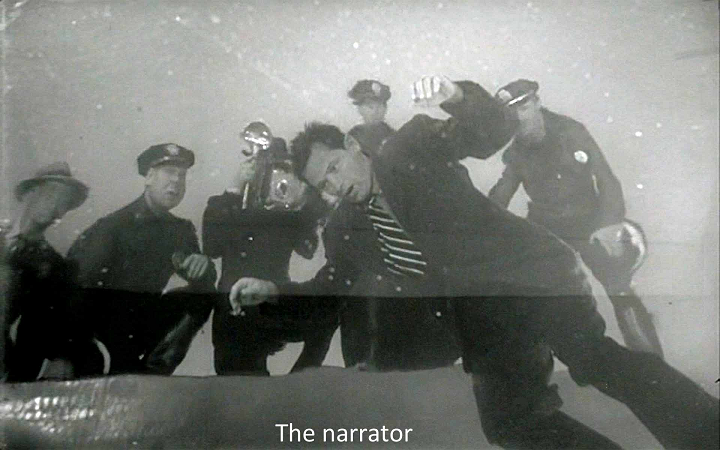
For my birthday, my wife took me out for a night on the town that included a screening of Sunset Boulevard at the ImaginOn playhouse. It was part of a series entitled “Hollywood Shoots Itself: 11 Movies About Movies.” I saw Sunset Boulevard decades ago while working as a projectionist at a small television station, and was amazed at what I could remember — AND at what I’d forgotten.

Joe Gillis, played by William Holden, is an ambitious writer in 1949 Hollywood, but hasn’t sold a script in months. In typical writerly fashion, he wonders if just maybe his scripts are “too original” for Hollywood. (Hey, I’ve been guilty of that. How about you?) Anyway, Gillis finally snags an appointment with a producer, and makes his best elevator speech about a script for a movie with the working title Bases Loaded:

SHELDRAKE
All right, Gillis. You’ve got
five minutes. What’s your story
about?

GILLIS
It’s about a ball player, a rookie
shortstop that’s batting 347. The
poor kid was once mixed up in a hold-
up. But he’s trying to go straight —
except there’s a bunch of gamblers
who won’t let him.

SHELDRAKE
So they tell the kid to throw the
World Series, or else, huh?

GILLIS
More or less. Only for the end
I’ve got a gimmick that’s real good.

Lesson for Writers Number 1: Your story has to stand out. Not only must the stakes be high, but you have to have a concept that’ll intrigue and entertain. It’s too easy to resort to stale formulas and hope YOUR version of a plot that’s been done to death will be different because YOU are the writer. News flash: It’ll take more than good writing or, worse, some kind of gimmick to get readers’ attention. Writers have to offer both a theme that readers will identify with as well as an interesting new twist on that theme. Gillis just doesn’t get it.

But he runs into someone who does when Sheldrake summons Betty, one of his readers, played by a businesslike but adorable Nancy Olson:

BETTY
Hello, Mr. Sheldrake. On that Bases
Loaded. I covered it with a 2-page
synopsis.
(She holds it out)
But I wouldn’t bother.

SHELDRAKE
What’s wrong with it?

BETTY
Just a rehash of something that
wasn’t very good to begin with.

Ouch. But Betty’s right about Gillis’ script. In fact, everyone can see it’s a stale muffin except Gillis. Betty and Gillis gradually forget their awkward first meeting and couple up, but guess what? Even after Betty falls in love with Gillis, she still thinks Bases Loaded is a turkey.

That brings us to Lesson for Writers Number 2: Don’t take criticism personally. When you hear your wip doesn’t have what it takes, it doesn’t mean your readers don’t like you. Consider that the problems come from your manuscript rather than the debased natures of the philistines who don’t swoon over your work.

If you haven’t seen Sunset Boulevard, or haven’t seen it in a while, check it out. It’s a treasure chest of hilarious, sad, embarrassing, and educational scenes for all writers.
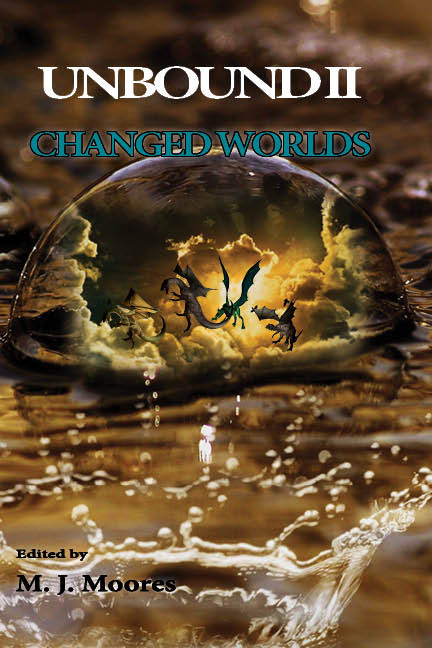
Unbound II: Changed Worlds Anthology

Unbound

Science Fiction and Fantasy Publications will publish Unbound II: Changed Worlds in August. This themed anthology includes my short story “Hunting Ground.” From their web site:

Our second in the groundbreaking collection of short stories with the underlying theme Changed Worlds. The Unbound Anthology series published by Science Fiction and Fantasy Publications started with more than 200 submissions. Carefully, we examined each story and finally ended with the best of the best for your enjoyment.

This collection covers both Science Fiction and Fantasy, taking you around the universe and into worlds beyond your imagination.

And here’s a suggestion for my fellow writers: if you’re looking for a great venue for your work, check out Science Fiction and Fantasy Publications. Editor M.J. Moores was a pleasure to work with, and I must say that her advice made my story stronger.

In other news, I still have five stories submitted to various publishers, all looking for a little slush pile love. Next week I’m meeting with my critique group to hear their ideas on a sixth story, which I’ll submit somewhere after I incorporate their suggestions. My goal this year was to always have at least three active submissions out, and I’ve held to it so far.

Wish me luck!

Best Fiction and Writing Blogs

Jack London

The best fiction and writing blog posts from around the ‘net, with advice and inspiration guaranteed to make you a literary adventurer. Compiled by jack.

Bob MayerTrue Grit. Writer Style.
Shaun LevinTaking Your Notebook for a Walk
Julian YanoverThe most Poetic cities in the World [infographic]
Mike CharaOn John Hudspith and Editors and Editing
Sarah K.L. WilsonHow to Avoid Major YA Errors
Andrew FergusonCreating Characters of the Opposite Gender
P. S. HoffmanWrite Everyday with these Nine Strategies
Jack LondonAdvice on Honing Your Creative Craft

Best Fiction and Writing Blogs

Lovecraft

The best fiction and writing blog posts from around the ‘net, with advice and inspiration guaranteed to make you a literary cult figure. Compiled by howard.

Joanne Jeffries and Julian YanoverPoetic WordClouds: These are the most common words in Poetry
Owen Booth24 Rules for Writing Short Stories
Fionn GrantLiterary Agent: Another Step Toward Writer Status
Jami GoldWhat Goes into Building a Movie in Our Mind?
Aerogramme Writers’ StudioOpportunities for Writers: June and July 2016
A.J. HumpageGetting Your Story To Flow
Krishna Prasad Is Poetry Dead?
PenstrickenThe (Im)perfect Protagonist
H. P. Lovecraft11 Tips for Novice Writers

Fictional Atonement

Kanan Mikaya

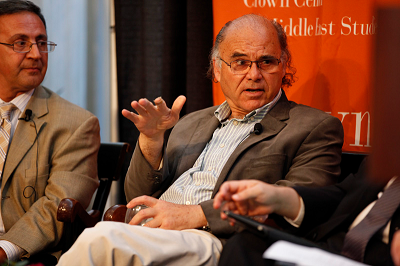
Kanan Makiya is a professor of Islamic and Middle Eastern Studies at Brandeis University who was an early and vocal proponent of the 2003 Iraq War. In fact, he was in the Oval Office with George W. Bush when both received news that Baghdad had fallen to American forces. No doubt the two congratulated each other at the time.

Then came the aftermath, as this New York Times article relates:

For years afterward, as Iraq fell apart, Mr. Makiya’s pen went silent while he struggled to make sense of what happened and his own role in the catastrophe.

As a Middle East scholar at Brandeis University, Mr. Makiya is a man of facts and history. Ultimately, though, he decided the best way to express what he felt became of Iraq was to write fiction. Only with a novel, he says, could he access “the larger meanings and deeper truths about what went wrong post-2003.”

The book is also an apology, and represents a decade of introspection for a man whose life’s work was closely associated with a costly war that was justified by the false assertion that Mr. Hussein had weapons of mass destruction and was a threat to the United States.

That says a lot about the act of writing, doesn’t it? Dr. Mikaya could have written a scholarly account explaining what went wrong in the war he advocated. But that just wasn’t enough. Mikaya had to redo the Iraq War. He had to creatively re-arrange the facts — to play with them. Fiction writing is a type of play, which development psychologists now recognize as a vital part of learning. And play isn’t just for kids — creative exploration of the world around us is both therapy and mental exercise that adults need as well.

There’s a redemptive aspect to fiction writing, also, which I believe Dr. Mikaya would acknowledge. It’s a means of making right those things from our past that still gnaw at us.

[SPOILER ALERT!]

In the novel and movie Atonement, Ian McEwan explored that aspect of writing. It’s the tale of Briony Tallis, a young girl who spitefully and wrongfully accuses her sister’s suitor of rape. That, of course, ends the wedding plans and ruins the life of both the sister, Cecilia, and her suitor, Robbie.

At the end of the story, Cecilia and Robbie are happily reunited. Then comes this admission from an elderly Briony, now a writer:

My sister and Robbie were never able to have the time together they both so longed for, and deserved. And which, ever since, I’ve… Ever since I’ve always felt I prevented. But what sense of hope, or satisfaction, could a reader derive from an ending like that? So, in the book, I wanted to give Robbie and Cecilia what they lost out on in life. I’d like to think this isn’t weakness or evasion, but a final act of kindness. I gave them their happiness.

I think Flannery O’Connor was right when she said, “There is something in us, as storytellers and as listeners to stories, that demands the redemptive act, that demands that what falls at least be offered the chance to be restored.” Atonement, whose meaning includes both paying what’s owed and seeking forgiveness, is at the heart of writing.

Don’t Derail Your Writing Career Before it Starts: 8 Ways New Writers Sabotage Themselves

Derail

Anne R. Allen has a must-read post for both new and intermediate writers. She lists and discusses self-defeating practices of many newbies, such as: relying on well-meaning but uninformed advice from friends and family, overlooking the advantages of seeking out other writers for support and mutual critiquing, and failing to create and regularly UPDATE a writer’s blog.

But the mistake that stood out for me was “Writing Novels Exclusively.” Here’s what Anne says:

Once I decided I wanted to have a writing career, I dove right into writing novels. I left short stories and poetry behind. People told me they were for amateurs. …

I was short-sighted. If I’d had more publishing credits and contest wins, I would have found a publisher for my longer fiction faster.

I’d also now be sitting on a goldmine, since short stories, novelettes and novellas are hot commodities.

Anne’s absolutely right about this. I’m not claiming prescience here; in fact, I started out writing novels as well. (And I have the rejection slips to prove it!) I turned to short stories as a way to get the hang of writing for an audience as well as learning how to make my manuscripts stand out from the slush pile. I have to say it was a winning strategy — after getting a half-dozen short stories published, I tried long fiction again, and my book Aztec Midnight was finally accepted. Now, in addition to writing short stories, I’m again working on longer pieces.

But there’s another value to publishing short stories, one I learned in my previous career as a manager in the insurance industry. The most important thing you look for when you interview potential employees is a history of getting hired and promoted. A good record tells the interviewer that other professionals in the industry have put their stamps of approval on the person under consideration. Similarly, a consistent publishing history is a testament to a writer’s dedication and ability to write stories other editors like.

Seeing that other editors have accepted your previous manuscripts doesn’t guarantee an editor will accept your next submission, but it might just tip the scales in your favor.

“If you’re a writer, declare yourself the best writer!”

Here’s an inspirational scene from one of my favorite movies, Midnight in Paris. Gil Pender, a young writer on vacation in Paris, climbs into a cab at the stroke of midnight, and when he gets out, he finds himself in 1920s Paris, where he encounters many literary and artistic legends. In the following clip, Gil gets to discuss writing with Ernest Hemingway. Gil can’t resist asking for a small favor:

Gil: Would you read it?

Ernest Hemingway: Your novel?

Gil: Yeah, it’s about 400 pages long, and I’m just looking for an opinion.

Ernest Hemingway: My opinion is I hate it.

Gil: Well you haven’t even read it yet.

Ernest Hemingway: If it’s bad, I’ll hate it because I hate bad writing, and if it’s good, I’ll be envious and hate it all the more. You don’t want the opinion of another writer.

Gil: You know what it is? I’m having a hard time getting somebody to evaluate it.

Ernest Hemingway: You’re too self-effacing; it’s not manly. If you’re a writer [slams table with his fist], declare yourself the best writer.

Ha! Yeah, that sounds like Ernie. And he’s right: It takes more than a little self-confidence to put your heart into a story and hit that “Send” key. You don’t know what the person judging your work is going to think. That’s scary — definitely not for the weak of heart.

Jami Gold recently addressed this in a great blog post titled “What Helps You BE a Writer?”:

Outside of any writing skill that we may or may not have, we also bring other aspects of ourselves to the writing-journey table. We might have personality traits that help us want to be a writer, such as a love of storytelling or a desire to entertain, educate, or inspire others.

Or we might have personality traits that help us stick with writing, even during the bad times. As Delilah mentioned in her post, stubbornness (tenacity, perseverance, determination, etc.) ranks high in many of the replies.

We might have enough of an ego that we think others are interested in what we have to say. Or we might have a desire to prove ourselves worthy of being listened to.

Jami and Ernie are on to something: If you’re going to write, go big. Go brazen. And keep going.

Best Fiction and Writing Blogs

Hemingway Writing

The best fiction and writing blog posts from around the ‘net, with advice and inspiration guaranteed to make you a literary adventurer. Compiled by ernie.

Jeremy AnderbergThe Libraries of Famous Men: Ernest Hemingway
Krishan CouplandHow to Submit Your Writing
P. S. HoffmanHow I Learned to Stop Worrying and Love the Outline
J.C. Wolfe7 Ways I Find Writers’ Blogs
Jami GoldWhat Does Your Genre’s Theme Promise to Readers?
Cathleen TownsendEditor’s List of Common Mistakes
A. J. HumpageThe Art of Captivating First Lines