K.M. Weiland is one of my favorite writing coaches, and I never miss her posts. I learn something every time I check her blog. Her latest is on the craft of writing emotional fiction. She acknowledges it’s a difficult art, but there are good reasons for working to master it:
“The good news is that because fiction is an inherently emotional experience, it is well-suited to helping us access and process the very emotions we’re seeking to convey in our stories. … I recognize that my lifelong love of stories has certainly been influenced by their cathartic power to help me feel things in a safe container. For both readers and writers, stories offer the scientifically proven opportunity to expand the nervous system’s capacity to feel and process emotion—and, by extension, to experience life more expansively.”
That’s a worthy endeavor, one I’ve worked on for many years. But then came this:
“If you’re cut off from emotions, it’s because you’re cut off from your body. The act of vocally naming sensations helps promote a mind-body neural connection that makes it easier and easier to raise real-time emotional awareness.”
Absolutely. But why is this so?
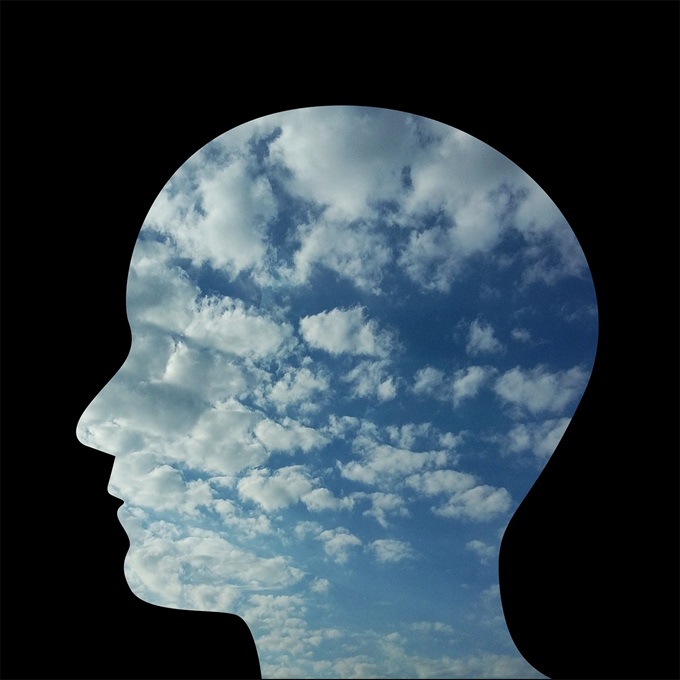
The barrier to the emotional awareness that allows us to write honest, evocative fiction is the philosophical dualism that permeates the arts and sciences. Dualism asserts that mind and body are fundamentally different things unnaturally yoked together, with the rational mind trapped in an inferior, unintelligent body. That interpretation of human existence has been critiqued as “the ghost in the machine.” Charlene Spretnak, an ecowriter with compelling insights about the relationship between our bodies and the rest of nature, traces the development of dualism in her book The Resurgence of the Real:
“Rational thought could be exercised only if sealed off from ‘corrupting’ influences of the body (sensations, emotions, desires) and if properly isolated from ‘lowly’ nature. Plato felt that we, that is, our minds, are imprisoned in the dumb matter of our bodies.”
Plato believed the mind was a supernatural entity that made humans separate and above the rest of nature. Nature, according to dualism, is inherently inferior, worthy only of contempt and exploitation. Descartes cast this notion in concrete when he asserted that the mind defines humans. Sensations and emotions, rather than instant, crucial alerts from a knowing body, were regarded as confused, irrational reactions which should be ignored.
I examined the impact of dualism in my latest story, “Due Diligence.” Yes, it’s fantasy, but it gave me the freedom to explore what the unnatural separation of mind and body does to one’s ability to cope and find meaning.
The latest developments in neuroscience show us that thinking is grounded in the body. We now know much more about how neural networks in the brain store and retrieve memories. And if dualism were correct about the mind being fundamentally separate from the body, why are there so many studies confirming that physical exercise strengthens our ability to remember and solve problems?
The art of writing is more than a craft or a hobby, it’s a path toward making oneself and the world around us a little better. I love the way Weiland put it:
“Learning how to write emotional fiction is, at its core, a journey into the heart of our shared humanity. It is not just an artistic endeavor; it’s an exploration of the human experience.”
 M.C. Tuggle, Writer
Informative post -appreciate the quote!
LikeLiked by 2 people