All posts by Mike

Adventures and mishaps in science fiction, fantasy, and mystery

Salman Rushdie on Fantasy

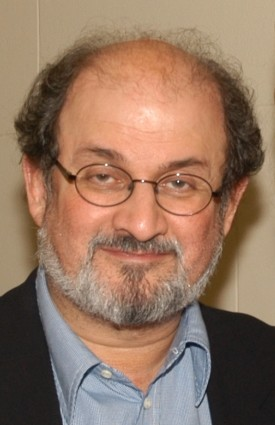
Rushdie

Salman Rushdie, who was knighted in 2007 for his contributions to literature, will speak here in Charlotte at Queens University tomorrow night. He’s earned his honors. Because of Rushdie’s unblinking portrayal of what he deemed religious fanaticism, both Ayatollah Khamenei and Al-Qaeda have called for his murder. In London a few years back, only dumb luck saved him from a fanatic’s book bomb (a real one, not to be confused with one of Larry Correia’s book bombs!).

This is a man who has risked his life for his art. So when Rushdie speaks, he’s worth paying attention to. His observations on fantasy fiction deserve wide circulation:

I think that magical realism is one version of a kind of literature that is found all over the world. It is much older form with, in many ways, a richer tradition than the realist tradition.

These stories are very old. I just thought one of the things I like about the old stories is while they are full of flying carpets and ogres and dragons and things like that, they are completely realistic about human beings. The people you find in the stories are beautifully drawn.

“Ogres and dragons and things like that.” Works for me. And Rushdie’s comment about the power of satire struck me as pitch-perfect: “Satire is the classic weapon that artists have always had against hypocrisy and tyranny.”

Jonathan Swift and Ambrose Bierce would be proud.

The Murders in the Rue Morgue

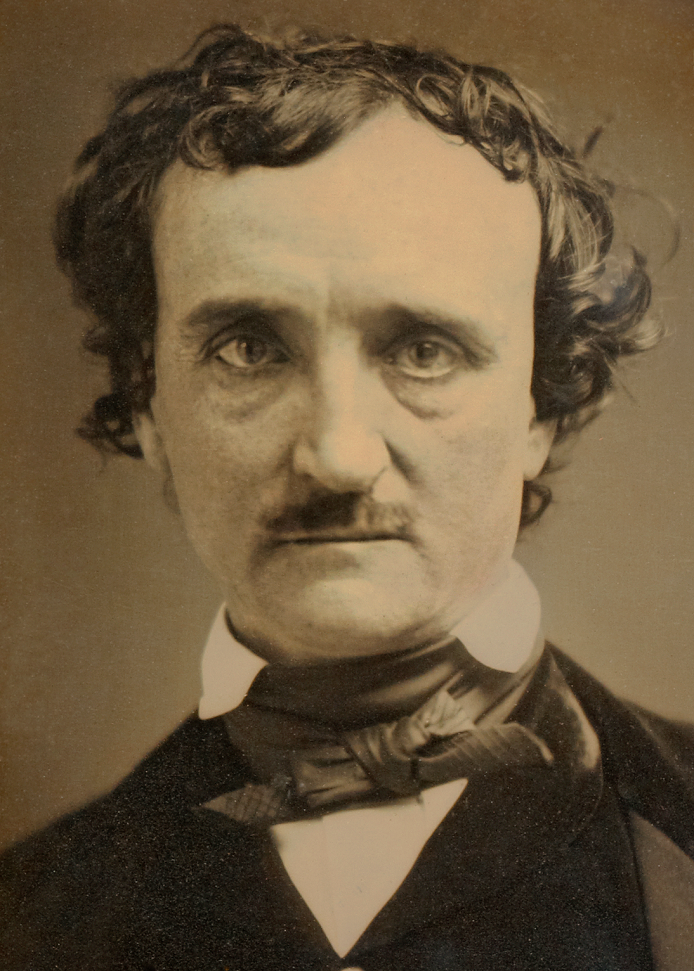
Edgar Alan Poe

Sean Fitzgerald offers a sympathetic evaluation of the great-great granddaddy of detective fiction, with revealing insights into Poe’s other work:

Edgar Allan Poe’s “great continuous convulsion” speaks very naturally and very intensely to the adolescent spirit: passion, love, hatred, murder, primal desires and fears, a desperate pursuit for meaning in a corrupt world. The tales of Edgar Allan Poe capture a universal adolescent essence, and few things deserve to be taken as seriously as adolescence. Adolescence is a search. Adulthood is dealing with the discovery.

What Fitzgerald says about Poe is also true of other works of speculative fiction. Though dismissed by some as frivolous, if not lowbrow, speculative fiction often brilliantly tackles difficult, universal issues in a way that is both entertaining and enlightening. Poe was a pioneer of the genre who blazed the trail for many others, including H.P Lovecraft, Robert E. Howard, and Stephen King.

Best Fiction And Writing Blogs

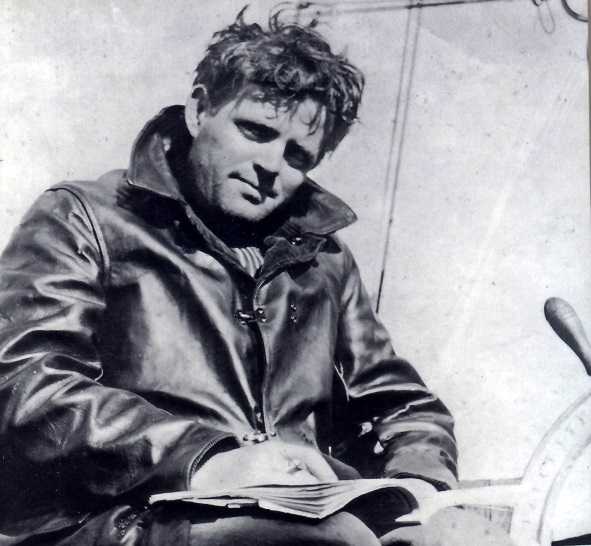
Jack London

The best fiction and writing blog posts from around the ‘net, with advice and inspiration guaranteed to make you a literary adventurer. Compiled by jack.

Anthony VicinoEnding Your Story Like A Boss
A. J.HumpageTricks to Hook Your Reader
Wallace CassThe Writing Lifestyle: It’s a Juggling Act
Jacqui MurrayMake Your Character Your Best Friend
J. C. WolfeWriting Prompts for Halloween
Sue VincentA Writerly Weekend
Jay Dee ArcherMy Take On This Whole Blogging Thing
Jack LondonGetting Into Print (yes, THAT Jack London!)

Former Is Coming!

Stueve

The latest from writer A. E. Stueve sounds like fun — and it’ll be published in January:

About Former

Unlike his wife, his family, and his friends, Billy Dodge is alive. Profine, an international pharmaceutical and defense conglomerate, has cured him of an infection that has ravaged the Earth for over a decade. Life isn’t easy for former infected, however, and despite Profine’s help Billy is struggling to cope in a less than welcoming world. When Billy and a friend are blamed for an unfortunate death, things only become more difficult, and Billy finds himself at the center of a global crisis. As Billy wrestles with his inner demons and the strife around him, society struggles with an important question: are formers human, and should they be allowed to live?

About A.E. Stueve

A.E. Stueve was born on a bend in the Mississippi River in Southern Illinois in the late 70s. Currently he resides in Omaha, Nebraska where he is a writer, teacher, father, and husband. He holds several degrees in teaching and writing including an MFA in Creative Writing from the University of Nebraska. His novels, The ABCs of Dinkology: Life and The ABCs of Dinkology: Time In-Between from EAB Publishing are available wherever good books are sold.

Best Fiction and Writing Blogs

LovecraftThe best fiction and writing blog posts from around the ‘net, with advice and inspiration guaranteed to make you a literary sensation. Compiled by lovecraft.

Alice OsbornHow to Set Better Boundaries
A. J. Humpage Why Character Actions/Reactions Are Important
Angela AckermanKiller Resources for Drafting Our Story
Jonathon SturgeonAn Introduction to Cosmic Horror (Wait – Lovecraft again?) Oh, yes.
James Scott BellThe Power of Voice
Jordan DaneAdding Depth to Your Fictional Relationships
Charlie AndersThe Philosophical Roots of Science Fiction

White Hot


You may recognize Tom Cochrane for his hits “Lunatic Fringe” and “Life is a Highway.” But “White Hot” is my favorite Cochrane song, and this version, featuring Cochrane’s band Red Rider and the Edmonton Symphony Orchestra, is electrifying. The song is a tribute to French poet Arthur Rimbaud, who abandoned a promising literary career for a life of reckless adventure. Cochrane’s lyrics evoke the thrills and terrors Rimbaud experienced:

Cast out from the jungle
With no rations or canteen
For selling faulty rifles
To the thieves in Tanzania

Adventures and misfortune
Nothing wagered, nothing gained
I have wandered through the desert
Found the ocean not the rain

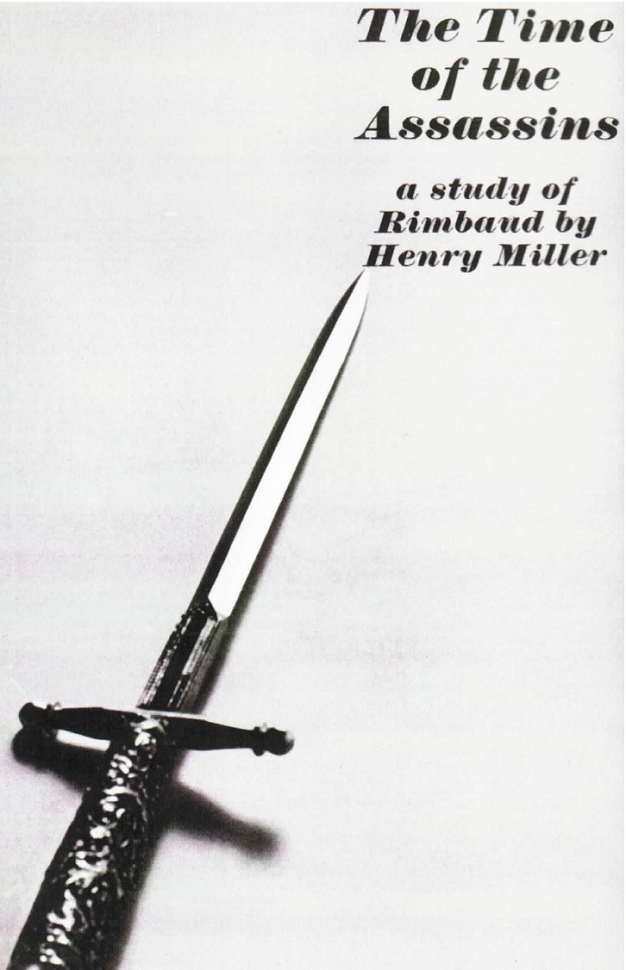
Rimbaud influenced a number of important writers, including Ezra Pound and Henry Miller. Miller acknowledged his debt to Rimbaud in The Time of the Assassins, which Cochrane read and admired.

Assassins

Here’s the passage that inspired Cochrane to write the song:

Rimbaud turned from literature to life; I did the reverse. Rimbaud fled from the chimeras he had created; I embraced them. Sobered by the folly and waste of mere experience of life, I halted and converted my energies to creation.  …

Rimbaud restored literature to life; I have endeavored to restore life to literature. … With him I have felt an underlying primitive nature which manifests itself in strange ways. Claudel styled Rimbaud “a mystic in the wild state.” Nothing could describe him better. He did not “belong” – not anywhere. I have always had the same feeling about myself. [emphasis mine]

I think Cochrane’s lyrics and melody perfectly capture Miller’s mood and message. The song’s distant, mystical opening lures the listener close, then sweeps him up with a driving melody that arouses stark awareness of the dangers and adventures Rimbaud chased all over the globe. Ezra Pound believed we can recognize worthy poetry by “the play of image, music, and meaning” within it, and “White Hot” definitely qualifies.

That’s great songwriting. No wonder Tom Cochrane’s career has endured over the decades.

Notes From The Underground

Notes From The Underground

Space Squid Magazine has published my story Notes From The Underground as its featured story of the month.

Here’s how I came to write it. While researching an alt history novel I’m working on, I saw a video about Japanese Kamikaze pilots saying good-bye to their loved ones and dedicating their lives to their nation in a solemn ritual before taking off. It was deeply moving to see those young men preparing for death. I could not help but recall Mishima’s Patriotism.

A few days later, I read an Atlantic article entitled How Indie Rock Changed The World. That’s when the scenario and characters came to me. Several of my interests, including music, history, electronics, and writing converged into a gritty, yet hopeful, post-apocalyptic tale. I hope you enjoy it.

Water on Mars?

AnnetteActual NASA photograph of Mars

A lot of folks are giddy over NASA’s announcement that its Mars Reconnaissance Orbiter has found evidence of liquid water on Mars. They imagine this points the way to a Martian colony and human expansion into space.

Put me down for a big ol’ “meh” on this waste of taxpayers’ dollars. While the Trekkies may swoon over this news, I (and many others) suspect we are too acutely tuned to the rhythms, radiation fields, and cycles of this planet to go skipping about the galaxy like disembodied brains.

I agree with Kim Stanley Robinson: “I think Earth is the one and only crucial place for humanity. It will always be our only home. … Maybe there’s only one planet where humanity can do well, and we are already on it.”

As to terraforming an alien planet to make it suitable for human habitation, Robinson says, “… there’s no place other than Earth where humanity can be healthy and safe. When we land on another planet, we’ll find out if it’s either alive or dead. It it’s alive, we’ll be in trouble because the life that’s there already will either make us sick or kill us. If it’s dead, we’ll have to terraform it, in which case we’ll die before it’s ready.”

Robinson’s objection is valid. In fact, there are so many variables involved in reverse engineering alien planets to accommodate human needs that such a project would be utterly impossible. Then there are the countless unknowns we will never grasp. It wasn’t until the past decade or so that we understood the vital role played by human flora, which outnumber human cells by 10 to 1.

I’ll believe we can terraform other worlds to our liking when we’re able to rid our own planet of earthquakes, tidal waves, volcanic eruptions, and telemarketing calls.