All posts by Mike

Adventures and mishaps in science fiction, fantasy, and mystery

Hemingway’s Paris Memoir Flies Off Shelves in Show of Defiance

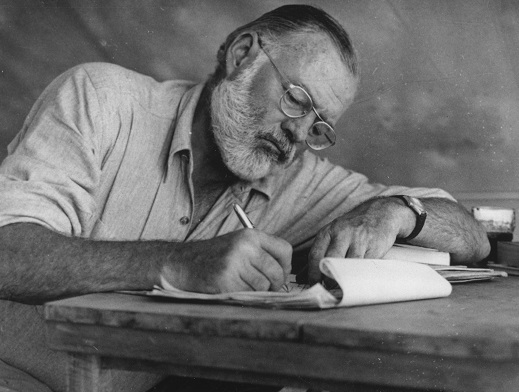
Hemingway Writing

From Bloomberg Business:

Ernest Hemingway’s memoir about the time he spent lounging in cafes and bars in 1920s Paris has become an unlikely totem of defiance against the terrorist attacks that claimed 129 lives in the City of Light last Friday.

Hemingway’s ‘‘A Moveable Feast,’’ or “Paris est une Fete” in French, is flying off the shelves at bookstores across the French capital and is the fastest-selling biography and foreign-language book at online retailer Amazon.fr. Daily orders of the memoir, first published in 1964, three years after the American author’s death, have risen 50-fold to 500 since Monday, according to publisher Folio.

Copies have been laid among the flowers and tributes at the sites of the massacres, and people are reading the book in bars and cafes, Folio spokesman David Ducreux said Thursday. Orders surged after a BFM television interview on Monday with a 77-year-old woman called Danielle, who urged people to read the memoir as she laid flowers for the dead. The video was shared hundreds of times on social media.

I think this is a marvelous way to express solidarity with the people of Paris in the wake of last week’s horrific massacre. That said, the article’s description of A Moveable Feast as an account of the time Hemingway “spent lounging in cafes and bars in 1920s Paris” misses the mark. Yes, there are sensuous descriptions of how he and his friends “ate well and cheaply and drank well,” but the little masterpiece also reveals how Hemingway mastered the craft of fiction, including how he dealt with rejection letters. Hemingway’s vignettes of Ezra Pound, Gertrude Stein, and F. Scott Fitzgerald are not to be missed.

If you haven’t read it, pick up a copy at the library or book store. And let folks know you’re doing it for Paris.


The Paris Massacre, Awareness, and Writing

Musashi

Like many others, the horrific massacre in Paris got me to thinking about how I would have reacted to a terror attack. A number of articles have popped up on the Internet stressing how situational awareness improves your odds of surviving acts of terrorism and similar emergencies. I couldn’t help but notice the ties between situational awareness and writing.

I’ve previously made the case that intense physical activity sharpens the mind and senses. Famed Japanese swordsman Miyamoto Musashi argued the same in his classic The Book of Five Rings. And now we have science that bolsters Musashi’s insights. From Psychology Today:

Musashi referred extensively to training vision and perception through martial arts, but now there is modern evidence in experimental psychology to support his assertions and show that visual abilities can be enhanced with such training. …

Writing in the journal “Attention and Perceptual Psychophysics,” Monica Muinos and Soledad Ballesteros from the Department of Basic Psychology in Madrid, Spain wanted to know if sports training that relied heavily on dynamic visual acuity could interfere with the normal decline in this ability. Using a tracking task where the participants had to rapidly determine the direction and characteristics of object motion, they studied young (less than 30 years) and older (more than 60 years) adults who either had no sporting background or who had training in judo or karate. Not surprisingly, martial arts athletes—both judo and karate—had better dynamic visual acuity scores than non-athletes. This result supports the idea that martial arts training may enhance dynamic visual acuity.

In the following clip, Matt Damon (as Jason Bourne) explains how attention to seemingly trivial details is essential to survival:

Awareness of the fine details others overlook is something every writer must develop. As Stephen King wrote in On Writing, “Skills in description, dialogue, and character development all boil down to seeing or hearing clearly and then transcribing what you see or hear with equal clarity.”

As I’ve said before, the act of reading and writing stories isn’t just a diversion from life, it is life itself.

Why Writers Run

Marathoon

Most folks think of writing as a monkish, abstract endeavor more akin to meditation than exertion. But there’s a vital connection between the discipline of putting one word after another and taking one stride after another, as Nick Ripatrazone explains in this must-read Atlantic article:

The steady, repetitive movement of distance running triggers one’s intellectual autopilot, freeing room for creative thought. Neuroscientists describe this experience as a feeling of timelessness, where attention drifts and imagination thrives. …

Since I’ve returned to distance running, I’ve changed the way I think about writing. Writing exists in that odd mental space between imagination and intellect, between the organic and the planned. Runners must learn to accept the same paradoxes, to realize that each individual run has its own narrative, with twists and turns and strains.

Writers and runners use the same phrase—“hit my stride”—to describe the moment when exertion and work become joy. Writers stuck on a sentence should lace their sneakers and go for a jog, knowing that when they return, they will be a bit sweatier, more tired, but often more charged to run with their words.

We know a sound mind in a healthy body is sharper and livelier because mind and body are not two separate entities. Each one affects the other. But Ripatrazone expands on this truth by proposing that running helps the mind harmonize with the rhythm and tempo of the body, stimulating the writer’s ability to “focus on a single, engrossing task and enter a new state of mind entirely—word after word, mile after mile.”

I fully agree, and would add that other physical activities also promote writing ability. I’ve found that weightlifting, a strenuous, repetitive, and somewhat dangerous activity, sharpens my focus and endurance, two qualities essential to getting words onto paper. Yukio Mishima even wrote a book, Sun and Steel, about the benign discipline lifting weights imposed on his writing. And Ernest Hemingway relied on boxing to help him break occasional writer’s block.

Raymond Chandler Didn’t Care About Plot

Raymond Chandler

I’ve always found Raymond Chandler’s writing to be inspirational, sublime, and maddening. I have no idea how many times I’ve read Farewell, My Lovely, and there’s still a lot about it I just don’t get. The work is an adventure tale, a work of art, and a puzzle. Chandler broke a lot of rules. But I, and countless other fans, keep coming back.

This retrospective on Chandler’s unique approach in Literary Hub echoes my feelings toward this gifted and driven artist:

Looking at Chandler’s work in retrospect, it seems fair to say that he wasn’t really a “mystery writer”—or not first and foremost. Plots didn’t interest him much. They were just pegs on which to hang characters and language. His plots were not particularly original but that never bothered him. “Very likely Agatha Christie and Rex Stout write better mysteries. But their words don’t get up and walk. Mine do.” And: “I don’t care whether the mystery is fairly obvious but I do care about the people, about this strange, corrupt world we live in and how any man who tries to be honest looks in the end either sentimental or just plain foolish.”

Story construction and the tying up of loose ends never bothered him. When director Howard Hawks was filming The Big Sleep, he cabled Chandler: “Who killed the chauffeur?” Chandler cabled back: “No idea.”

When he himself collaborated with the young Billy Wilder on what was Chandler’s first Hollywood film, Double Indemnity, Wilder observed that “Chandler was a dilettante. He did not like the structure of a screenplay… He was a mess but he could write a beautiful sentence. ‘There is nothing as empty as an empty swimming pool.’ That is a great line.” He would later give his moody one-time partner credit for being “one of the greatest creative minds I’ve ever encountered.”

I think Chandler’s face reflects the purposeful rebellion and probing intelligence one senses behind the writer’s challenging and endlessly intriguing fiction.

Salman Rushdie on Fantasy

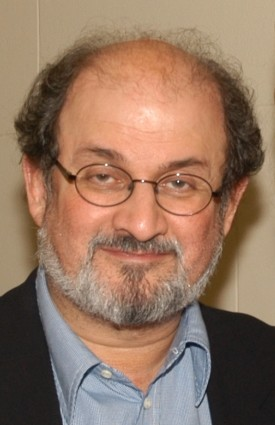
Rushdie

Salman Rushdie, who was knighted in 2007 for his contributions to literature, will speak here in Charlotte at Queens University tomorrow night. He’s earned his honors. Because of Rushdie’s unblinking portrayal of what he deemed religious fanaticism, both Ayatollah Khamenei and Al-Qaeda have called for his murder. In London a few years back, only dumb luck saved him from a fanatic’s book bomb (a real one, not to be confused with one of Larry Correia’s book bombs!).

This is a man who has risked his life for his art. So when Rushdie speaks, he’s worth paying attention to. His observations on fantasy fiction deserve wide circulation:

I think that magical realism is one version of a kind of literature that is found all over the world. It is much older form with, in many ways, a richer tradition than the realist tradition.

These stories are very old. I just thought one of the things I like about the old stories is while they are full of flying carpets and ogres and dragons and things like that, they are completely realistic about human beings. The people you find in the stories are beautifully drawn.

“Ogres and dragons and things like that.” Works for me. And Rushdie’s comment about the power of satire struck me as pitch-perfect: “Satire is the classic weapon that artists have always had against hypocrisy and tyranny.”

Jonathan Swift and Ambrose Bierce would be proud.

The Murders in the Rue Morgue

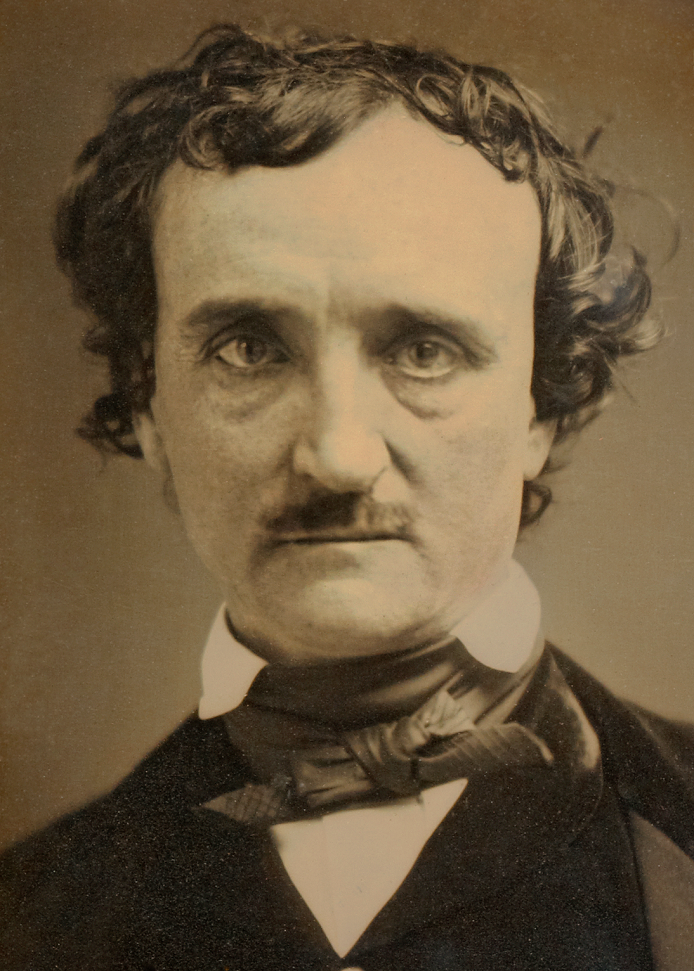
Edgar Alan Poe

Sean Fitzgerald offers a sympathetic evaluation of the great-great granddaddy of detective fiction, with revealing insights into Poe’s other work:

Edgar Allan Poe’s “great continuous convulsion” speaks very naturally and very intensely to the adolescent spirit: passion, love, hatred, murder, primal desires and fears, a desperate pursuit for meaning in a corrupt world. The tales of Edgar Allan Poe capture a universal adolescent essence, and few things deserve to be taken as seriously as adolescence. Adolescence is a search. Adulthood is dealing with the discovery.

What Fitzgerald says about Poe is also true of other works of speculative fiction. Though dismissed by some as frivolous, if not lowbrow, speculative fiction often brilliantly tackles difficult, universal issues in a way that is both entertaining and enlightening. Poe was a pioneer of the genre who blazed the trail for many others, including H.P Lovecraft, Robert E. Howard, and Stephen King.

Best Fiction And Writing Blogs

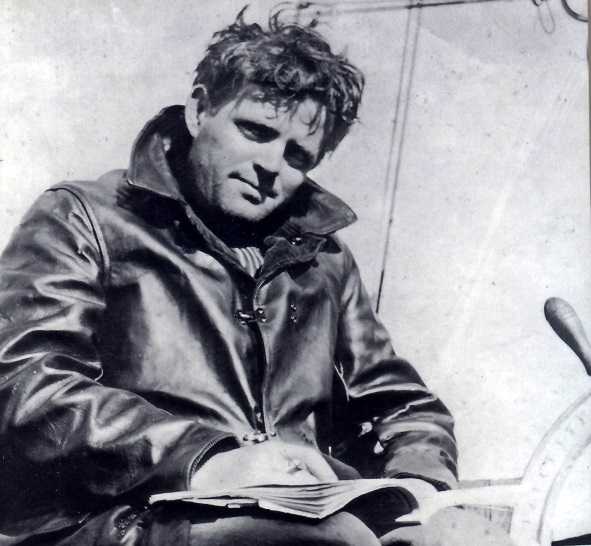
Jack London

The best fiction and writing blog posts from around the ‘net, with advice and inspiration guaranteed to make you a literary adventurer. Compiled by jack.

Anthony VicinoEnding Your Story Like A Boss
A. J.HumpageTricks to Hook Your Reader
Wallace CassThe Writing Lifestyle: It’s a Juggling Act
Jacqui MurrayMake Your Character Your Best Friend
J. C. WolfeWriting Prompts for Halloween
Sue VincentA Writerly Weekend
Jay Dee ArcherMy Take On This Whole Blogging Thing
Jack LondonGetting Into Print (yes, THAT Jack London!)

Former Is Coming!

Stueve

The latest from writer A. E. Stueve sounds like fun — and it’ll be published in January:

About Former

Unlike his wife, his family, and his friends, Billy Dodge is alive. Profine, an international pharmaceutical and defense conglomerate, has cured him of an infection that has ravaged the Earth for over a decade. Life isn’t easy for former infected, however, and despite Profine’s help Billy is struggling to cope in a less than welcoming world. When Billy and a friend are blamed for an unfortunate death, things only become more difficult, and Billy finds himself at the center of a global crisis. As Billy wrestles with his inner demons and the strife around him, society struggles with an important question: are formers human, and should they be allowed to live?

About A.E. Stueve

A.E. Stueve was born on a bend in the Mississippi River in Southern Illinois in the late 70s. Currently he resides in Omaha, Nebraska where he is a writer, teacher, father, and husband. He holds several degrees in teaching and writing including an MFA in Creative Writing from the University of Nebraska. His novels, The ABCs of Dinkology: Life and The ABCs of Dinkology: Time In-Between from EAB Publishing are available wherever good books are sold.

Best Fiction and Writing Blogs

LovecraftThe best fiction and writing blog posts from around the ‘net, with advice and inspiration guaranteed to make you a literary sensation. Compiled by lovecraft.

Alice OsbornHow to Set Better Boundaries
A. J. Humpage Why Character Actions/Reactions Are Important
Angela AckermanKiller Resources for Drafting Our Story
Jonathon SturgeonAn Introduction to Cosmic Horror (Wait – Lovecraft again?) Oh, yes.
James Scott BellThe Power of Voice
Jordan DaneAdding Depth to Your Fictional Relationships
Charlie AndersThe Philosophical Roots of Science Fiction