All posts by Mike

Adventures and mishaps in science fiction, fantasy, and mystery

A Conversation with Steve Himmer, author of Fram

SeaRocks

Steve Himmer writes about bleak, alien landscapes and the surprising complexity his characters discover in those places. The critical quote:

“I guess I wouldn’t say we’re at odds with nature so much as befuddled by an insistence on seeing ourselves as the most important thing—the only thing, more often than not—that matters in any particular landscape.”

A Conversation with Adam Long of the Hemingway-Pfeiffer House

Hemingway2

Here’s a little treasure for all of us Hemingway fans, an interview with Adam Long, the director of the Hemingway-Pfeiffer House. Mr. Long knows what he’s talking about. He comes to the job with a background in American modernism and a PhD in literature. Long shares his knowledge about the author’s time at his second wife’s family home, a period of Hemingway’s life many of us aren’t familiar with. Great insights into Hemingway’s writing habits and thought.

My only gripe with the interview is this prologue: “Hemingway once explained: ‘There’s nothing to writing. All you do is sit down at a typewriter and bleed.'”

It’s very unlikely Hemingway said that. That vivid quote probably came from Red Smith, a sportswriter. Hemingway’s weapon of choice was the pencil (See A Moveable Feast), and he wrote standing.

Best fiction and writing blogs

Howard

The best fiction and writing blogs, compiled by reh

This edition features the best author interviews on the Internet. Enjoy!

Jacqueline Seewald: Interview With D.K. Christi 
A Writer’s Path: How Mark Lawrence Became Published
Fantasy Faction: Chris Evans Interview
The Paris Review: Michel Houellebecq Defends His Controversial New Book
No Wasted Ink: Author Interview: Jamie Maltman
Warrior Scribe: Writing dark fantasy, martial arts and travel with Alan Baxter

On Location: “Aztec Midnight”

Want to see pictures of the various sites where much of the action in Aztec Midnight takes place? Then you need to check out Pinterest.

Calle Revolución in Cuernavaca, the U.S. State Department headquarters in D.C., the Instituto Nacional de Antropología e Historia, the Tepozteco archaeological site in Tepoztlan — there’s even a picture of the magical lair where it all came together (aka, my humble little office). Check it out.


The power of story

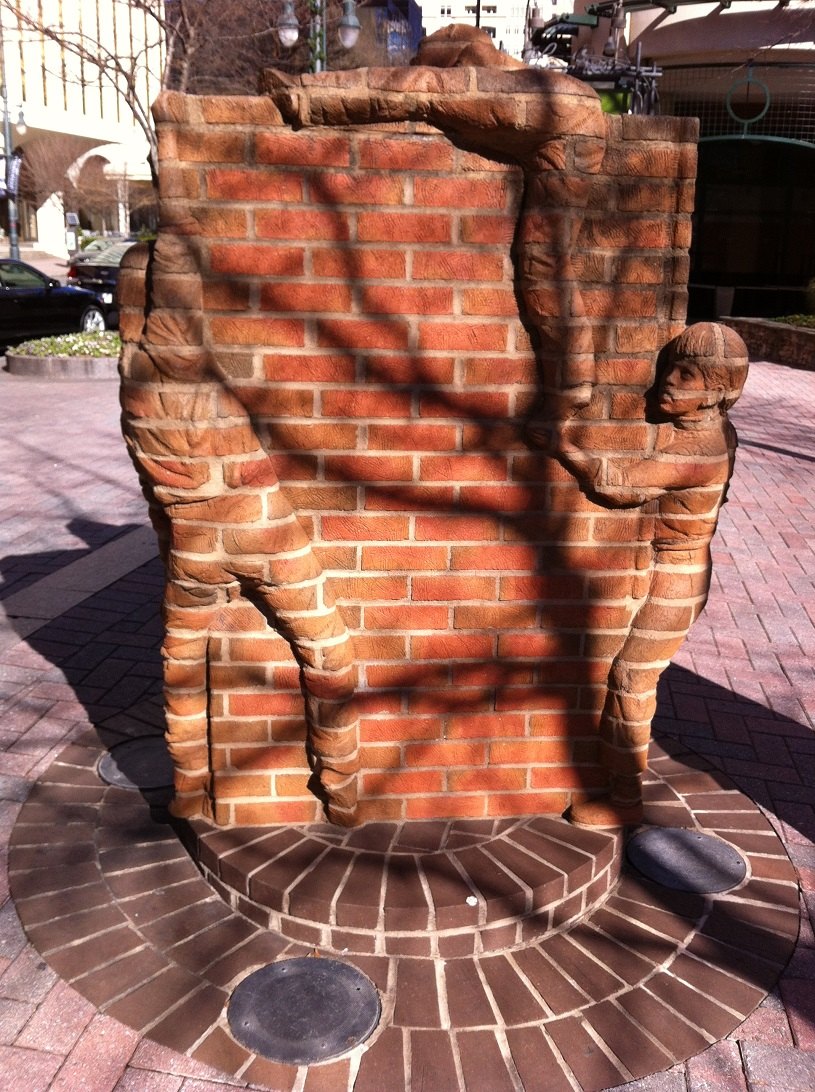
BrickSculpture

Why do all human cultures create and pass on stories? We know that shared stories — histories — unite a people,  just as a person’s life history unifies one’s many experiences into a coherent narrative and defines that person. But that’s only part of it.

Now we are learning that a shared story creates a connection much deeper than we ever suspected.  Writing in Aeon Magazine, Elizabeth Svoboda tells us how neuroscience is uncovering how stories help us connect to other people:

In a 2010 Proceedings of the National Academy of Sciences study, the psychologist Uri Hasson and his Princeton University colleagues had a graduate student tell an unrehearsed story while her brain was being scanned in an fMRI machine. Then they scanned the brains of 11 volunteers listening to a recording of the story. As the researchers analysed the data, they found some striking similarities. Just when the speaker’s brain lit up in the area of the insula – a region that governs empathy and moral sensibilities – the listeners’ insulae lit up, too. Listeners and speakers also showed parallel activation of the temporoparietal junction, which helps us imagine other people’s thoughts and emotions. In certain essential ways, then, stories help our brains map that of the storyteller.

We already knew stories let us break through our normal limits, allowing us to transport ourselves into deep space, the deep sea, or life as it was lived thousands of years ago. But they also enable us to free ourselves of those most alienating and harmful barriers, the self-made blockades meant to protect, but which actually isolate us from other people.

So it’s not just entertainment, and it’s more than imparting valuable lessons. It’s a basic human need.

I often have trouble speaking in public and getting up the nerve to meet people. But at certain times in critique groups, open readings, or when I receive kind notes from readers, I feel I’ve shaken loose my usual inhibitions and fears and have managed to connect. It’s a wonderful feeling.

Robert E. Howard, Southern Writer

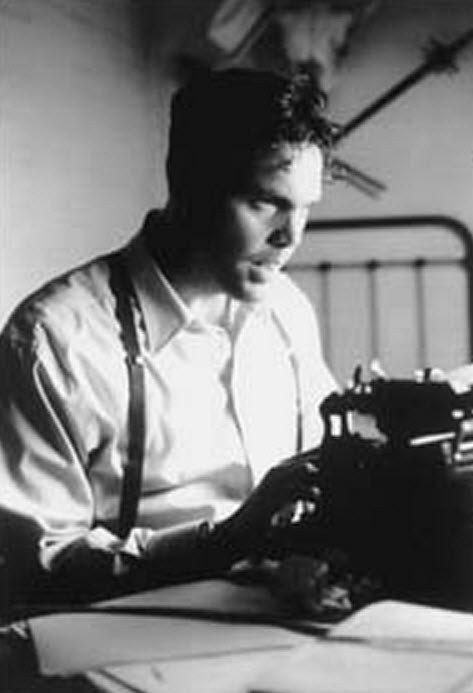
reh

The Abbeville Institute, a site dedicated to Southern arts, has published my article on Robert E. Howard. Here’s a sample:

“The novelist with Christian concerns will find in modern life distortions which are repugnant to him, and his problem will be to make these appear as distortions to an audience which is used to seeing them as natural; and he may well be forced to take ever more violent means to get his vision across to this hostile audience. When you can assume that your audience holds the same beliefs you do, you can relax a little and use more normal ways of talking to it; when you have to assume that it does not, then you have to make your vision apparent by shock — to the hard of hearing you shout, and for the almost blind you draw large and startling figures.” Flannery O’Connor

The Southern Gothic tradition, as pioneered by such writers as William Faulkner and Carson McCullers, as well as O’Connor, is noted for its stinging indictment of modern life. Southern Gothic tales feature shocking violence and criminality committed by bizarre, larger-than-life characters clawing for survival in a society that has broken down. Magical and supernatural forces often intervene in unexpected ways.

Read the rest at Abbeville Review, and like it here.