I’m thrilled to announce that Quarter Press has released the second volume of The Quarter(ly)Journal. It offers fantastical poetry, fiction, comics, and art by award-winning authors and artists, and includes my story “An Alignment of Wood and Water.”
Zach Benson is a master carpenter who builds special projects for special clients along the North Carolina coast. He returns to a client’s house to handle a complaint, something he absolutely dreads having to do. The disgruntled client is a newcomer to the area who lives in an isolated bungalow on Pamlico Sound. She’s a novice witch who claims Zach did not make a witching floor according to her specifications.
As Zach inspects the floor’s enchanted shapes of ash, oak, and cedar, a mysterious figure shows up outside. It takes Zach a while to get his nerve up, but he decides to confront the intruder.
It’s a scary/fun story featuring a creepy familiar, a dreamy shoreline, blue-collar stoicism, and a magical showdown. It also includes my thoughts on malignant do-gooderism. Please check it out! Quarter(ly) Journalis now available atAmazon.
“The writer who loses his self-doubt, who gives way as he grows old to a sudden euphoria, to prolixity, should stop writing immediately: the time has come for him to lay aside his pen.”
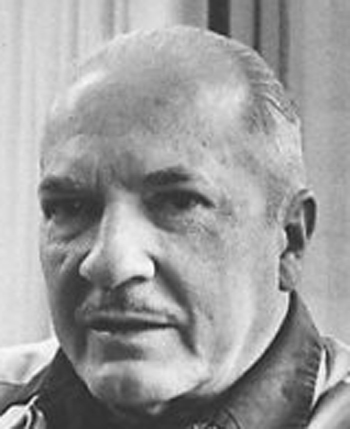
John Irving, Courtesy of Special Collections, University of Houston Libraries
It’s a distressing trend: Only a minority of adults reads for pleasure. COVID (while ruining everything else) has only made things worse. Seeking escape, folks drift toward the brain-numbing distractions of booze, video games, and binge-watching TV.
That’s dire news for writers and publishers. What to do?
There’s a great article I want to recommend about the reading crisis in the latest Vox titled How to fall back in love with reading. Step one on the road to reading recovery is to remind yourself WHY you should read instead of blotting out your consciousness with passive entertainment. The Vox piece reminds us that reading is associated with longer, healthier lives. Reading also enhances social skills.
Of course, there’s a deep cultural bias at work, which associates recreational reading with social ineptness and sissiness. That couldn’t be further from the truth. As President Harry S. Truman once put it, “Not all readers are leaders, but all leaders are readers.” Think of Teddy Roosevelt, Winston Churchill, and John Kennedy, all energetic, life-long lovers of the written word.
As for the stereotype of readers as puny, we have the vital examples of Ernest Hemingway and Yukio Mishima, just to name a couple. Author John Irving, pictured above, was a wrestler in college, so pugnacious that in his younger days, he’d take a seat at a bar with a book and a beer and wait for someone to pick on him. A few did, to their dismay.
“Life, even on a quiet day, happens so densely and quickly around us and most of it is about seeing, feeling and thinking in a not-strictly verbal way. Writing translates all of this into words but paradoxically the most powerful writing uses words in a way that transcends language to become more true to life; it mimics how we live in a world that is constantly changing and moving before our eyes.”
Flash Fiction Magazine has published my story “Social Network.” This piece represents nearly three weeks of writing and re-writing. I’m quite pleased with how it turned out, and I have to thank editor Shanna Yetman for her guidance.
Most of my stories arise from an image I can’t get out of my head. The only relief is to transform that image into a story, and that process inevitably taps into deep-seated concerns. When I recently re-read H.P. Lovecraft’s classic Nyarlathotep, one vivid scene stuck in my imagination:
And where Nyarlathotep went, rest vanished; for the small hours were rent with the screams of nightmare. Never before had the screams of nightmare been such a public problem; now the wise men almost wished they could forbid sleep in the small hours, that the shrieks of cities might less horribly disturb the pale, pitying moon as it glimmered on green waters gliding under bridges, and old steeples crumbling against a sickly sky.
“Social Network“ imagines a malignant presence just as frightening as the one Lovecraft described, though in the form of a technological pandemic no vaccination can stop.
Stoicism has inspired many writers, including Matthew Arnold, Walker Percy, and Ambrose Bierce. I strongly suspect it also influenced Robert E. Howard, whose character Conan of Cimmeria exemplified Stoicism.
In fact, I’d say Conan was the very model of a Stoic. He could shrug off bad luck, pain, and looming disaster like no other fictional character, whatever the genre. Conan fumed at cowardice, punished betrayal, and battled opponents savagely, but he never complained, never felt sorry for himself. He accepted fate with a shrug.
What is Stoicism? Here’s a short, useful definition from WhatIsStoicism.com:
“Stoicism, or Stoic philosophy, is a philosophy of personal ethics and a methodology for seeking practical wisdom in life. A key principle of the ancient Stoics was the belief that we don’t react to events; we react to our judgments about them, and the judgments are up to us. They also advised that we should not worry about things beyond our control as everything in life can be divided into two categories – things that are up to us and things that are not.”
Sounds like Conan to me.
I believe Robert E. Howard’s most famous character reflected his author’s courageous and clear-headed embrace of the human condition, from its brief, tenuous life span to its deep-seated connections to a rich, sprawling past. I like the way David Smith puts it in his magnificent Robert E. Howard: A Literary Biography:
“His work is shot through with a relentless awareness of time, hurtfully so.This tragic appreciation is exhibited as powerfully in his writing as his acute awareness of the body — the weight of time, its passage and its cost to us. He grew up, of course, listening to recollections of the immediate past, frontier tales in which “the past is never past,” in Faulkner’s famous phrase.” p. 191.
The Stoic philosopher Seneca observed that an extensive and intimate relationship to the past broadens and deepens a person:
“Of all people only those are at leisure who make time for philosophy, only they truly live. Not satisfied to merely keep good watch over their own days, they annex every age to their own. All the harvest of the past is added to their store. ”
Howard, a life-long and passionate student of history, appreciated the wealth of wisdom and adventure the past holds. That passion –and his unique worldview — supercharged his fiction.
“My mother was a potter. All my life I was around that. The first draft, that’s the hard part. That’s going out and digging clay. Revision is where you finally get to chuck that son of a bitch on the wheel and make something.”
Puzzled by endless rejections? Unsure what editors are looking for? Are you still letting yourself be misled by those pernicious and persistent writing myths?
Don’t feel bad. It’s not just newbies who are letting themselves be held back by those myths.
Here’s a great introduction to the unique challenge of writing flash fiction. This FREE (!) course reveals the real reasons editors accept and reject manuscripts. (Hint: It’s not what you think.) It also includes guidance in choosing a POV for your next story, as well as time-tested principles in crafting relatable characters and compelling plots.
My wife and I just caught an advance screening of “The Northman.” I tend to be a homebody these days, so when she told me last week she had passes to a movie, she quickly added, “This is your kind of movie.”
She was right. Mostly.
It stars a totally ripped, berserking Alexander Skarsgård as Amleth, a Viking prince whose uncle murders his father and takes Amleth’s mother as his wife. If that sounds like the plot of Shakespeare’s “Hamlet,” you’re right — but in fact, Shakespeare, um, “borrowed” his plot from an old Viking tale and changed the protagonist’s name from Amleth to Hamlet.
Writers refer to such a process as “recycling.” It’s a good thing.
One big difference between Shakespeare’s tragedy and director Robert Eggers’ movie is that there’s nothing indecisive about the main character of “The Northman.” When young Amleth witnesses his father’s murder, he escapes and apprentices himself to Vikings, who teach him the finer points of plundering and fighting dirty as he plots his revenge. His determination is so single-minded that he doesn’t seem to care who gets hurt along the way, including enslaving peaceful villagers and torching their homes. That, I think, makes him an unsympathetic character.
And what a blood-soaked revenge it is! Witches and magical ravens guide Amleth to a mystical sword, which he uses to spill the guts of his uncles’s goons until he’s finally face to face with his uncle. Rather than a retelling of “Hamlet,” the tone of the movie is more reminiscent of “Conan the Barbarian,” “Gladiator,” and “Braveheart.”
“The Northman” is a gory romp, but certainly not for the kiddies.








 M.C. Tuggle, Writer