Category Archives: Ambrose Bierce

The “Wrong” Kind of Reading?

What to do about growing illiteracy in America? It’s a problem behind a host of other social ills, including unemployment, crime, and mental illness. Frederick Hess, a former teacher, has a suggestion:

One reason that boys read less than girls may be that we’re not introducing them to the kinds of books they may like. There was a time when schools really did devote too much time to generals and famous battles, but we’ve massively overcorrected. Indeed, I find that too many “diverse, inclusive” reading lists feature authors who may vary by race and gender but overwhelmingly tend to write introspective, therapeutic tales that read like an adaptation of an especially heavy-handed afterschool special.

Sadly, our schools are not helping this problem. In some ways, they’re making things worse. Reading is often shoved at students as a burden, if not punishment. Plus, the approved reading list often fails to snag interest. Too many of the folks running public education believe “real” literature is, as Hess writes above, introspective and therapeutic. In a word, dull. This highbrow view of literature is the legacy of William Dean Howells, the influential author and editor of The Atlantic Monthly. Here’s Howells’ view of what literature should be:

Yet every now and then I read a book with perfect comfort and much exhilaration, whose scenes the average Englishman would gasp in. Nothing happens; that is, nobody murders or debauches anybody else; there is no arson or pillage of any sort; there is not a ghost, or a ravening beast, or a hair-breadth escape, or a shipwreck, or a monster of self-sacrifice, or a lady five thousand years old in the whole course of the story…. Yet it is all alive with the keenest interest for those who enjoy the study of individual traits and general conditions as they make themselves known to American experience.

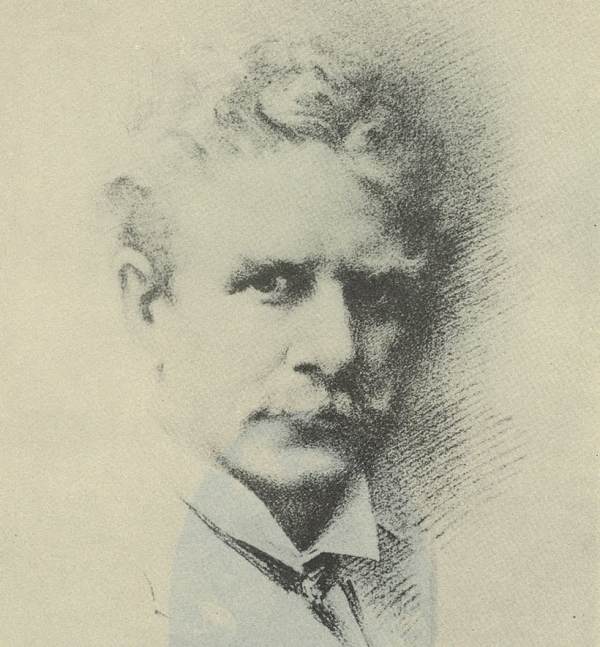
The Realist literary movement Howells pushed decreed that instead of action and heroism, literature should focus on interior tension and the experience of ordinary people. To impart the real life of real people, Realist authors focused on gritty detail. However, devotion to the mundane often produced boring and sordid tales. Ambrose Bierce defined “Realism” in his Devil’s Dictionary as “The art of depicting nature as it is seen by toads. The charm suffusing a landscape painted by a mole, or a story written by a measuring-worm.”

Of course, the antidote is to read and promote tales of adventure, intrigue, and heroism, stories that illustrate a virile and heartening sense of life. That’s what both young and old need today. There’s plenty available, but first we have to unburden ourselves of the notion that self-appointed highbrows get to tell us what real literature is.
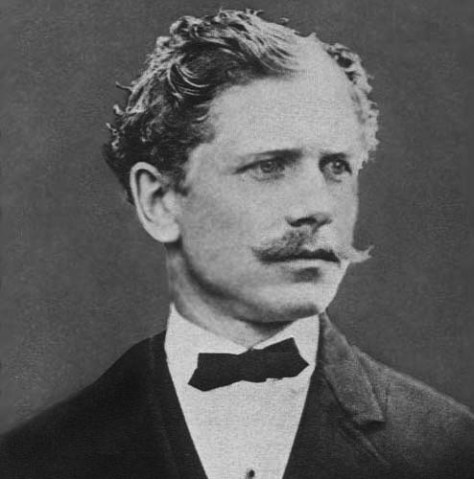
Happy birthday, Ambrose Bierce!

Today is the birthday of Ambrose Gwinett Bierce, one of the great short story writers and satirists of the late nineteenth century. Bierce, a former Union officer in the War Between the States, gave the world the most vivid and brutally honest picture of war ever captured in prose. The war than nearly killed him taught him many grim lessons, chief of which was that noble ideals are the cheapest of lies, used to convince the naive to prop up insane projects that lead only to suffering and death for the many — and profit for the few.

My Master’s Thesis explored Bierce’s war stories, tales exposing the animal senselessness of war.

Fans of both Ambrose Bierce and Robert E. Howard will want to read John Bullard’s excellent post on the significant influence Bierce exerted over a young Robert E. Howard. It includes additional resources on each author, with a link to Bierce’s works.

Best fiction and writing blogs

The best fiction and writing blog posts from around the ‘net, all guaranteed to make you a literary legend. Compiled by Ambrose Bierce.

P. S. Hoffman13 Smart Shortcuts to Write Brilliant Characters
Dina Al-MahdiBe your own muse
Raimey GallantNegative space, as important to author marketing as it is to writing
M. L. DavisWriters: Don’t Edit Away Your Voice
Cath HumphrisIs there anything new in the writer’s tool kit?
l. t. garvinWriting book blurbs
kakymcOn Writing Dangerously
Sierra AyonnieWhat makes a good short story?

Salman Rushdie on Fantasy

Rushdie

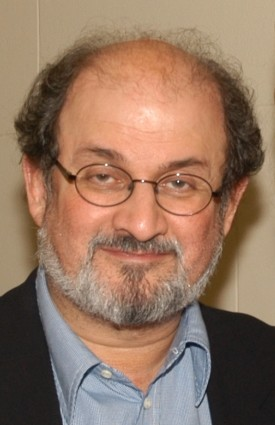
Salman Rushdie, who was knighted in 2007 for his contributions to literature, will speak here in Charlotte at Queens University tomorrow night. He’s earned his honors. Because of Rushdie’s unblinking portrayal of what he deemed religious fanaticism, both Ayatollah Khamenei and Al-Qaeda have called for his murder. In London a few years back, only dumb luck saved him from a fanatic’s book bomb (a real one, not to be confused with one of Larry Correia’s book bombs!).

This is a man who has risked his life for his art. So when Rushdie speaks, he’s worth paying attention to. His observations on fantasy fiction deserve wide circulation:

I think that magical realism is one version of a kind of literature that is found all over the world. It is much older form with, in many ways, a richer tradition than the realist tradition.

These stories are very old. I just thought one of the things I like about the old stories is while they are full of flying carpets and ogres and dragons and things like that, they are completely realistic about human beings. The people you find in the stories are beautifully drawn.

“Ogres and dragons and things like that.” Works for me. And Rushdie’s comment about the power of satire struck me as pitch-perfect: “Satire is the classic weapon that artists have always had against hypocrisy and tyranny.”

Jonathan Swift and Ambrose Bierce would be proud.

Best Fiction and Writing Blogs

Bierce

The best fiction and writing blog posts from around the ‘net, all guaranteed to make you a literary adventurer. Compiled by ambrose.

Michael Chabon and Neil Gaiman: Video Tribute to Terry Pratchett
P.J. Parrish: What does your character want?
Alice Osborn: 5 Tips on How to Make a Living as an Author
Rod Dreher: First You Change the Language…
James Machin: H. P. Lovecraft’s pivotal moment
Jami Gold: Write what you want to learn about
Stephen Masty: Awareness of the Past Heightens Creativity
Jacqueline Seewald: Overcoming Writer’s Block (Part 2)