Category Archives: Fantasy Fiction

Q&A with Aztec Midnight Author, M.C. Tuggle

Here’s a short interview in which I discuss my writing process, what inspires me, and the back story of Aztec Midnight. 

Trigger Warning: Yes, the picture accompanying the interview shows my actual work space. Folks used to tidy offices may be offended, even shocked. It’s chaotic, but I manage to write there. Somehow.

Best fiction and writing blogs

Bret

The best fiction and writing blogs, compiled by Bret

Dave’s Corner of the Universe: The 2014 Davie Awards [Most outstanding work in Sci-Fi/Fantasy]
Cristian Mihai: The Angel in the Marble
The Quiet Fantasy Book Blog: Book Review – The Slow Regard of Silent Things
Cindy Knoke: Storm Surge [Coastal scenes that are both beautiful and treacherous]
Thoughts on Fantasy: 5 Ways to Keep Your Dragons Fresh [Great tips for writers! A must read.]
Confessions of a Readaholic: BOOK REVIEW: The Entire Predicament by Lucy Corin
A Writer’s Path: How the Seven-Point Story Structure Can Help Your Writing [This is EXCELLENT!]
Sarah C. Roethle: Print Book Giveaway!

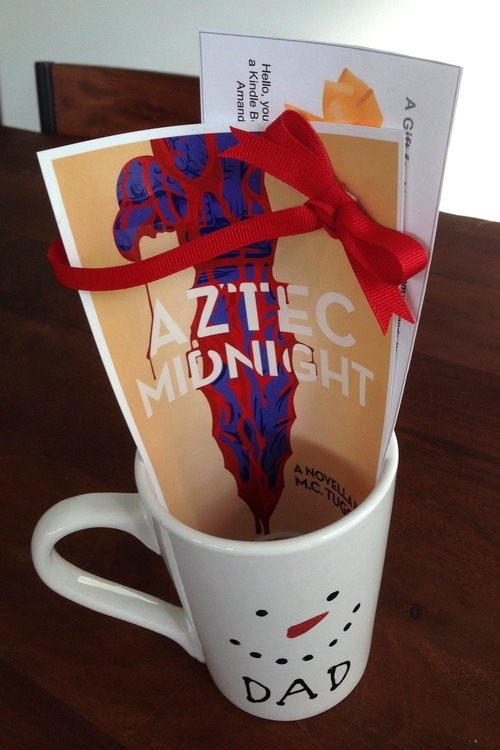
Gifting an eBook

Aztec Midnight ebook

Now here’s a great Christmas gift idea from The Novel Fox:

Try ebooks this year as a gift for travelers, commuters, book club members, coworkers, teachers . . . or any book lover!

Many e-bookstores allow you to gift an ebook. It’s easy to make the ebook a more tangible gift by printing the book cover on card stock or photo paper and including the details on how to redeem it. An ebook is perfect for a stocking stuffer or a little something extra to go in a card, along with a baked good or small gift. Ebooks are an inexpensive, easy, and thoughtful gift for all occasions!

Aztec Midnight Release

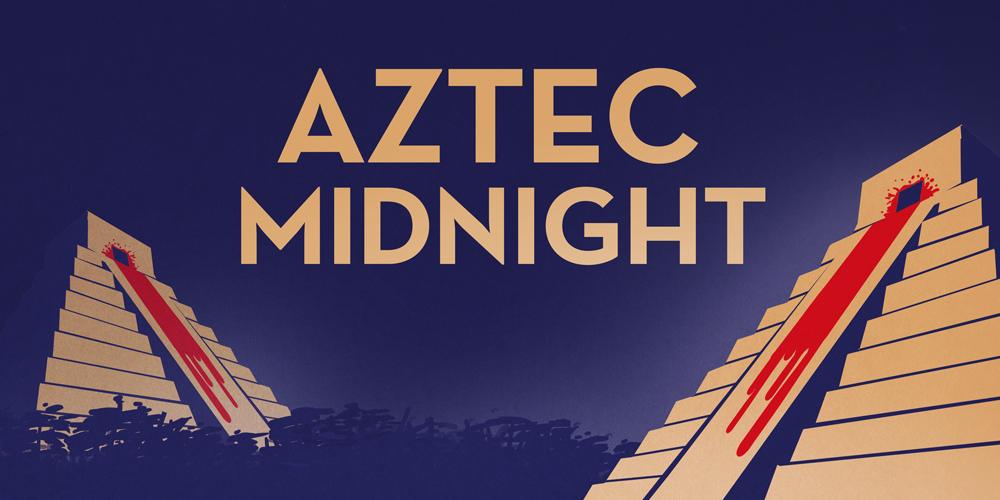
Aztec Midnight

Click to enlarge

AZTEC MIDNIGHT

By M.C. Tuggle

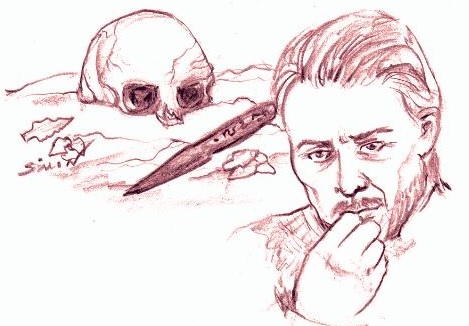
When drug cartels begin vandalizing ancient Aztec sites throughout Mexico in search of the sacred obsidian knife of Aztec emperor Ahuitzotl, the Mexican government reaches out to the U.S. State Department for assistance. Dr. Jon Barrett, an archaeologist and pre-Columbian weapons expert, then journeys to Cuernavaca with his wife Susanna at the request of Eric Winwood, a high-ranking State Department official, to find and rescue the knife before the cartels can claim it. Locating the knife proves more challenging and dangerous than Dr. Barrett anticipated, and he and Susanna soon find themselves at the center of the cartels’ search. For Dr. Barrett and his wife to survive, he will be forced to apply his knowledge of ancient weapons in the face of an ancient power he never imagined.

“This fast-paced novella amps up the suspense with well-crafted dialogue and a Mexican drug cartel subplot. . . . M. C. Tuggle’s meticulous creation of a suspenseful, driving thriller makes Aztec Midnight very engaging.” – Foreword Clarion Reviews

“It zips right along from twist to twist, eventually arriving at a bloody finale.” – Kirkus Reviews

Click here to buy Aztec Midnight and to read an excerpt. For background on the creation of Aztec Midnight, click here.

What Did Tolkien Think of Fantasy Fiction?

TolkienSignature

Nicola Alter has a great piece on J.R.R. Tolkien at Thoughts on Fantasy. Anyone who admires Tolkien will enjoy this review of his special genius and unique contribution to fantasy fiction. As Alter says:

People often forget that Tolkien was also a linguist and a poet and a university professor. He invented new languages. He wrote literary essays, many of which discuss his work. He was a friend of fellow fantasy author C.S. Lewis, and the two were members of the same informal literary discussion group.

Tolkien was not only writing amazing fantasy novels, he was also reflecting on his own work and on the fantasy genre itself. One of Tolkien’s famous essays is called On Fairy Stories (Tolkien called “fairy stories” what we would today call “fantasy”) – a speech he wrote and then later published.

I read On Fairy Stories several years ago for an essay I was writing, and recently revisited it to answer a related question on Quora. When I did, I was once again astounded by the eloquence and intelligence of this man. It struck me that in its fledging years, as the fantasy genre was growing in popularity, it couldn’t have had a better champion. He was not just someone writing brilliant fantasy, but also someone analysing it, promoting it, and defending it against critics who dismissed it as useless or escapist or literature fit only for children.

I’m presently reading J.R.R. Tolkien’s commentary on his translation of Beowulf. Not only does Tolkien deliver an energetic and loving rendition of this classic adventure, he also shares his insights into the rich and vigorous culture that produced it. As the poet W.H. Auden once declared, encountering Tolkien’s long-sighted and perceptive observations on Beowulf is an “unforgettable experience.”

And it still is.

About those literary labels …

Bottom line: They’re all useful. And like anything useful, they can be misused.

Over at Thoughts on Fantasy, Nicola Alter argues for the necessity of literary labels:

As a reader, I love genre. I love that there are labels in the different parts of the book store, or labels on Goodreads, that help me find the kind of story I’m looking for.

As a writer, I love genre, because it allows me to convey the kind of story I am writing with a few simple words. I love to think about stories I could write that use elements of different genres, or that subvert or fulfill genre expectations in interesting ways.

Alter also weighs in on the debate she calls “The Myth of Genre Fiction vs Literary Fiction.” It’s true they are distinct categories, but they are not castes. One is not superior to the other. There are good and bad examples of each. Plot and characterization are vital in both.

I can relate. I’ll get an occasional raised eyebrow for considering both Hemingway and Howard as mentors. But I learned a great deal from reading Hemingway and Howard. Both authors crafted great stories that still crackle with energy.

That said, another label that generates more heat than light among readers and writers involves region. Dannye Romine Powell dismisses regional labels as restrictive, even dismissive. But I tend to side with Hailey Foglio on this:

Lately, I’ve been thinking about the identity of writers and how we define ourselves. Writers label themselves based on location, genre, themes, etc. Personally, I refer to myself as a Young Adult writer because that’s what I love and that’s what I do. A couple weeks ago, we had a wonderful writer visit us at WVU named George Singleton. George is from South Carolina, and during his visit, George told us that he had been invited to an Appalachian writing conference. But he distinctly argued, “I don’t consider myself an Appalachian writer; I’m a Southern writer.”

I consider myself a Southern writer primarily writing fantasy fiction, and I see nothing incongruous in adapting the wild and fantastic to traditional themes. The best apologist for this approach was Flannery O’Connor, who famously said, “You have to make your vision apparent by shock — to the hard of hearing you shout, and for the almost blind you draw large and startling figures.”

Works for me.
Even Literary Rock Stars Get the Blues

King

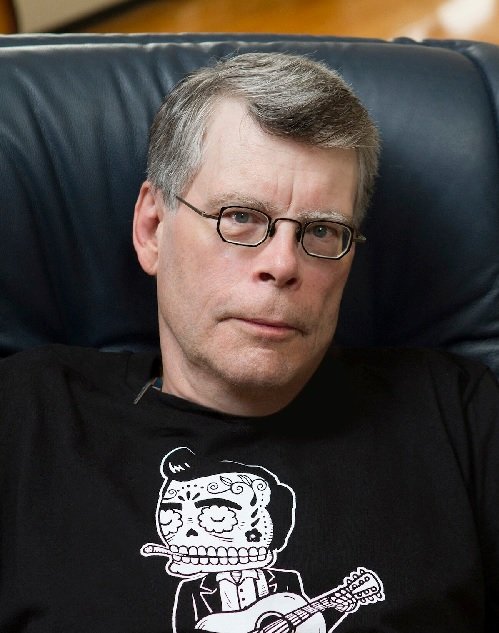
You don’t want to miss the Rolling Stone interview with Stephen King. Even if horror isn’t your cup of espresso, the insights into the creative mind are priceless. Check out King’s confession about the fears that stoke his nightmares:

Like what?

The one that recurs is that I’m going to be in a play, and I get to the theater and it’s opening night and not only can I not find my costume, but I realize that I have never learned the lines.

How do you interpret that?

It’s just insecurity – fear of failure, fear of falling short.

You still fear failure after all these years of success?

Sure. I’m afraid of all kinds of things. I’m afraid of failing at whatever story I’m writing – that it won’t come up for me, or that I won’t be able to finish it.

King’s On Writing is within reach even as I peck at the keyboard. It’s one I highly recommend. The first half is a confessional/autobiography. Before I’d read it, I had no idea of King’s alcohol and cocaine addictions. How he managed to survive them and end them is a heart-wrenching tale. You cannot help but be moved by King’s honesty and courage.

The second half focuses on the craft of writing, and is a classic of the genre, packed with practical advice. Well worth your money and time.

The Battle of Highbrow vs. Lowbrow

Creation

Over at Electric Lit, Amber Sparks argues that while writers usually claim one of the highbrow greats as their stylistic model, they often fail to give proper due to the lowbrow authors who inspired them to become writers. She cites authors willing to admit to the influence of pulp writers in their early careers:

“Romance novels, horror novels, thrillers. Psycho, Rosemary’s Baby, everything V.C. Andrews wrote, Danielle Steel: I devoured it all,” says Julia Fierro, author of Cutting Teeth. “Those ‘trashy’ books taught me how to write story, character, and created my lifelong need for drama, conflict, and my belief that every story, no matter what genre or style, needs to make the reader feel as if a lot is ‘at stake.’” And Peter Tieryas, author of Bald New World, says, “I devour and gorge on lowbrow entertainment, from the maligned Waterworld and the original Dawn of the Dead, to comics like Legends of the Dark Knight and X-Force, to K-pop and Tupac, and of course video games. They play with the tropes, or establish all new ones, and being unhinged from traditional restrictions, push the medium, teaching me that I can do the same.”

After all, says Sparks, “we’re all of us storytellers, trying to retell that first and perfect tale that started it all.”

I couldn’t agree more. In grade school, my vocabulary was three grades ahead of my classmates thanks to Marvel Comics. (Don’t ask about my math skills!) And as an English major, I continued to enjoy Robert E. Howard, H.R. Wakefield, and Robert Heinlein as much as Hemingway and Shakespeare.

As Sparks says, they’re all storytellers. And that’s what I want to be.

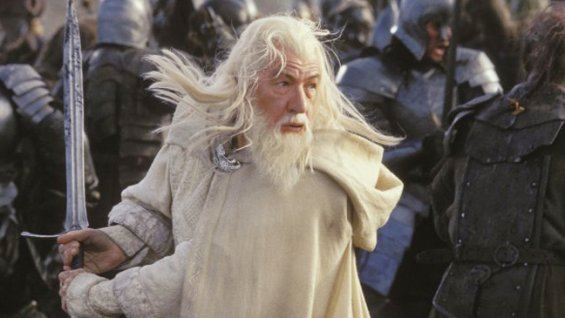
J.R.R. Tolkien’s Vision of Just War

Gandalf

Writing in the latest Imaginative Conservative,   and  offer a useful summary of Tolkien’s themes in Lord of the Rings. They point out that Tolkien’s epic is a war tale that was not intended to be an allegory, but still applicable to the issues of the time in which it was written. I’d add that Tolkien’s insights are applicable to many current issues  as well.

In response to the early criticism that the methods of Sauron’s forces and those of the Fellowship are “indistinguishable” since each side kills the other, Richards and Witt note that the Fellowship observes Just War theory: They fight aggression, they fight honorably, and, as far as circumstances allow, they are charitable to those they defeat in battle. But such acts rise from a fundamentally different worldview from their enemies:

There is also the stark difference between what Brian Rosebury calls “the diversity of good and the sameness of evil.”Among the free peoples of Middle-Earth there is widespread and mostly tolerated diversity, which extends to what does not happen. For instance, King Théoden and later Aragorn might have tried to insist that a primitive and ancient people known as the Woses join their military alliance. Instead Théoden takes the gracious help they offer, and both he and Aragorn honor the Woses’ desire to otherwise stay out of the war.

Compare this to the homogenizing slavery and oppression of those who bow the knee to Mordor. The contrast is stark enough that only a reader blinded by a philosophy of war devoid of even the crudest nuance could miss it.

I think that’s the key to understanding the differences between Sauron and the Fellowship, as well as the difference between totalitarians and small “r” republicans. The desire to flatten reality and make all the same drives all totalitarians, whether Hitler, Stalin, or Pol Pot. One of Russell Kirk’s principles of conservatism tell us, “They [conservatives] feel affection for the proliferating intricacy of long-established social institutions and modes of life, as distinguished from the narrowing uniformity and deadening egalitarianism of radical systems.”

The notion that one possesses an absolute and universal truth is too often used to justify the initiation of violence to enforce that truth. As Tolkien counseled, men are not wise enough to choose for all. Now that lesson is certainly applicable today.