Category Archives: Hemingway

The Magic of Words

Years ago, the opening scene of A Wizard of Earthsea captured my imagination and hooked me into this little classic. All who appreciate the power and beauty of words can’t help but feel the wonder Duny experiences as his gift for magic expands with his mastery of language. When his aunt, a witch, tells Duny the “true name” of falcons, he discovers this gives him control over them. This whets his appetite for more:

“When he found that the wild falcons stooped down to him from the wind when he summoned them by name, lighting with a thunder of wings on his wrist like the hunting-birds of a prince, then he hungered to know more such names. … To earn the words of power he did all the witch asked of him and learned of her all she taught, though not all of it was pleasant.” p. 5

Ordinary mortals feel the same rush when they learn the names of things. My eyes always tear up when I watch the water scene from The Miracle Worker. Anyone who isn’t moved when young Helen Keller learns that words represent reality has a heart of stone. Leicester Hemingway wrote that by the time his brother Ernest was eight, he “knew the names of all the birds, all the trees, flowers, fish, and animals found in the Middle West.” Knowing the names of things connects you to them. It elevates and empowers you.

As beautiful as this truth is, it isn’t romanticism, but hard practicality. Faithful communication was our distant ancestors’ most important adaptation to a harsh environment, as Robert Ardrey illustrated in The Social Contract:

“The bipolar nature of hominid society … became the cradle of language as we know it. Things had to be told. A hunter was injured, a child was sick. Hunters returning empty-handed had to tell apologetically of the big one that got away. Leopards menacing the home-place had to be described by the women, numbered, placed on the map if the group was to be defended.” p. 327

That’s why telling the truth evolved into an ancient virtue. Lying not only disrupted social bonds, but also threatened survival. Accurate, truthful communication alerted one’s family and neighbors to both dangers and opportunities.

Modernity hasn’t changed this basic fact. Writers offer the world an ideal of precise transmission of ideas and emotions. That’s what Ernest Hemingway meant when he reminded himself that he had to write “the truest sentence that you know.” In other words, a writer must discipline himself to express his truth with conviction and stand by his words.

Clear, honest communication remains a goal for the individual and society. Ezra Pound once declared that “Good art cannot be immoral. By good art I mean art that bears true witness, I mean the art that is most precise.” Asked what he would do if he were governor, Pound’s mentor Confucius vowed to “rectify the names.” By “rectify,” he meant to restore, to purify, to correct, so that words would correspond to reality. That’s a discipline, an art, and a calling.

How Writing Makes Us Human

I was intrigued by this observation from author Walter Stephens:

Writing evolved to perform tasks that were difficult or impossible to accomplish without it; at some level, it is now essential for anything that human societies do, except in certain increasingly threatened cultures of hunter-gatherers. Without writing, modern civilization has amnesia; complex tasks need stable, reliable, long-term memory.

Think about the octopus. It’s a remarkably intelligent creature, but its short life span precludes it from creating an enduring civilization. Imagine a human child that had to discover for itself how to make fire, the wheel, or language. As Stephens puts it, “Writing enabled memory to outlast the human voice and transcend the individual person.” Tradition, our inheritance from countless forbears, is the infrastructure that makes us fully human. Without it, we’d be in the same boat as the octopus. Except we wouldn’t have boats.

As Stephens reminds us in his thought-provoking article, the written word is the most powerful tool — or weapon — we have yet created. No wonder we view language as a “wondrous, mystic art.”

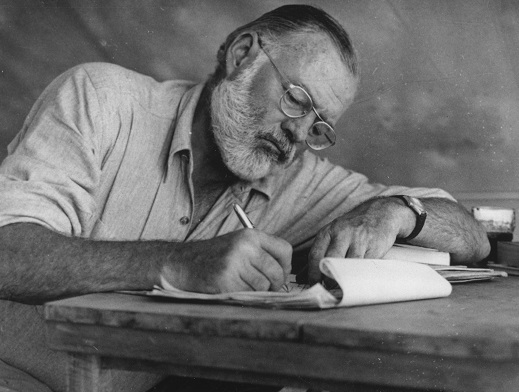
Wondrous indeed. And surely an art. Early on, I was fascinated by stories, and still love reading and writing. Words enable us to connect with the past, the present, and the future, and allow the individual to pass on the things that enchant and delight us. I love describing the joys and terrors of life, from the roar of a storm on Onslow Bay, the smell of a wood campfire at a mountain camp, or the taste of a steamed oyster. And while passing our thoughts and feelings to others is an essential life skill, the art of writing is a life-long pursuit. As Hemingway once put it, “We are all apprentices in a craft where no one ever becomes a master.”

It’s a journey that will never end.

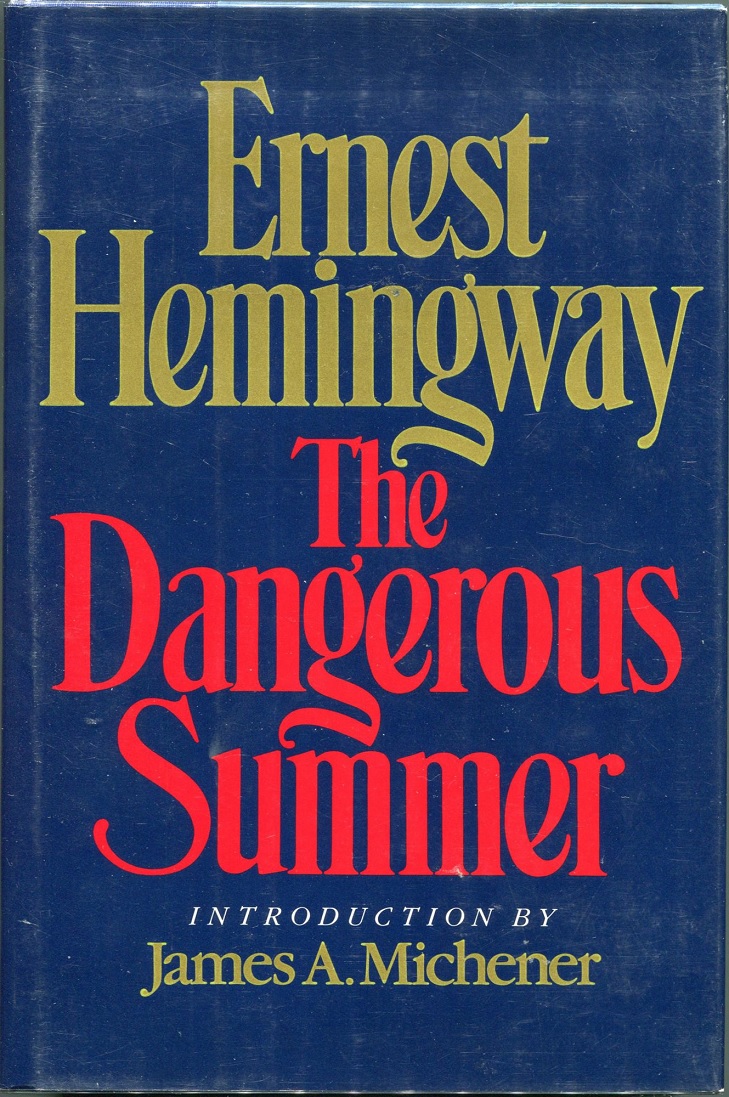
The Dangerous Summer

I finally got my hands of a copy of The Dangerous Summer, Ernest Hemingway’s account of his return to Spain fifteen years after the Nationalists took over. Having visited Republican forces during Spain’s bloody civil war, and authoring the best-selling novel For Whom The Bell Tolls, which gave a sympathetic account of the Republican cause, visiting Spain was risky for Hemingway.

It was the last book the world-famous author wrote. I’m half-way into it, and find it not only enjoyable, but enlightening. Hemingway is as lucid and vivid as ever as he describes the Spanish countryside, the fine food and drink, and, of course, the bull fights. He seems to be more relaxed and open in this work. I suspect he was no longer focused on solidifying his legacy, and was able to loosen up a bit and make his account more conversational.

Early on, I was reminded of this statement from another author, Elmore Leonard:

“My biggest influence at the very beginning was Hemingway. I grew up reading Hemingway—I loved him. When I was writing westerns, I would open For Whom the Bell Tolls anywhere, because they are in the mountains with horses and guns. I got in the mood. But then I realized that Hemingway didn’t have a sense of humor…”

Leonard apparently never read The Dangerous Summer. Hemingway, aware of his reputation for backing the losing Republican side, approaches the Spanish frontier with a little apprehension, uncertain how the Nationalist regime will react. From The Dangerous Summer:

“Then we left for the frontier. It was grim at the inspection post too. I took the four passports in to the police and the inspector studied mine at length without looking up. This is customary in Spain but never reassuring.

‘Are you any relation of Hemingway the writer?’ he asked, still without looking up.

‘Of the same family,’ I answered.”

Who says Ernest Hemingway lacked a sense of humor?

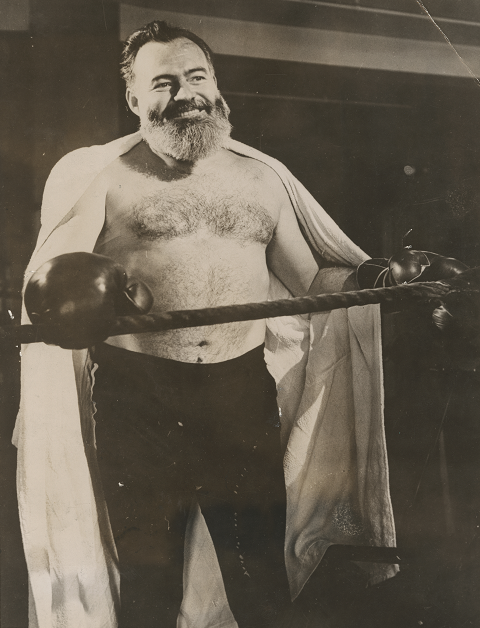
The Boxer

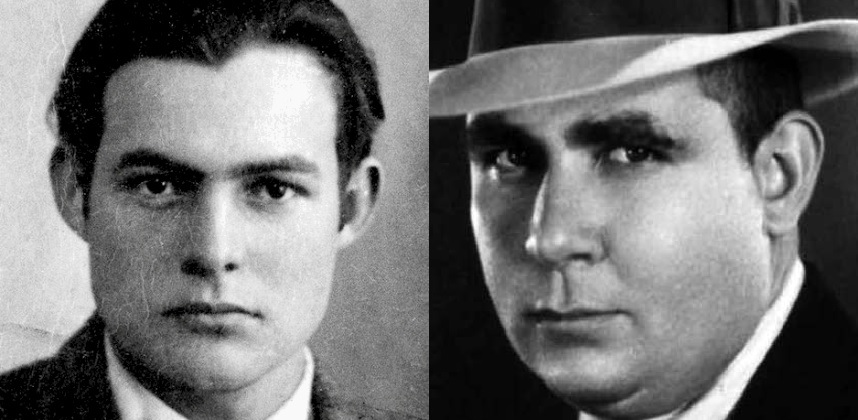
Ernest Hemingway and Robert E. Howard had a lot in common. Both were passionate outdoorsmen who relished food and drink and brawling. Though identified with different genres, both infused their fiction with athletic, vivid prose that still stirs the imaginations of appreciative readers. They have inspired countless writers, and decades after their deaths, their works are still in print.  

Both of them boxed, and wrote spirited, brawny stories about boxers. And each also wrote inspirational tales about heroes who refused to surrender despite overwhelming odds.

And yet, both committed suicide.

I’ve read excellent accounts of the lives and careers of both authors, and still puzzle over their final acts.

No doubt both men were tormented, and found some release – or at least, temporary escape – from their suffering in their writing. In a letter to F. Scott, Fitzgerald, Hemingway confided:

“Forget your personal tragedy. We are all bitched from the start and you especially have to hurt like hell before you can write seriously. But when you get the damned hurt use it—don’t cheat with it. Be as faithful to it as a scientist—but don’t think anything is of any importance because it happens to you or anyone belonging to you.”

In his poem “Musings,” Howard identifies writing as a weapon against the horrors and torments of a hostile world:

The mighty poets write in blood and tears
And agony that, flame-like, bites and sears.
They reach their mad blind hands into the night,
To plumb abysses dead to human sight;
To drag from gulfs where lunacy lies curled,
Mad, monstrous nightmare shapes to blast the world.

The intrepid protagonists that both writers brought to life still inspire. Garcia, the washed-up matador in Hemingway’s “The Undefeated,” must battle not just a formidable bull, but a predatory promoter and a fickle, unforgiving crowd. Like Santiago in “The Old Man and the Sea,” Garcia may be beaten at the end, but refuses to give up. Howard’s Conan tales still thrill readers with dazzling, evocative scenes of courage and muscle battling intrigue and sorcery.

How could artists who penned such timeless accounts of heroic tenacity raise their guns to their own heads?

One possible explanation is suggested by H.P. Lovecraft’s tribute to Howard shortly after Howard’s suicide:

“Scarcely anybody else in the pulp field had quite the driving zest and spontaneity of R. E. H. He put himself into everything he wrote—even when he made outward concessions to pulp standards…”

The same could be said of Hemingway. Both infused their stories with their own life-force. Like the determined heroes they conceived, they held on to their agency, though in a final, hard choice. Both found themselves with no other option. Hemingway could no longer write, and he was racked by concussions and a broken body. Howard was convinced both his relationship with Novalyne Price and his writing career were over, and was physically and emotionally wrecked by the demands of attending to his mother.

We can easily imagine Hemingway and Howard as the boxer Paul Simon wrote about:

In the clearing stands a boxer
And a fighter by his trade
And he carries the reminders
Of every glove that laid him down
Or cut him till he cried out
In his anger and his shame
“I am leaving, I am leaving”
But the fighter still remains

Pummeled and in devastating pain, the boxer chooses to leave. But the fighter still remains. As Hemingway once put it, “A man can be destroyed but not defeated.”

HEMINGWAY – KEN BURNS

Looking forward to the Ken Burns documentary on Ernest Hemingway airing on PBS April 5-7. If it’s half as good as Burns’ Civil War series, it should be a classic.

Featuring original manuscripts and rare archival photos and films, the series promises new insights into Hemingway’s creative process behind such masterpieces as A Farewell to Arms and the short stories “The Snows of Kilimanjaro” and (my favorite!) “The Short Happy Life of Francis Macomber.” With voice-overs by Jeff Daniels, Meryl Streep, Keri Russell, Patricia Clarkson, and Mary-Louise Parker, viewers can look forward to a series comparable to Burns’ other masterpieces.

Beginning April 5, I’ll be glued in front of the TV with mojitos at hand.

Get Out of the Way!

Get out of the way

Many of the submissions Joe Ponepinto has turned down for his literary journal appeared to have everything going for them — tension, good characterization, an interesting premise — yet they just didn’t work. He had to reject stories that hit all the right buttons, but failed to resonate.

Writing as both an editor and author, he tells us what’s wrong with technically sound but lifeless submissions:

In short, the writer is present in every sentence, hunched over the reader’s shoulder, which is why so much in these stories sounds like explanation, like the writer worrying that readers won’t “get it” unless they lay out paragraphs of background info. As Elmore Leonard famously said, it sounds like writing.

How do you create writing that doesn’t sound like writing? Yes, you have to hit all the right buttons, including pacing, characterization, theme, plot points, tension, etc, but you have to do it without the reader seeing you do it. And you can only do that when you don’t think about those technicalities. As Ponepinto puts it, “You have to internalize the conventions of creative writing so that you know them without thinking about them.”

Or, as Ernest Hemingway advised, “Write drunk, edit sober.”

The goal is what the Japanese call zanshin, the state of total awareness made possible by unselfconscious mastery of your craft. There’s only way to get there, and that is to practice the techniques of your craft until they enter your subconscious. In karate class, we had to practice basic skills repeatedly until they became second nature. In a tournament (or, more urgently, a street fight) you cannot win if you obsess over methodology. (How did sensei tell me to block a low punch?)

Martial arts require unconscious mastery and total focus, attributes that are invaluable in every aspect of life, including writing. Here’s what Wannabe Bushcrafter counsels about mastering the sling:

Your mind must be completely clear. Try to not think about anything when slinging. Distracting thoughts absolutely kills accuracy. …

Now here is the hard part! You need to practice, A LOT. You need to practice every single day for hundreds of days. Practice until your arm and back are sore, practice until thick hard calluses form on your release fingers. Practice until your muscles, your eyes and your mind become one. Practice until you are able to consciously purge all thoughts from your mind at a moment’s notice.

For writers, that means we must read a lot and write a lot.

COVID-19 and Paris

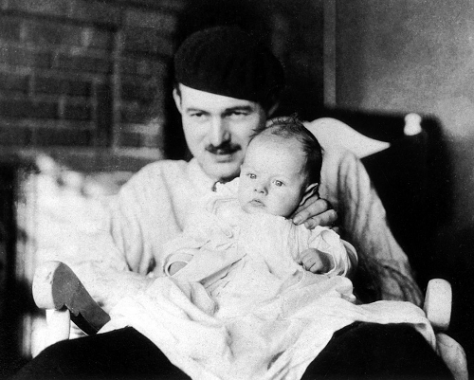
Hemingway and Bumby
Hemingway and Bumby

Elmore Leonard, who admired Ernest Hemingway, and looked to him as a role model, once lamented that the famous author “didn’t have a sense of humor.”

I disagree.

I’ve been busy during our global time-out. I’ve been reading new fiction, as well as re-reading old favorites, including Ernest Hemingway’s A Moveable Feast, a series of vignettes of Hemingway’s early days as an author while starting a family in 1920s Paris.

This little book cannot be drained; every time I read it, I discover more treasures. And if the honorable Mr. Leonard were alive, I could tell him Hemingway displays a wicked sense of humor in A Moveable Feast.

Let’s look at a few examples.

The metaphor that links the book’s poignant scenes together is the sumptuous food and drink of Paris. Here’s how Hemingway launches our little tour:

As I ate the oysters with their strong taste of the sea and their faint metallic taste that the cold white wine washed away, leaving only the sea taste and the succulent texture, and as I drank their cold liquid from each shell and washed it down with the crisp taste of the wine, I lost the empty feeling and began to be happy and to make plans.

That should whet any appetite. It certainly works for me.

Hemingway depicts Paris as a sprawling, lusty muse for all artists. In those days, he knew no greater joy than parking himself at a little café and setting a freshly sharpened pencil to his notebook. Pure writerly bliss. But every paradise has its snake, and for Hemingway, it’s the aggressive follower:

“Hi Hem. What are you trying to do? Write in a café?”

Your luck had run out and you shut the notebook.

Other artists, and especially writers, cannot evade Hemingway’s sharp, scrutinizing eye:

Wyndham Lewis wore a wide black hat, like a character in the quarter, and was dressed like someone out of La Boheme. He had a face that reminded me of a frog, not a bullfrog but just any frog, and Paris was too big a puddle for him.

F. Scott Fitzgerald and his melancholic wife Zelda get much scrutiny. Scott and Zelda had what you could call a rough and tumble, bittersweet relationship. When Zelda informs Scott she considers his, um, manhood inadequate, Scott looks to Hemingway for reassurance, which he kindly offers:

“You’re perfectly fine,” I said. “You are O.K. There’s nothing wrong with you. You look at yourself from above and you look foreshortened. Go over to the Louvre and look at the people in the statues and then go home and look at yourself in the mirror in profile.”

“Those statues may not be accurate.”

“They are pretty good. Most people would settle for them.”

Ah, the healing power of art.

Best Fiction and Writing Blogs

Ernest Hemingway

The best fiction and writing blog posts from around the ‘net, all guaranteed to make you a literary heavyweight. Inspired by ernie.

P. S. Hoffman3 Vital Keys to Every Great Horror Story
Kendra BoersenRevision, With A Side Of Existential Crisis
Emily Raper5 Misconceptions About Writers
Annika PerryWrite From Your Heart
Lionelson Norbert YongWhy I Chose Fantasy As My Genre
E. Michael HelmsSense and Sensibility [Not what you think!]
D. Wallace PeachThe Word Police
Ernest HemingwayHow to Write Fiction

Best Fiction and Writing Blogs

hemingway-boxer

The best fiction and writing blog posts from around the ‘net, all guaranteed to make you a literary heavyweight. Compiled by ernie.

C.S. WildeFree Scene Planer
John HartnessMusic to write by
Miguel Olmedo MorellThe Day I Filmed Tolkien’s Grandson
Fionn GrantThere Is No Original
PenstrickenA Fight Scene Worth Reading
Janice HardyBackstory: Finding the Right Balance
Alice OsbornWhy I Love Editing
Ernest Hemingway Seven Tips on How to Write Fiction