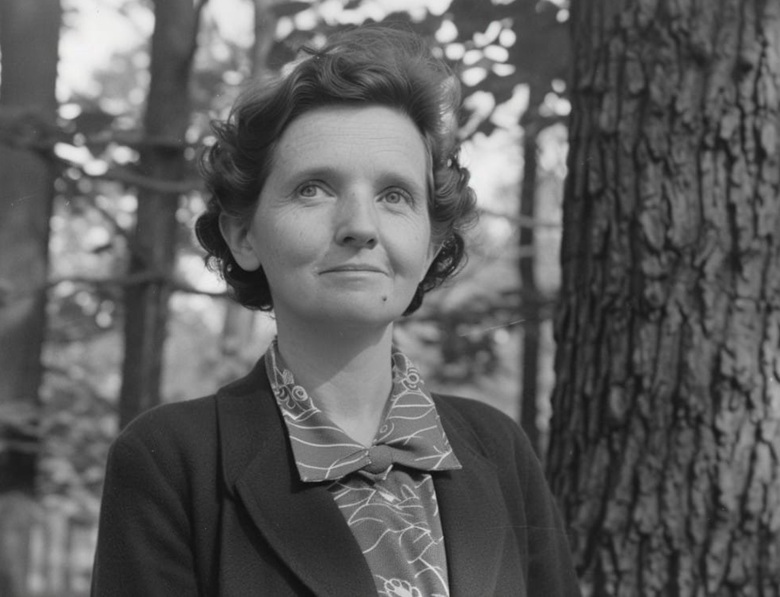
“The aim of science is to discover and illuminate truth. And that, I take it, is the aim of literature, whether biography or history.”
Rachel Carson
“The aim of science is to discover and illuminate truth. And that, I take it, is the aim of literature, whether biography or history.”
Rachel Carson

The latest findings on American literacy are troubling, and not just for educators and authors:
The number of Americans who read for pleasure has fallen by 40%, according to a new study.
Researchers at the University of Florida and University College London have found that between 2003 and 2023, daily reading for reasons other than work and study fell by about 3% each year.
Many causes contribute to this unsettling trend. More “how to” advice is presented in the form of videos rather than text. Often, when you’re trying to read a news story online, pop-up videos vie for your attention. Video games, with their numbing sound effects and over-the-top visuals, offer seductive, but mindless, distraction. How are books to compete?
And again, the effects are far-reaching. Written language is the bedrock of an advanced civilization. The wisdom of past generations boosts the available information to the present generation, freeing us from having to re-invent the wheel.
Just as important, language binds us to one another, helping us see ourselves in context. Reading stories opens our eyes, letting us see we’re not alone facing problems.
Finally, each of us is a story, a cohesive narrative that makes sense of our memories, good and bad, as well as our aspirations. Lacking that narrative, we fall apart. Little wonder so many people feel isolated, disconnected, not just from others, but from themselves. When children agonize about being born in the wrong body, they’re yearning for a cohesive identity, which helps define purpose.
A culture that actively promotes atomizing society into disjointed, isolated individuals needs medical attention. The humanizing power of language is just what the doctor ordered.

“It’s a human need to be told stories. The more we’re governed by idiots and have no control over our destinies, the more we need to tell stories to each other about who we are, why we are, where we come from, and what might be possible.”
Alan Rickman

“The act of writing this book made it clear to me that history, folklore and fiction are actually more similar than they are different. Each uses storytelling as a means of reckoning with the world, of processing trauma—both individually and collectively—and of finding one’s place. At the same time, these stories, whether fictional or factual, bind us to something greater, some shared understanding of where we have come from, of who we are, and of who we might become. “

One of my coping mechanisms when stuck on a manuscript is to read outstanding posts on writing I’ve saved over the years. This morning, I revisited this advice from K.M. Weiland:
One of the best rules of thumb for showing instead of telling is to never name an emotion. Love, hate, happiness, sadness, frustration, grief—they all might be easily recognizable emotions. They might even all be emotions that will immediately get a point across to a reader. But by themselves the words lack the ability to make a reader feel what we are trying to convey.
This insight shook the mental cobwebs that had been holding me back. Weiland’s right — the most stirring and uplifting prose succeeds obliquely, rousing the reader to silent awe or trembling fear. A few examples:
“Some nights in the midst of this loneliness I swung among the scattered stars at the end of the thin thread of faith alone.” – Wendell Berry
“The trees were full of silver-white sunlight and the meanest of them sparkled.” — Flannery O’Connor
“I sat up straight and as I did so something inside my head moved like the weights on a doll’s eyes and it hit me inside in back of my eyeballs. My legs felt warm and wet and my shoes were wet and warm inside. I knew that I was hit and leaned over and put my hand on my knee. My knee wasn’t there.” — Ernest Hemingway
Not only do these examples evoke intense reactions, they do so indirectly. As Weiland advises, the best writing shows rather than tells. Emily Dickinson was on the same track when she proposed that we tell the truth, but tell it slant.
I believe these passages soar for us because they appeal to more than just our logical selves. The neocortex, that is, the rational brain, processes language, but it connects to other parts of the brain as well. The limbic system interprets facts as emotions, and triggers the reptilian brain, which in turn shoots reactions to the body. So if you read Stephen King alone at midnight, you start peeking outside the window and maybe sweat a little. That’s the three parts working together. And we love it.
Good writing, then, achieves unity of mind and body, a sorely needed experience in an age that fractures and alienates.
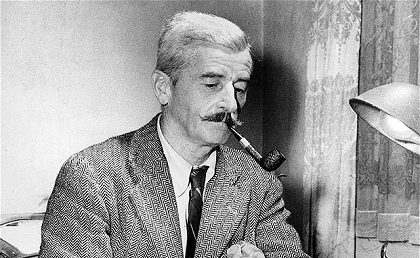
“I believe that man will not merely endure: he will prevail. He is immortal, not because he alone among creatures has an inexhaustible voice, but because he has a soul, a spirit capable of compassion and sacrifice and endurance. The poet’s, the writer’s, duty is to write about these things. It is his privilege to help man endure by lifting his heart, by reminding him of the courage and honor and hope and pride and compassion and pity and sacrifice which have been the glory of his past.” – William Faulkner, from his acceptance speech for the 1950 Nobel Prize for Literature.
 M.C. Tuggle, Writer