Category Archives: Movies

On Superheroes

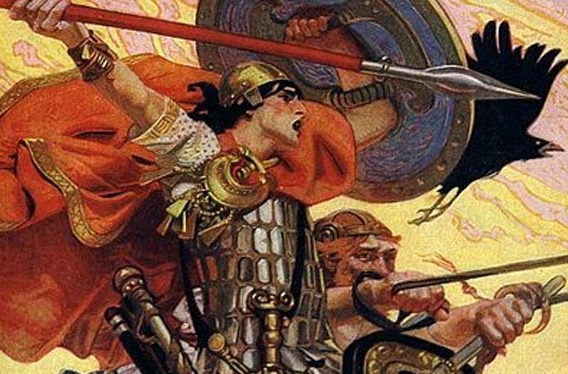
Cuhullin
Cuhullin Riding His Chariot into Battle

Brian Kaller looks at the similarities and differences between the competing blockbusters Captain America: Civil War and Superman vs. Batman, and why Marvel movies are better than DC movies. Along the way, he reveals just what it is about superheroes that continues to fascinate us:

As long as humans have existed, we have told legends of people with super-human abilities, and delighted in stories of how they faced danger and out-fought or out-witted enemies. Gilgamesh for the Sumerians, Odysseus and Jason for the Greeks, Samson for the Hebrews, Beowulf for the Saxons – ancient scriptures, barbarian sagas and oral traditions swell with superheroes. In a more modern era the Scarlet Pimpernel, Zorro, Paul Bunyan, the Lone Ranger, James Bond and Sherlock Holmes are all basically super-heroes, doing things real people can’t do. Every culture has stories like this; our forebears told them around campfires or mead-halls, 20th-century kids read them in comic books.

When societies abandon that heroic ideal, when they acquire the “philosophic indifference” of Gibbon’s latter-day Romans, the culture is in deep trouble. As our country slipped away from the post-war glow into an era of escalating hedonism, it abandoned superheroes save as pablum for children.

Yet Generation X-ers and Millennials, children of the counterculture, embraced them even into adulthood, perhaps desperate for the heroes their culture no longer provided. In this century, as the nation grows ever more troubled, we are turning back to stories that give us heroes to believe in – a sign that there is hope for us.

Yes, we can dismiss superhero movies as unrealistic, childish, and silly. And in a world of hip cynicism, self-serving politicians, and sleazy celebrities, why read or write about stubbornly courageous characters who risk life and reputation for friends or family? In a world where mouthing the easy lies of our time ensures success, why would anyone in his right mind cheer a character who questions, or, heaven forbid, rebels against accepted thought?

Because we must.

“If you’re a writer, declare yourself the best writer!”

Here’s an inspirational scene from one of my favorite movies, Midnight in Paris. Gil Pender, a young writer on vacation in Paris, climbs into a cab at the stroke of midnight, and when he gets out, he finds himself in 1920s Paris, where he encounters many literary and artistic legends. In the following clip, Gil gets to discuss writing with Ernest Hemingway. Gil can’t resist asking for a small favor:

Gil: Would you read it?

Ernest Hemingway: Your novel?

Gil: Yeah, it’s about 400 pages long, and I’m just looking for an opinion.

Ernest Hemingway: My opinion is I hate it.

Gil: Well you haven’t even read it yet.

Ernest Hemingway: If it’s bad, I’ll hate it because I hate bad writing, and if it’s good, I’ll be envious and hate it all the more. You don’t want the opinion of another writer.

Gil: You know what it is? I’m having a hard time getting somebody to evaluate it.

Ernest Hemingway: You’re too self-effacing; it’s not manly. If you’re a writer [slams table with his fist], declare yourself the best writer.

Ha! Yeah, that sounds like Ernie. And he’s right: It takes more than a little self-confidence to put your heart into a story and hit that “Send” key. You don’t know what the person judging your work is going to think. That’s scary — definitely not for the weak of heart.

Jami Gold recently addressed this in a great blog post titled “What Helps You BE a Writer?”:

Outside of any writing skill that we may or may not have, we also bring other aspects of ourselves to the writing-journey table. We might have personality traits that help us want to be a writer, such as a love of storytelling or a desire to entertain, educate, or inspire others.

Or we might have personality traits that help us stick with writing, even during the bad times. As Delilah mentioned in her post, stubbornness (tenacity, perseverance, determination, etc.) ranks high in many of the replies.

We might have enough of an ego that we think others are interested in what we have to say. Or we might have a desire to prove ourselves worthy of being listened to.

Jami and Ernie are on to something: If you’re going to write, go big. Go brazen. And keep going.

“Rowdy” Roddy Piper Versus Cthulhu!

Portal to Hell!

This evening, The Charlotte Film Society featured two shorts and a full-length film. My wife and I agreed the main film, Nina Forever, was an unfocused hot mess. However, the short Portal to Hell!!! was a blast.

Ex-pro wrestler Roddy Piper plays Jack, a patient, over-worked, and under-appreciated building super. Jack’s so stressed by his job that he ignores a lady who’s obviously interested in him. One day, while checking out a power loss in the old building’s creepy basement, he discovers that two elderly male tenants dressed in tighty whities have invoked none other than the dreaded Cthulhu from his undersea hideout in R’lyeh. Jack just wants to do his job, but he’s pretty sure the men’s actions violate their lease, and doesn’t hesitate to tell them.

The Old One, being who he is, strikes out from his portal and kills everyone in his reach, then wraps a tentacle around Jack and s-l-o-w-l-y drags our hero toward certain doom. But the lady who has a secret crush on Jack finds the book the old men used to summon Cthulhu. Will she find the correct spell in time? And is that spell permanent or just a temporary fix?

Great special effects, great acting, lots of laughs, and plenty of hidden treasures for Lovecraft fans.

One sad note: Roddy Piper passed away shortly before the film was nominated for the Toronto International Film Festival.

Through Wendell Berry’s Looking Glass

Berryphoto via http://www.theseerfilm.com

Laura Dunn’s new documentary of Wendell Berry lets us meet a true American original. Produced by Robert Redford and Nick Offerman (Parks and Rec), The Seer introduces viewers to the work and thought of Berry, whose writing grapples with the question of how we can remain human in an increasingly flattened, urbanized, and technological world.

From a review by Gracy Olmstead:

Berry is a Kentucky-born farmer and philosopher, essayist and poet, environmental activist and localist. He’s written fiction, nonfiction, and poetry, and has been the recipient of a Guggenheim fellowship, the National Humanities Medal, and the Richard C. Holbrooke Distinguished Achievement Award. Those familiar with Berry’s work know that he is an outspoken advocate for “flyover country”—for towns and communities, farmers and farms neglected or even maltreated by modern politics and culture. His nonfiction work lauds a loyalty to place, to family, and to community that we’ve largely forgotten. His poetry exudes a reverence for the created world, for the glory of quotidian rituals and objects. His novels combine both these things in characters that love their towns and land. Through this immense body of work, Berry has appealed to a wide range of readers, transcending political and personal biases.

What makes Wendell Berry so refreshingly different as a social critic is that his starting point is not some pre-packaged, other-worldly ideology. Instead, Berry lives and writes within a close-knit community of people making their living on family farms. As Olmstead points out, Berry’s independent point of view has “angered people on both left and right—but it’s also enabled him to bridge ideological barriers and appeal to a large set of people. He’s tapped into a yearning that lies in the heart of so many: a love of home, of place, of traditions that are worth preserving and communities that are worth celebrating.”

We live in an artificial world where the use of anti-depressants is “skyrocketing.” Wendell Berry’s battle cry for reclaiming human connections may be just what we need.

Why ‘The Force Awakens’ Is the ‘Star Wars’ Movie We Needed

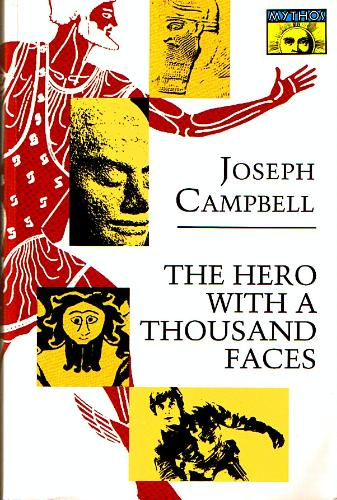
Joseph CampbellReprint of Campbell’s classic with Luke Skywalker on the cover.

Some folks have criticized The Force Awakens for drawing too heavily on Star Wars: A New Hope. Writing in The Rolling Stone, David Ehrlich argues that these critics are missing the point. In The Force Awakens, Abrams is “making new” a tale that inspires and excites with each retelling:

The original 1977 movie was innovative in many respects, but it was derivative by design. In creating a galaxy far, far away, Lucas effectively draped his imagination over a constellation of yarns so familiar that they seem to have spun from the marrow of our bones. Its alchemy is nothing if not well documented: A New Hope combined the plot of Akira Kurosawa’s The Hidden Fortress with the widescreen scale of Lawrence of Arabia and the Saturday morning spectacle of serials like Flash Gordon and Buck Rogers. With his 20th-century influences well in hand, Lucas then poured them like molten metal into the iron mold of the hero’s journey as laid out by Joseph Campbell, who traced the origins of modern narrative arcs back to the beginning of civilization. “I wanted a contemporary version of the myth and the fairy tale,” Lucas said in a Los Angeles Times interview published days before Star Wars first hit theaters in 1977.

Whether we’re talking about Beowulf, the Iliad, or Indiana Jones, such stories resonate because, as Ehrlich puts it, “they seem to have spun from the marrow of our bones.” Campbell stripped the heroic myth down to its barest essentials:

A hero ventures forth from the world of common day into a region of supernatural wonder: fabulous forces are there encountered and a decisive victory is won: the hero comes back from this mysterious adventure with the power to bestow boons on his fellow man.

The heroic myth, then, is about leaving behind what was once comforting and familiar, confronting new challenges, and finding one’s place in a world that has changed in many ways, some good, some bad. But the hero now knows he can survive and thrive in that world. Sounds like growing up, doesn’t it?

Benedict Cumberbatch as Dr. Strange

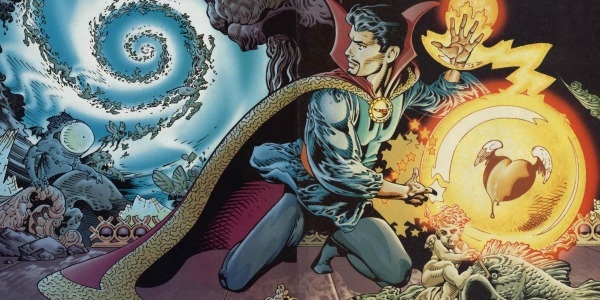
Dr. Strange

Now this should be fun! Benedict Cumberbatch stars in what’s being promoted as the most “mystical, magical Marvel movie ever.”

Dr. Strange was one of the lesser-known of the Marvel comics heroes, but as a kid, I bought many Strange Tales, which featured the “master of the mystic arts.” The character blended the superhero genre with Western and Eastern mysticism. Through high school and college, I found Dr. Strange as fascinating and surprising as Carlos Castaneda’s Don Juan, and maybe a little more accessible.

The spells Strange cast opened doors to alternate universes whirling with unknown worlds, mind-bending vistas, non-Euclidean structures, and beings that looked like they’d sprung from Picasso’s nightmares. And like James Bond, the good doctor often duked it out at Euclidean, but exotic venues. Stonehenge was the site of one spell-casting shoot out with an evil sorcerer. Loved it! No doubt many Boomers intrigued by the psychedelia that energized the worlds of Dr. Strange can’t wait for a nostalgic return. I know I can’t.

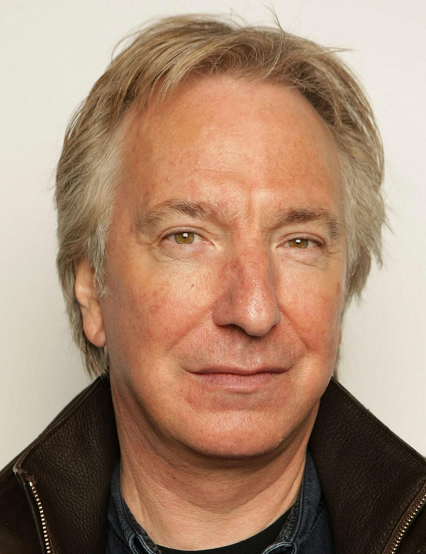
And no matter what other characters he plays, none will have a name as cool as “Benedict Cumberbatch.”

Remembering Bob Gordon

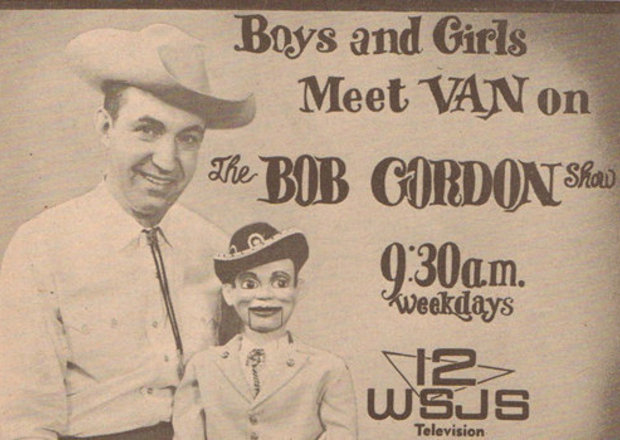
Bob Gordon

Robert Gordon Van Horn, November 16, 1924 – September 11, 2015

Now this brings back some memories:

Robert (“Bob”) Gordon Van Horn was an unassuming man, not given to boasting, and devoid of any ego. If you spoke with him, you’d never know that he was a popular TV personality, a creative innovator, or a war hero. As our mutual friend Dave Plyler told me, “Bob saw fierce combat in World War II at the Battle of the Bulge for which he earned a purple heart and a bronze star, but he never discussed his service.”…

Bob is preceded in death by North Carolina’s other legendary children’s TV show hosts: George Perry (WFMY’s Old Rebel); Fred Kirby (WBT’s singing cowboy); Uncle Paul Montgomery (WRAL’s jazz artist); and Brooks Lindsay (WSOC’s Joey the Clown). His passing earlier this month should serve as a reminder of the pioneering work they all did to make growing up just a little more fun.

Saturday afternoons, I’d plant myself in front of our black-and-white TV and watch those wonderful “B” serials Bob Gordon featured on his show in between rope and magic tricks. Rocket Man was my favorite.

Rocket Man

Those cliffhanger serials were my first introduction to science fiction, and no doubt influenced my approach to story telling.

Thanks for the memories, Bob.