“Writing is a sort of way of disobeying two major rules I heard as a child: stop daydreaming and stop staring into space.” Anne Tyler
Category Archives: Writing
Creative Community & The Fear of Becoming “Normal”
Writing is viewed as a solitary activity. Some writers believe their isolation is what defines them, and even imagine that socializing would not only detract from their uniqueness, but diminish their creativity. Mingle with the herd, and you’ll become one of them. Call it the writer’s fear of becoming “normal.”
But these folks have it all wrong. We are social beings who need to interact with others. What’s more, social contact improves our craft, as this piece from PsychCentral explains:
As creative people, we need others to see the work we do (after all art is meant to be seen), to give us feedback and also to normalize some of the chaos that comes with the creative territory.
Aside from these internal benefits, being a part of a community of creatives can also expand your audience reach, increase the chances of doing collaborative work (in which you can discover a brand new part of yourself and a new method to create) and extend your creative network. A community can give you the opportunity to experience art and creativity from the various perspectives of all the other people surrounding you, at a collective level rather than the individual one you can provide for yourself.
I know I’ve benefited from my participation in the Charlotte Writer’s Club and my monthly critique group, as well as various writing workshops. Even when you’re stuck in the office, you can exchange views and ideas by posting comments on writing blogs.
Naturally, we also need time alone to think and create. The ideal is a balance of separateness and socialization.
Andrew Nelson Lytle advised us to “throw out the radio and take down the fiddle from the wall.” By that, he meant that art, entertainment, and companionship were not meant to be separate things. Art should be a social, interactive endeavor that not only engages everyone who participates, but beckons all toward beauty and a sense of connectedness. To me, that’s the ultimate aim of any art.
Quote of the day
“I’m not a really good writer, and I’m okay with that. What I do have is this ability to dissect my emotions and feelings, and write about my deepest secrets, about what terrifies me, about what I hate.” Cristian Mihai
Now one could counter that the ability to capture your deepest secrets and fears with words is the definition of good writing.
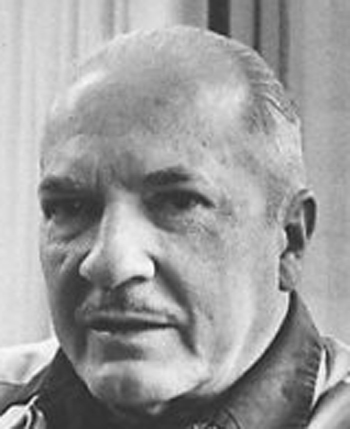
Consider H.P. Lovecraft. His characterization and dialogue could be laughably bad, but his ability to construct scenarios and concepts that thrilled and challenged readers made him a giant among fantasy and horror writers.
Bottom line: We can’t be good at every aspect of life, or even good at every aspect of our chosen craft, but we can focus on what we love and make the most of what we have.
Best Fiction and Writing Blogs
The best “how-to” writing articles of the week, compiled by robert.
Alice Osborn: 3 Steps for Taming the Inner Critic
Sarah Hoyt: There’s No Business Like Writing Business
A Vase of Wildflowers: Links for Readers and Writers
Cristian Mihai: Five Painters
Stuck on your next move?
We’ve all been there. Despite your meticulous outlining, you find yourself stuck in your story and have no idea what your protagonist does next. How do you advance your plot?
Fear not. This is something every writer has to wrestle with. Even the pros admit to hitting an occasional road block. So whether a best-selling author or lowly scribbler, you have to deal with the occasional plot snag somehow. So I’ll share what I do.
My approach is two-fold: First, go back to your protagonist’s basic motivation. What does he want? Then imagine the worst that could happen to prevent him from achieving his goal. Throw that at him, and watch what he does. If you understand the protagonist’s history and heartfelt desire, you should be able to visualize how he’ll respond.
Read the rest at Alice Osborn’s blog, where I’m guest blogging today.
Best Fiction and Writing Blogs
The week’s best “how-to” articles compiled by margaret
Jacqueline Seewald: Setting the Scene
Holly Lisle: Freeing Up the Subconscious in Writing
Grady Brown: SUPERPOWER: ENERGY MANIPULATION (I could use that!)
A Vase of Wildflowers: Links for Readers and Writers
Cindy Knoke: It’s Home to The Holler We Go! (Nothing like dazzling pictures of exotic wildlife to inspire you)
Nicola Alter: Accepting the Existence of Magic (How to do magic right in your stories)
A Conversation with Steve Himmer, author of Fram

Steve Himmer writes about bleak, alien landscapes and the surprising complexity his characters discover in those places. The critical quote:
“I guess I wouldn’t say we’re at odds with nature so much as befuddled by an insistence on seeing ourselves as the most important thing—the only thing, more often than not—that matters in any particular landscape.”
Best fiction and writing blogs

The best fiction and writing blogs, compiled by reh
This edition features the best author interviews on the Internet. Enjoy!
Jacqueline Seewald: Interview With D.K. Christi
A Writer’s Path: How Mark Lawrence Became Published
Fantasy Faction: Chris Evans Interview
The Paris Review: Michel Houellebecq Defends His Controversial New Book
No Wasted Ink: Author Interview: Jamie Maltman
Warrior Scribe: Writing dark fantasy, martial arts and travel with Alan Baxter
7 Languages That Inspire Fantasy Authors
Of the more than 6,500 documented languages, guess which have inspired fantasy authors the most? A very useful introduction from Thoughts On Fantasy.
What kind of writing makes the most money?
“Ransom notes.” Elmore Leonard
Ha! Love that quote. And check out the BBC interview with Leonard at the link. The Master talks about his approach to writing, his daily regimen, and how he learned to let his characters be themselves.
 M.C. Tuggle, Writer