On Location: “Aztec Midnight”

Want to see pictures of the various sites where much of the action in Aztec Midnight takes place? Then you need to check out Pinterest.

Calle Revolución in Cuernavaca, the U.S. State Department headquarters in D.C., the Instituto Nacional de Antropología e Historia, the Tepozteco archaeological site in Tepoztlan — there’s even a picture of the magical lair where it all came together (aka, my humble little office). Check it out.


The power of story

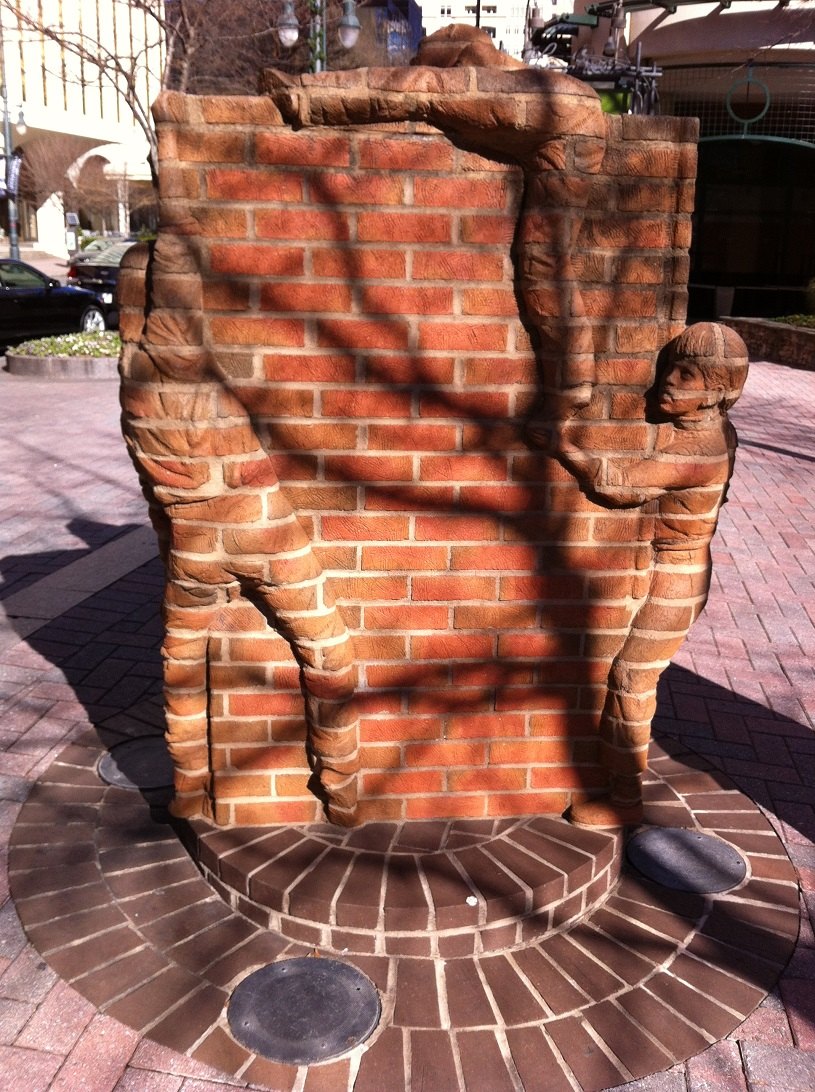
BrickSculpture

Why do all human cultures create and pass on stories? We know that shared stories — histories — unite a people,  just as a person’s life history unifies one’s many experiences into a coherent narrative and defines that person. But that’s only part of it.

Now we are learning that a shared story creates a connection much deeper than we ever suspected.  Writing in Aeon Magazine, Elizabeth Svoboda tells us how neuroscience is uncovering how stories help us connect to other people:

In a 2010 Proceedings of the National Academy of Sciences study, the psychologist Uri Hasson and his Princeton University colleagues had a graduate student tell an unrehearsed story while her brain was being scanned in an fMRI machine. Then they scanned the brains of 11 volunteers listening to a recording of the story. As the researchers analysed the data, they found some striking similarities. Just when the speaker’s brain lit up in the area of the insula – a region that governs empathy and moral sensibilities – the listeners’ insulae lit up, too. Listeners and speakers also showed parallel activation of the temporoparietal junction, which helps us imagine other people’s thoughts and emotions. In certain essential ways, then, stories help our brains map that of the storyteller.

We already knew stories let us break through our normal limits, allowing us to transport ourselves into deep space, the deep sea, or life as it was lived thousands of years ago. But they also enable us to free ourselves of those most alienating and harmful barriers, the self-made blockades meant to protect, but which actually isolate us from other people.

So it’s not just entertainment, and it’s more than imparting valuable lessons. It’s a basic human need.

I often have trouble speaking in public and getting up the nerve to meet people. But at certain times in critique groups, open readings, or when I receive kind notes from readers, I feel I’ve shaken loose my usual inhibitions and fears and have managed to connect. It’s a wonderful feeling.


Robert E. Howard, Southern Writer

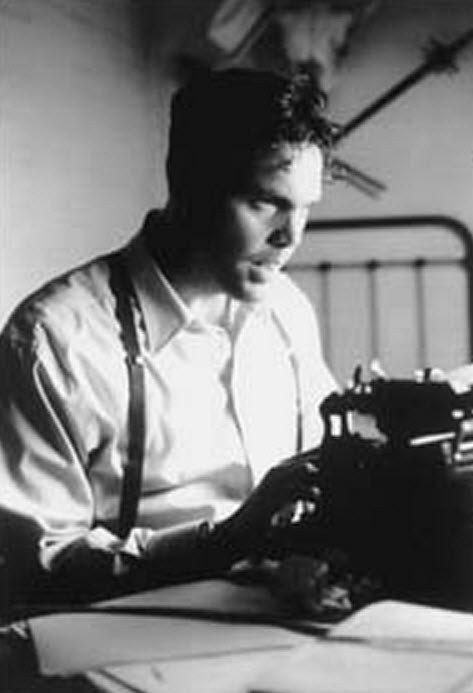
reh

The Abbeville Institute, a site dedicated to Southern arts, has published my article on Robert E. Howard. Here’s a sample:

“The novelist with Christian concerns will find in modern life distortions which are repugnant to him, and his problem will be to make these appear as distortions to an audience which is used to seeing them as natural; and he may well be forced to take ever more violent means to get his vision across to this hostile audience. When you can assume that your audience holds the same beliefs you do, you can relax a little and use more normal ways of talking to it; when you have to assume that it does not, then you have to make your vision apparent by shock — to the hard of hearing you shout, and for the almost blind you draw large and startling figures.” Flannery O’Connor

The Southern Gothic tradition, as pioneered by such writers as William Faulkner and Carson McCullers, as well as O’Connor, is noted for its stinging indictment of modern life. Southern Gothic tales feature shocking violence and criminality committed by bizarre, larger-than-life characters clawing for survival in a society that has broken down. Magical and supernatural forces often intervene in unexpected ways.

Read the rest at Abbeville Review, and like it here.

We Are Not The World

MexicanChurch

Sarah Hoyt reminds us how presumptuous and simply wrong-headed it is to imagine the rest of the world is just like us, only dressed differently. As she puts it, “I don’t think anyone realizes just how different the texture of life is elsewhere.”

She’s right. My wife and I spent three weeks in a village in central Mexico where I researched Aztec Midnight. Though I’d been in the country before, I was not prepared for what I encountered.

The locals we met were extremely hospitable, generous, and eager to talk to us. I admired how social they are — we attended a birthday party for a 75-year-old man we’d just met, and our hosts kept offering us homemade rum and beer, pastries, and enchiladas. They love to fiesta.

But Mexicans are indeed different. There’s a certain Mexican attitude that encompasses both cheerfulness and fatalism, and it’s expressed with a grin and a shrug of the shoulders. Their national character is a striking contrast to American triumphalism.

The more we learn about others, the more we can appreciate who we are.

Best fiction and writing blogs

Lovecraft
The best fiction and writing blogs, compiled by lovecraft

A Vase of Wildflowers: Links for Readers and Writers [Good stuff here, folks!]
Writerish Ramblings: Critique Group
Captain’s Log: Notes on Money and Self-Publishing [Practical advice from a writer who’s walked the walk]
Kill Zone: Don’t Muddle Your Message [How to think like an editor]
Alice Osborn: 4 Tips for a Writing Mom to Stay Sane
Jacqueline Seewald: How to Increase Your Creativity and Productivity
Flavorwire: The 50 Sexiest Literary Villains
A Writer’s Path: Ten Quote Tuesday [Need inspiration? Ryan has it]

David Holt’s State of Music

Frank Stasio of North Carolina public radio interviews David Holt about his upcoming special on the music of western North Carolina. There’s a great slide show accompanying the interview you don’t want to miss.

And don’t forget: David Holt’s State of Music premieres Thursday, January 29. It promises to be a wonderful introduction to mountain music.

Beauty and the Ideal Man

MidsummerDream

Far from making him appear “sissy,” an appreciation of beauty is essential to channeling a man’s natural inclinations into supporting vital social goals and making him a better man, says Jared Silvey:

This stronger inclination to fighting is not, in itself, automatically directed to either good or evil. It has the potential to go either way. It can be directed to good, as in the case of fighting to defend one’s country against unjust aggression, or to evil, as in the cases of murder, rape, and other acts of unjust violence.

Beauty here enters the picture by helping to direct this male inclination to aggression and fighting to a worthy end. This is because real beauty is always found wherever there is truth and goodness, and it strengthens the attraction these other two values exert on the human person. It moves a man to defend whatever is good and true. The beautiful maiden is a potent spell which carries the knight into the field of battle. It can be said that there is no one the enemy should fear more than a man who enters into battle with his lady in his heart. Beauty makes men fighters because it first makes them lovers.

Silvey observes that even the caveman found time to make cave paintings, whereas “today’s tech-savvy, fast-food fed, materialistic West places more emphasis on money, things, efficiency, and instant gratification.” Modern consumerism transforms everything into a commodity, even sex. To salvage the humanity within us, we need to slow down, stop envying what we’re told we’re supposed to have, and rediscover the joy of simple, direct living.

Jon Barrett, the hero of my novella Aztec Midnight, feels a mystical connection to the beauty of ancient weapons when he enters the vault at the Instituto Nacional de Antropología e Historia in Cuernavaca:

I stepped into a long, darkened room full of rows of tables. The only illumination came from ultraviolet lamps. It took a few moments for my eyes to adjust to the relic-friendly lighting. I slowly recognized piles of Aztec, Mayan, Toltec, and Spanish colonial artifacts on each table. As I gazed at the long rows of deadly and finely crafted weapons from four heroic cultures, my heart beat just a bit faster than normal. It felt like Christmas morning.

I think Jon Barrett would agree with Dostoevsky’s observation that “Beauty will save the world.” Appreciating beauty, like striving for a sound mind in a healthy body, is a vital part of being a whole man.

Adventures and mishaps in science fiction, fantasy, and mystery