Quote of the day

Flaubert

“What a delicious thing writing is — not to be you anymore but to move through the whole universe you are talking about. Take me today, for instance: I was a man and woman, lover and mistress; I went riding on a fall afternoon beneath the yellow leaves, and I was the horse, the leaves, the wind, the words he and she spoke, and the red sun beating on their half-closed eyelids, which were heavy with passion.” – Gustave Flaubert

Writing is acting. It is the channeling of imagined personalities so we can transpose them into words. It’s an endeavor that requires many skills, which is why it can be so frustrating when we can’t pull it off the way we want, and why it is so bone-deep gratifying when it all comes together.

What Did Tolkien Think of Fantasy Fiction?

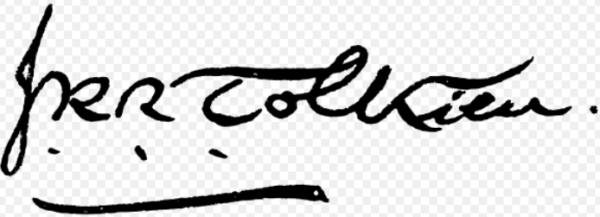
TolkienSignature

Nicola Alter has a great piece on J.R.R. Tolkien at Thoughts on Fantasy. Anyone who admires Tolkien will enjoy this review of his special genius and unique contribution to fantasy fiction. As Alter says:

People often forget that Tolkien was also a linguist and a poet and a university professor. He invented new languages. He wrote literary essays, many of which discuss his work. He was a friend of fellow fantasy author C.S. Lewis, and the two were members of the same informal literary discussion group.

Tolkien was not only writing amazing fantasy novels, he was also reflecting on his own work and on the fantasy genre itself. One of Tolkien’s famous essays is called On Fairy Stories (Tolkien called “fairy stories” what we would today call “fantasy”) – a speech he wrote and then later published.

I read On Fairy Stories several years ago for an essay I was writing, and recently revisited it to answer a related question on Quora. When I did, I was once again astounded by the eloquence and intelligence of this man. It struck me that in its fledging years, as the fantasy genre was growing in popularity, it couldn’t have had a better champion. He was not just someone writing brilliant fantasy, but also someone analysing it, promoting it, and defending it against critics who dismissed it as useless or escapist or literature fit only for children.

I’m presently reading J.R.R. Tolkien’s commentary on his translation of Beowulf. Not only does Tolkien deliver an energetic and loving rendition of this classic adventure, he also shares his insights into the rich and vigorous culture that produced it. As the poet W.H. Auden once declared, encountering Tolkien’s long-sighted and perceptive observations on Beowulf is an “unforgettable experience.”

And it still is.

News That Stays News

Howard
The best writing blogs, compiled by reh

Ipuna Black: Inspirational Hike
Dave’s Corner of the Universe: Blood Filled Craters of Death on the Moon! (ya gotta love that title!)
Jack Ronald Cotner: Ancient Celtic Blacksmiths
Rose Red: The Poem of the Spanish Poet
Harsh Reality: Ten Ways to Get New Followers (From a blogger who knows what he’s talking about!)
Ms. Toy Whisperer: Momism
Kurt Brindley: March Headlong Into The Wind
The Quiet Fantasy Blog Review: Star Wars: The Force Awakens

About those literary labels …

Bottom line: They’re all useful. And like anything useful, they can be misused.

Over at Thoughts on Fantasy, Nicola Alter argues for the necessity of literary labels:

As a reader, I love genre. I love that there are labels in the different parts of the book store, or labels on Goodreads, that help me find the kind of story I’m looking for.

As a writer, I love genre, because it allows me to convey the kind of story I am writing with a few simple words. I love to think about stories I could write that use elements of different genres, or that subvert or fulfill genre expectations in interesting ways.

Alter also weighs in on the debate she calls “The Myth of Genre Fiction vs Literary Fiction.” It’s true they are distinct categories, but they are not castes. One is not superior to the other. There are good and bad examples of each. Plot and characterization are vital in both.

I can relate. I’ll get an occasional raised eyebrow for considering both Hemingway and Howard as mentors. But I learned a great deal from reading Hemingway and Howard. Both authors crafted great stories that still crackle with energy.

That said, another label that generates more heat than light among readers and writers involves region. Dannye Romine Powell dismisses regional labels as restrictive, even dismissive. But I tend to side with Hailey Foglio on this:

Lately, I’ve been thinking about the identity of writers and how we define ourselves. Writers label themselves based on location, genre, themes, etc. Personally, I refer to myself as a Young Adult writer because that’s what I love and that’s what I do. A couple weeks ago, we had a wonderful writer visit us at WVU named George Singleton. George is from South Carolina, and during his visit, George told us that he had been invited to an Appalachian writing conference. But he distinctly argued, “I don’t consider myself an Appalachian writer; I’m a Southern writer.”

I consider myself a Southern writer primarily writing fantasy fiction, and I see nothing incongruous in adapting the wild and fantastic to traditional themes. The best apologist for this approach was Flannery O’Connor, who famously said, “You have to make your vision apparent by shock — to the hard of hearing you shout, and for the almost blind you draw large and startling figures.”

Works for me.
News that Stays News

Lovecraft
The best of the writing web, compiled by howie

The Passive Voice: eBooks Could Finally Inch Past Print
A Writer’s Path: Showing vs. Telling
Alice Osborn: 5 Ways to Keep On Truckin’ After Rejection
Kendall F. Person: A Lesson in Marketing from Evel Knievel
The Better Man: Live a great story
Quinn’s Books: Naming Jack the Ripper
Dave’s Corner of the Universe: He Stole Enstines Brain!
Cristian Mihai: You’ll Live Forever if a Writer Falls in Love with You

Better than you remembered

“In truly good writing no matter how many times you read it you do not know how it is done. That is beacause there is a mystery in all great writing and that mystery does not dissect out. It continues and it is always valid. Each time you re-read you see or learn something new.” ― Ernest Hemingway

Fred on the Head has posed an interesting question: Do you re-read?

To this I can only plead: Guilty.

There are about a dozen works I find myself returning to, and for exactly the reason Hemingway cites above. In fact, three of Hemingway’s works are on my list: The Snows of Kilimanjaro, The Killers, and The Short Happy Life of Francis Macomber. For me, they never lose their power to amaze and teach. Even when my intention is to analyze, I end up getting lured in once again by the robust narrative.

Mishima’s Patriotism leaves me reeling each time I experience it. What a show: breathtaking eroticism and rapturous prose made all the more vivid and potent by the blunt reality of sepukku. Whoa.

Among the classics, I keep returning to A Midsummer’s Night Dream and Beowulf more than any of the others. And I’m in the process of travelling to Mordor once again with the Fellowship of the Ring. I’ve almost finished The Two Towers, and am just as carried away by Tolkien’s imaginative world-building as the first time I experienced him.

All good friends I could never get tired of.

Want to win a newly released novel?

Death Legacy by Jacqueline Seewald is a great novel for romantic suspense and mystery readers alike. The protagonist, intelligence consultant Michelle Hallam, is tough, dedicated, and sexy. Think of a vulnerable, modern-day Valeria from Robert E. Howard’s Red Nails. Ah, yes.

Tweet @thenovelfox a description of your ideal female secret agent and include #giveaway for a chance to win a free iBooks copy of Death Legacy by Jacqueline Seewald!

The Death Legacy Giveaway will run for 7 days starting Friday, November 21st and ending Friday, November 28th. The Novel Fox team will select their favorites and 20 winners will be announced on Saturday, November 29th.

How to Succeed at NaNoWriMo

I will confess to having never been tempted to participate in NaNoWriMo, or National Novel Writing Month. The goal of dashing off a 50,000 word manuscript in 30 days struck me as gimmicky and pointless.

But I may have to change my mind. Though a recent Publishers Weekly article on NaNoWriMo is entitled “How to Succeed at NaNoWriMo,” I’m more interested in WHY I should participate.

Turns out the article zooms right in on that concern, and it got my attention:

NaNoWriMo’s pressing time constraints leave little time for polishing and perfecting—and that’s perhaps the point.

Marissa Meyer, whose novels Cinder and Scarlet (Square Fish, 2014) began as NaNoWriMo drafts, says the beauty of the program is that it “forces you to silence that internal editor and just get something written. If you’re telling yourself that it’s OK to be writing something bad because you can always come back and fix it later, it takes a lot of the pressure off.”

Ouch. That hit home. That internal editor remains one of my biggest writing roadblocks. I can’t peck out two sentences on the laptop without having to go back and proof what little I’ve done. I know I’m supposed to complete my manuscript before getting all editorially and nit-picky, but I succumb every time to the temptation to tweak what I’ve written. And that slows me down, which impedes the completion of my manuscript, and a completed first draft, despite its inevitable ugly spots, is an accomplishment that will spur me on to sticking to the whole process.

I used to dismiss flash fiction as a gimmick, too, until I tried my hand at it and discovered the rigor and discipline it takes to complete quality pieces. It isn’t easy, and that’s the point. There’s no doubt writing flash fiction has improved my writing by forcing me to say what I want to say in fewer, stronger words. You can judge for yourself here and here.

So look out, NaNoWriMo 2015. Here I come.

Adventures and mishaps in science fiction, fantasy, and mystery