Fall has arrived, and a lot of folks in North Carolina are roasting pigs on the fire. I haven’t managed to trek to a good BBQ joint in a while, so I’ll have to settle for this mouth-watering video of the world-famous pits at Lexington Barbecue. Music written by me, performed by James Harden at Music People Studio. Enjoy!
The Writer as Actor
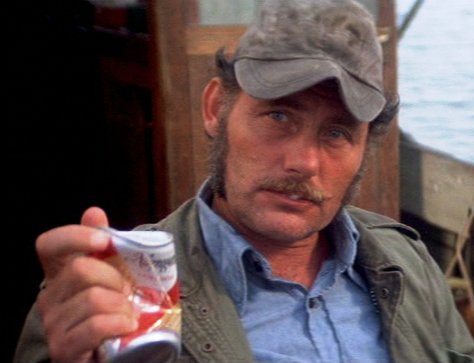
“Writing is where the real center of my integrity lies. I never write for money. I only act for money.” Robert Shaw
A member of the critique group I’m in was recently in a production of Shakespeare’s Measure for Measure. That got me to thinking about the relationship between acting and writing. After all, when you’re concentrating on describing a character’s feelings or writing authentic dialog, you’re channeling a character the same way an actor would. It takes me time and effort to “get into” a character’s head, even if I’ve been working on a piece for some time.
Robert Shaw, shown above as Captain Quint from Jaws, was one of my favorites. Like George C. Scott (a failed writer who became an actor!), Shaw always brought a titanic and menacing presence to the characters he portrayed. Who could forget his role as Grant, the ultimate cold-blooded assassin in From Russia With Love? In addition to Shaw’s all-too-short acting career, he also penned some fine novels and plays.
Other writers who were also actors include William Shakespeare, Yukio Mishima, and Orson Scott Card. And Tom Hanks just released a book of short stories. I’m sure there are others.
Election Day Request
On this national day of voting
Can’t we put aside our differences
And recognize the great source of our unity:
We all hate politicians
Ha! I just had to share the above from Jacke Wilson.
The Battle of Highbrow vs. Lowbrow

Over at Electric Lit, Amber Sparks argues that while writers usually claim one of the highbrow greats as their stylistic model, they often fail to give proper due to the lowbrow authors who inspired them to become writers. She cites authors willing to admit to the influence of pulp writers in their early careers:
“Romance novels, horror novels, thrillers. Psycho, Rosemary’s Baby, everything V.C. Andrews wrote, Danielle Steel: I devoured it all,” says Julia Fierro, author of Cutting Teeth. “Those ‘trashy’ books taught me how to write story, character, and created my lifelong need for drama, conflict, and my belief that every story, no matter what genre or style, needs to make the reader feel as if a lot is ‘at stake.’” And Peter Tieryas, author of Bald New World, says, “I devour and gorge on lowbrow entertainment, from the maligned Waterworld and the original Dawn of the Dead, to comics like Legends of the Dark Knight and X-Force, to K-pop and Tupac, and of course video games. They play with the tropes, or establish all new ones, and being unhinged from traditional restrictions, push the medium, teaching me that I can do the same.”
After all, says Sparks, “we’re all of us storytellers, trying to retell that first and perfect tale that started it all.”
I couldn’t agree more. In grade school, my vocabulary was three grades ahead of my classmates thanks to Marvel Comics. (Don’t ask about my math skills!) And as an English major, I continued to enjoy Robert E. Howard, H.R. Wakefield, and Robert Heinlein as much as Hemingway and Shakespeare.
As Sparks says, they’re all storytellers. And that’s what I want to be.
Quote of the day
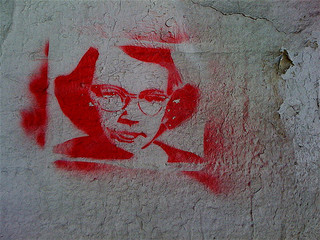
“Anybody who has survived his childhood has enough information about life to last him the rest of his days.” ― Flannery O’Connor
J.R.R. Tolkien’s Vision of Just War
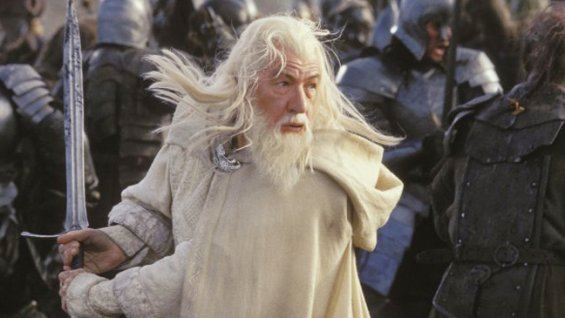
Writing in the latest Imaginative Conservative, Jay Wesley Richards and Jonathan Witt offer a useful summary of Tolkien’s themes in Lord of the Rings. They point out that Tolkien’s epic is a war tale that was not intended to be an allegory, but still applicable to the issues of the time in which it was written. I’d add that Tolkien’s insights are applicable to many current issues as well.
In response to the early criticism that the methods of Sauron’s forces and those of the Fellowship are “indistinguishable” since each side kills the other, Richards and Witt note that the Fellowship observes Just War theory: They fight aggression, they fight honorably, and, as far as circumstances allow, they are charitable to those they defeat in battle. But such acts rise from a fundamentally different worldview from their enemies:
There is also the stark difference between what Brian Rosebury calls “the diversity of good and the sameness of evil.”Among the free peoples of Middle-Earth there is widespread and mostly tolerated diversity, which extends to what does not happen. For instance, King Théoden and later Aragorn might have tried to insist that a primitive and ancient people known as the Woses join their military alliance. Instead Théoden takes the gracious help they offer, and both he and Aragorn honor the Woses’ desire to otherwise stay out of the war.
Compare this to the homogenizing slavery and oppression of those who bow the knee to Mordor. The contrast is stark enough that only a reader blinded by a philosophy of war devoid of even the crudest nuance could miss it.
I think that’s the key to understanding the differences between Sauron and the Fellowship, as well as the difference between totalitarians and small “r” republicans. The desire to flatten reality and make all the same drives all totalitarians, whether Hitler, Stalin, or Pol Pot. One of Russell Kirk’s principles of conservatism tell us, “They [conservatives] feel affection for the proliferating intricacy of long-established social institutions and modes of life, as distinguished from the narrowing uniformity and deadening egalitarianism of radical systems.”
The notion that one possesses an absolute and universal truth is too often used to justify the initiation of violence to enforce that truth. As Tolkien counseled, men are not wise enough to choose for all. Now that lesson is certainly applicable today.
At all times maintain it up!
Writer Erin Ryan recycles a spammer’s comments to liven up a quotidian scene. Works for me!
Walker Percy on Modern Life
The homogenized, globalized, sterilized world we’ve created is no place for a healthy human. In his book Lost in the Cosmos, Southern writer Walker Percy argued that depression is a rational response in such a world. Like a wild animal in a cage, we’re trapped in an environment that denies the essentials for living the way we were meant to live:
Because modern life is enough to depress anybody? Any person, man, woman, or child, who is not depressed by the nuclear arms race, by the modern city, by family life in the exurb, suburb, apartment, villa, and later in a retirement home, is himself deranged.
Now, call into question the unspoken assumption: something is wrong with you. Like Copernicus and Einstein, turn the universe upside down and begin with a new assumption. Assume that you are quite right.
You are depressed because you have every reason to be depressed. No member of the other two million species which inhabit the earth—and who are luckily exempt from depression—would fail to be depressed if it lived the life you lead. You live in a deranged age—more deranged than usual, because despite great scientific and technological advances, man has not the faintest idea of who he is or what he is doing.
So all the Prozac in the world can’t treat the underlying problem, which is not in the head of the depressed, but in the world he inhabits. How does one break out of such a world? Step one is to recognize there’s a problem. What happens next begins with an exercise of the imagination…
This day in history
In 1400, Geoffrey Chaucer died in London.
A Dreamer Out of Time: Nicholas Roerich

Over at the Imaginative Conservative, Benjamin Welton has a great article on a neglected Russian painter whose central theme was the re-imagining and refinement of Russian mythology. Nicholas Roerich’s mission, says Welton, was analogous to what Tolkien aimed for in TLOTR. And it turns out that Roerich also inspired none other than Lovecraft:
The American pulp writer H.P. Lovecraft spoke often of his appreciation for Roerich and once wrote to his friend James F. Morton that “there is something in his [Roerich’s] handling of perspective and atmosphere which to me suggests other dimensions and alien orders of being – or at least, the gateways to such.” Notably, Lovecraft’s At the Mountains of Madness was influenced by Roerich’s renderings of Tibet’s glacial precipices.
 M.C. Tuggle, Writer