
What to do about growing illiteracy in America? It’s a problem behind a host of other social ills, including unemployment, crime, and mental illness. Frederick Hess, a former teacher, has a suggestion:
One reason that boys read less than girls may be that we’re not introducing them to the kinds of books they may like. There was a time when schools really did devote too much time to generals and famous battles, but we’ve massively overcorrected. Indeed, I find that too many “diverse, inclusive” reading lists feature authors who may vary by race and gender but overwhelmingly tend to write introspective, therapeutic tales that read like an adaptation of an especially heavy-handed afterschool special.
Sadly, our schools are not helping this problem. In some ways, they’re making things worse. Reading is often shoved at students as a burden, if not punishment. Plus, the approved reading list often fails to snag interest. Too many of the folks running public education believe “real” literature is, as Hess writes above, introspective and therapeutic. In a word, dull. This highbrow view of literature is the legacy of William Dean Howells, the influential author and editor of The Atlantic Monthly. Here’s Howells’ view of what literature should be:
Yet every now and then I read a book with perfect comfort and much exhilaration, whose scenes the average Englishman would gasp in. Nothing happens; that is, nobody murders or debauches anybody else; there is no arson or pillage of any sort; there is not a ghost, or a ravening beast, or a hair-breadth escape, or a shipwreck, or a monster of self-sacrifice, or a lady five thousand years old in the whole course of the story…. Yet it is all alive with the keenest interest for those who enjoy the study of individual traits and general conditions as they make themselves known to American experience.
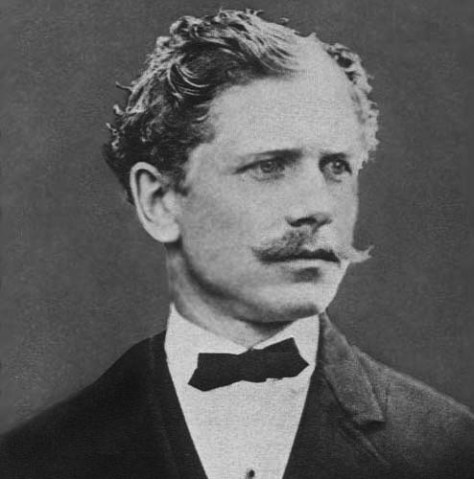
The Realist literary movement Howells pushed decreed that instead of action and heroism, literature should focus on interior tension and the experience of ordinary people. To impart the real life of real people, Realist authors focused on gritty detail. However, devotion to the mundane often produced boring and sordid tales. Ambrose Bierce defined “Realism” in his Devil’s Dictionary as “The art of depicting nature as it is seen by toads. The charm suffusing a landscape painted by a mole, or a story written by a measuring-worm.”
Of course, the antidote is to read and promote tales of adventure, intrigue, and heroism, stories that illustrate a virile and heartening sense of life. That’s what both young and old need today. There’s plenty available, but first we have to unburden ourselves of the notion that self-appointed highbrows get to tell us what real literature is.


 M.C. Tuggle, Writer