Tag Archives: writing

The Clincher

The Clincher

The Flash Fiction Press has published my story The Clincher, now available online.

The idea for this story came to me while reading William Lind’s introduction to Fourth Generation Warfare. Lind predicts that future battles will hinge on public perceptions of the combatants:

Fourth generation adversaries will be adept at manipulating the media to alter domestic and world opinion to the point where skillful use of psychological operations will sometimes preclude the commitment of combat forces. A major target will be the enemy population’s support of its government and the war.

Propaganda has long served as a “Fifth Column” for invading armies. During the 1968 Prague Spring uprisings against the Soviet Union, Czech communists assured their restless population that Soviet troops entering Prague weren’t really invading — they were just dropping by to preserve order and stop “counter-revolutionaries,” thereby ensuring Czechoslovakia’s peace and prosperity.

Prague Spring“We’re from Moscow, and we’re here to help.”
Lind argues that in future conflicts, warring groups will clash over narrative even more than over territory, making the control of public opinion “the dominant operational and strategic weapon.” It occurred to me that 4GW will weaponize the advertising industry. That made me think about Don Draper, Roger Sterling, and the other rapacious but fascinating characters from Mad Men. I wondered how they’d react if space aliens asked them to handle a PR campaign to prepare the Earth for invasion.

Yeah, they’d take that account.

Please leave comments at The Flash Fiction Press. Thanks!

Best Fiction and Writing Blogs

Howard

The best fiction and writing blog posts from around the ‘net, all guaranteed to make you a literary cult figure. Compiled by bob.

Bob MayerGive Your Protagonist An Anomaly
Jami GoldStory Description: Finding the Right Balance
LionAroundWritingThe Perfect Story
June Lorraine RobertsChain gang: authors/writers talk about their work
GeekritiqueThe Most Anticipated Science Fiction and Fantasy Books of 2016
Nicholas ConleyThe Writer’s Role in Society
CreativeWriter3 Quotes, 3 Days Challenge
Tony TulathimutteHow to name your fictional characters

Quote of the day

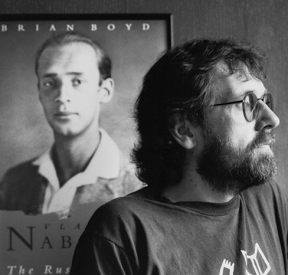
Brian Boyd

“Everything is humanities. The sciences are a form of the humanities. They involve traditions of inquiry; they involve social engagement with ideas. They do not happen with a naked brain going out and encountering a nonhuman world. And the better we understand ourselves, the better we can do science, as well. So I don’t see them—the sciences and the humanities—as being at all different.” Brian Boyd, author and Professor of English at the University of Auckland.

The spirit of C. P. Snow lives!

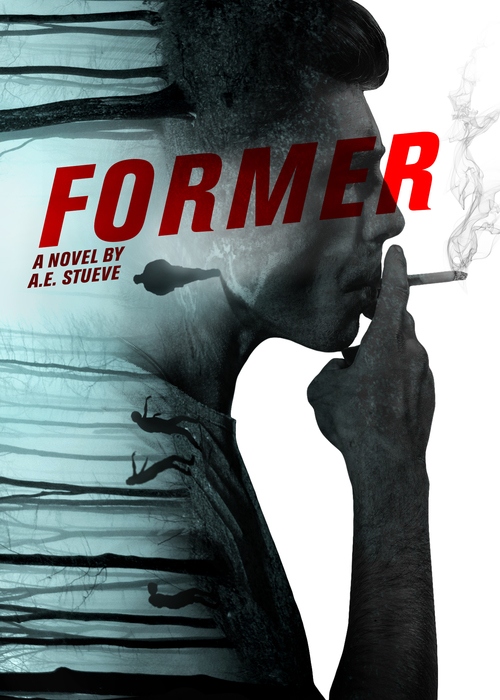
Review of Former

Former

The world A. E. Stueve creates in his just-released novel Former is warped, chilling, and bristling with menace. Battered and terrified from the Infection War, the survivors distrust one another. Their greatest fear is of formers, people who were once infected with a man-made disease that takes over the mind and fills the victim with one over-powering urge, to attack and eat other people. A shadowy and powerful pharmaceutical firm, Profine, which invented the cure, now houses the formers in compounds where it protects them and works to return them to something close to normal lives.

But the jumpy population outside Profine’s protective compounds is vulnerable to canny and unscrupulous media manipulators. One popular blogfeed is Zex Starshine’s Unreality, where master rabble-rouser Zex Starshine beguiles and horrifies his audience with startling revelations about corporate greed, government conspiracy, and the secret threat of another former uprising. (What are those people planning in those sprawling compounds?)

I know what you’re thinking — this horrifying world sounds like today’s venomous climate of mutual demonization and seething hatreds. In both our world and the world of Former, the Internet, that impossible-to-kill cockroach of misinformation overload, fairly throbs with voices screaming about what “those people” are up to now.

For Billy Dodge, the protagonist of Former, things go from dystopian to apocalyptic when he storms out of a group therapy session for formers like himself and ends up accused of complicity in murder. His only chance of clearing himself is to trust the mysterious figures within Profine. Billy has already lost much, including his wife, who killed herself rather than succumb to the dread disease. His brush with death and survivor guilt have made Billy world-weary, yet he is driven to prove to himself he’s still alive, sometimes in ways that only make things worse.

This novel manages to be both bleak and breathtaking, grim and darkly comical. It’s impossible not to sympathize with Billy Dodge despite his impulsiveness and semi-suicidal urges and bad choices. Billy’s determination to convince himself he’s not only a human being, but still himself, despite the disease that once made him a monster, reminds me of the works of Philip K. Dick.

I’ll make a prediction: This book will be used in writing classes to illustrate the right way to create an unforgettable atmosphere, one that perfectly suits the story that emerges from it. Highly recommended.

You may also be interested in the reviews at Kirkus and Foreword Reviews.

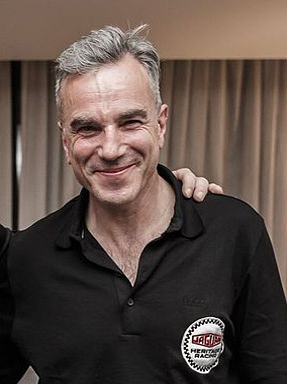
Want to be the Daniel Day-Lewis of writing?

Daniel Day-LewisBy Jaguar MENA

Steven McIntosh, writing in the BBC News, poses an interesting idea for writers looking for that little something extra:

Could writers benefit from the same tactics as method actors, who immerse themselves in extreme surroundings in order to prepare for a role?

Every February, as the Oscars roll around, movie fans revel in stories about actors who have gone to extreme lengths to prepare for parts.

Daniel Day-Lewis learned to track and skin animals and fight with tomahawks for The Last of the Mohicans, while, more recently, Leonardo DiCaprio plunged into an icy river and sank his teeth into a hunk of raw bison while filming the Oscar-nominated film The Revenant.

Actors going to such lengths has become more common in recent years and a cynic might argue it certainly did not harm their film’s publicity, but given the apparent success of their technique, could working in a similarly immersive way also benefit novelists?

While I’ve always thought there’s much common ground between acting and writing, what McIntosh is suggesting takes the idea a step further. I think he’s right. Knowing how to do the things you describe your characters doing certainly adds visceral detail to your story. I’m reminded of the research Jean Auel did for The Clan of The Cave Bear. Like her protagonist Ayla, Auel can weave baskets and make her own stone tools. Auel has said that mastering such skills gives her writing an “informed subjectivity” that she could not otherwise achieve. I agree.

I thoroughly enjoy researching my stories, and sometimes that involves more than simply nailing down a particular fact. Despite many years of hunting, backpacking, and hiking, I’d never rappelled before I taught myself while writing my flash fiction piece Cameron Obscura. In fact, all life experience can be put to work in your writing. My career in computer programming and artificial intelligence in the insurance industry no doubt informed my sci-fi pieces, and certainly prompted my misgivings about the dehumanizing effects of technology, as expressed in Snake Heart.

And I have no doubt that my travels in Mexico, as well as my experience with firearms and primitive weapons, livened up my novella Aztec Midnight with sensory details and authenticity you just can’t get from online research.

Maybe that crazy Daniel Day-Lewis is on to something …

Best Fiction And Writing Blogs

Raymond Chandler

The best fiction and writing blog posts from around the ‘net, with advice and inspiration guaranteed to make you a literary legend. Compiled by ray.

A. J.HumpageThe Writer’s Essential Checklist
Nicola AlterGreat Books About Writing
Andrew Heisel – In Search of the Novel’s First Sentence
Becca PuglisiHow (and Why) to Write a Logline For Your Story
James Scott BellWho Are You Trying To Delight?
Abbie LuBook Door Lookbook A project both your inner bibliophile and supervillain will love.
Raymond ChandlerTen Commandments for Writing a Detective Novel

The Name of the Whatever

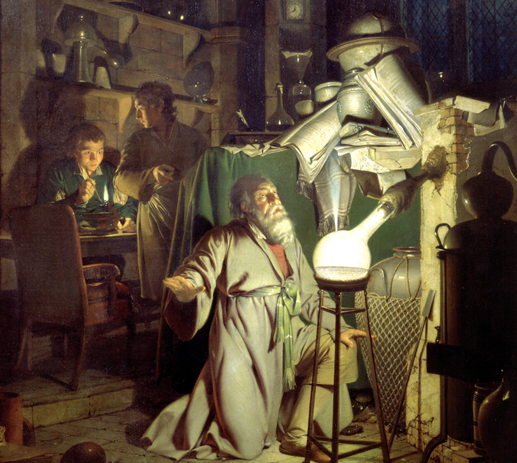
Philosopher Stone

“I read in a book once that a rose by any other name would smell as sweet, but I’ve never been able to believe it. I don’t believe a rose WOULD be as nice if it was called a thistle or a skunk cabbage.”
― L.M. Montgomery, Anne of Green Gables

Selecting a character’s name is the first step in making that character come alive. Of course, no one has done a better job than Charles Dickens, who gave the world Uriah Heep, Polly Toodle, Wilkins Micawber, and, of course, Ebenezer Scrooge.

This article on iconicity, the harmony of a symbol (word) and its meaning, suggests that evocative naming is the key to understanding the world around us:

The oldest documented discussion about iconicity and its role in constructing words is the Cratylus dialogue of Plato 1997. In the dialogue, Socrates is asked whether names belong to their objects “naturally” or “conventionally.” Though Socrates admits that convention and usage play a role in the creation of names, he confesses that he prefers the view “that names should be as much like things as possible” (pp. 433–435).

So of course the character’s name is essential to understanding that character. That’s one of the key elements I focus on when outlining a new story. I felt good about the name Jon Barrett in Aztec Midnight, and with Cam Taylor in Cameron Obscura.

I’ve always been fascinated with word play, especially with people’s names. In college, the Resident Assistant of our dorm hall was Curtis T—–. His job was to monitor our behavior, which included making sure no young ladies were still in our rooms after 1:00 AM, a job he seemed to enjoy a little too much. I gave him a name that stuck until he graduated, even though he quit being an RA his sophomore year: Curtis Interruptus, a nickname we pronounced with a Bronx accent.

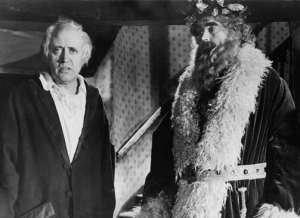
Terrorism, Hope, and Ebenezer Scrooge

Scrooge

I can’t help but think of what Christmas will be like for the 14 families who lost loved ones in the San Bernardino massacre last week, or for the families of the three who were gunned down at the Colorado Springs Planned Parenthood facilities last month.

Even for those of us who were not immediately affected, there is still that haunting reminder of the needless suffering we, as humans, inflict on each other.

And yet — and yet — we should not let ourselves give in to despair. Tempted as we may be to concede that evil appears entrenched in the human heart, we cannot surrender our hope that there is a spark of good in everyone, a spark worth noticing and perhaps even cultivating as best we can. As hard as it is to imagine, I believe the shooters in both tragedies thought they acted for worthy reasons.

Robert Dear, Jr., the Colorado Springs killer, ranted in court, “I’m guilty. There’s no trial. I’m a warrior for the babies.” Twisted? Yes. Egomaniacal? No doubt. But even this murderer believed he was protecting the innocent and helpless.

As for Farook and Malik, we can only speculate that they considered themselves warriors for their faith. Nevertheless, whatever was churning through their minds when they abandoned their six-month-old baby and drove to the San Bernardino County Department of Public Health with two .223-caliber semi-automatic rifles and pipe bombs, their actions certainly warranted the swift and decisive response the SWAT team meted out.

That said, we cannot ignore the powerful forces that work on terrorists such as Dear, Malik, and Farook. Modern alienation devastates the isolated individual, and many dedicate themselves to what appears as a last, desperate effort to accomplish something significant and worthwhile. In his article, The Psychological Sources of Islamic Terrorism, Dr. Michael J. Mazarr of Georgetown University writes:

Mass technological life tranquilizes people, drains us of our authenticity, of our will and strength to live a fully realized life. The result of this process is alienation, frustration, and anger. A few themes stand out from this broad concept.

One has to do with the burdens of freedom and choice. By breaking the chains of tradition and conformity, modern life offers a bewildering, paralyzing degree of choice about everything from career paths to marriage partners to fashion. When you can potentially be anything, the existentialists worry, you may in fact be nothing — and have no identity at all.

Alienation from tradition and from others is not freedom, but a curse. In our frantic pursuit of material gain, we lose sight of life’s true purpose. No one has better enunciated the antidote than the protagonist of A Christmas Carol, that classic fantasy tale of Christmas. After the three spirits teach him what Christmas means, Ebenezer Scrooge makes his famous vow:

“I will honour Christmas in my heart, and try to keep it all the year. I will live in the Past, the Present, and the Future. The Spirits of all Three shall strive within me. I will not shut out the lessons that they teach!” ― Charles Dickens, from his novella A Christmas Carol

Stubbornly seeking the spark of good that’s buried even in the heart of old Ebenezer Scrooge gives us hope, real hope, because very often we do indeed find that spark if we simply open our eyes to it. That insight into human nature makes for better fiction, too. The best literature can be a means to form and strengthen social ties because it helps us appreciate the hidden feelings of others. In my novella Aztec Midnight, the protagonist, Jon Barrett, must find and deliver an ancient Aztec relic to men who have kidnapped his wife. However, a local militia stands in his way — not because its members are evil, but because the relic will empower the drug cartels that terrorize them. Jon Barrett’s dilemma is one we can all appreciate.

Want to help make Christmas the season of hope it was meant to be? You can start by reading a good book. Or better yet – by giving one.