Tag Archives: writing

Creative Community & The Fear of Becoming “Normal”

Writing is viewed as a solitary activity. Some writers believe their isolation is what defines them, and even imagine that socializing would not only detract from their uniqueness, but diminish their creativity. Mingle with the herd, and you’ll become one of them. Call it the writer’s fear of becoming “normal.”

But these folks have it all wrong. We are social beings who need to interact with others. What’s more, social contact improves our craft, as this piece from PsychCentral explains:

As creative people, we need others to see the work we do (after all art is meant to be seen), to give us feedback and also to normalize some of the chaos that comes with the creative territory.

Aside from these internal benefits, being a part of a community of creatives can also expand your audience reach, increase the chances of doing collaborative work (in which you can discover a brand new part of yourself and a new method to create) and extend your creative network. A community can give you the opportunity to experience art and creativity from the various perspectives of all the other people surrounding you, at a collective level rather than the individual one you can provide for yourself.

I know I’ve benefited from my participation in the Charlotte Writer’s Club and my monthly critique group, as well as various writing workshops. Even when you’re stuck in the office, you can exchange views and ideas by posting comments on writing blogs.

Naturally, we also need time alone to think and create. The ideal is a balance of separateness and socialization.

Andrew Nelson Lytle advised us to “throw out the radio and take down the fiddle from the wall.” By that, he meant that art, entertainment, and companionship were not meant to be separate things. Art should be a social, interactive endeavor that not only engages everyone who  participates, but beckons all toward beauty and a sense of connectedness.  To me, that’s the ultimate aim of any art.
Quote of the day

“I’m not a really good writer, and I’m okay with that. What I do have is this ability to dissect my emotions and feelings, and write about my deepest secrets, about what terrifies me, about what I hate.” Cristian Mihai 

Now one could counter that the ability to capture your deepest secrets and fears with words is the definition of good writing.

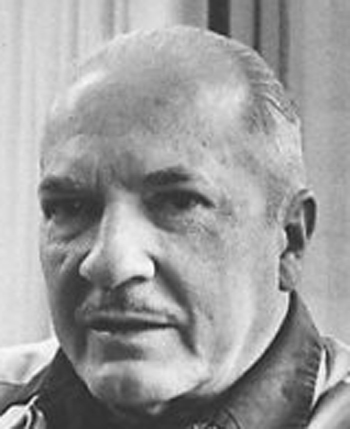
Consider H.P. Lovecraft. His characterization and dialogue could be laughably bad, but his ability to construct scenarios and concepts that thrilled and challenged readers made him a giant among fantasy and horror writers.

Bottom line: We can’t be good at every aspect of life, or even good at every aspect of our chosen craft, but we can focus on what we love and make the most of what we have.

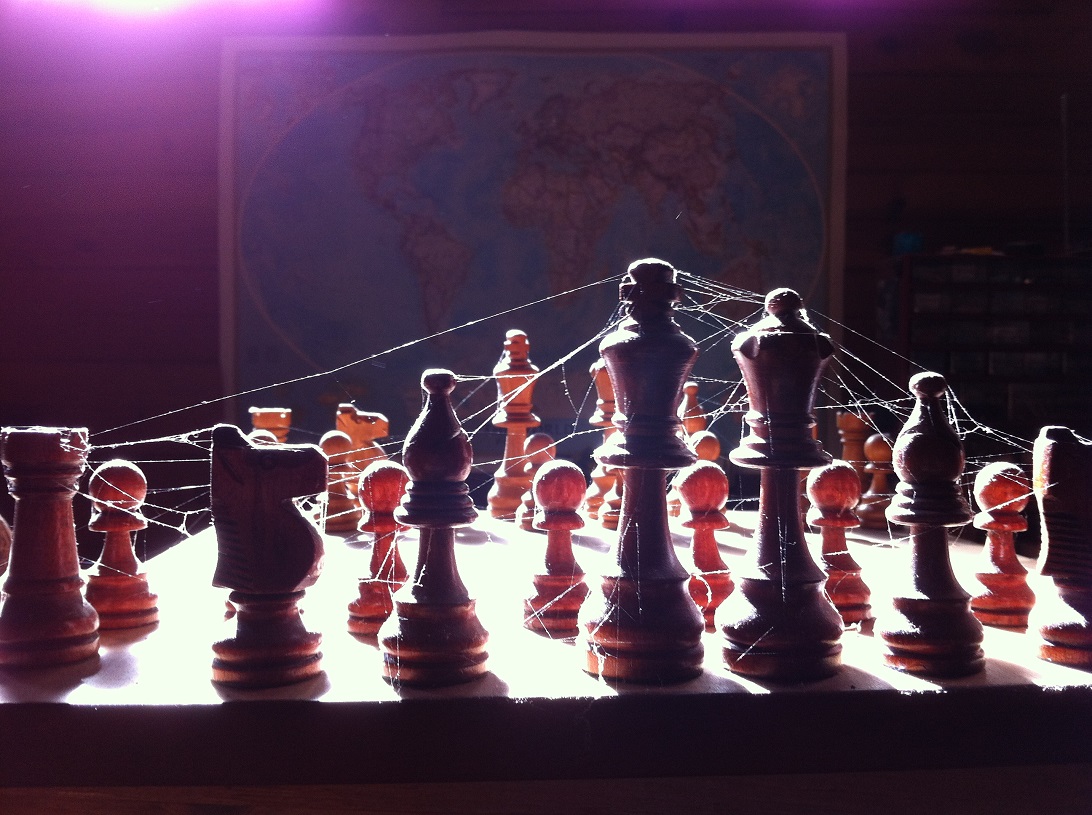
Stuck on your next move?

Chess

We’ve all been there. Despite your meticulous outlining, you find yourself stuck in your story and have no idea what your protagonist does next. How do you advance your plot?

Fear not. This is something every writer has to wrestle with. Even the pros admit to hitting an occasional road block. So whether a best-selling author or lowly scribbler, you have to deal with the occasional plot snag somehow. So I’ll share what I do.

My approach is two-fold: First, go back to your protagonist’s basic motivation. What does he want? Then imagine the worst that could happen to prevent him from achieving his goal. Throw that at him, and watch what he does. If you understand the protagonist’s history and heartfelt desire, you should be able to visualize how he’ll respond.

Read the rest at Alice Osborn’s blog, where I’m guest blogging today.

Best Fiction and Writing Blogs

Brundage1
The week’s best “how-to” articles compiled by margaret

Jacqueline Seewald: Setting the Scene
Holly Lisle: Freeing Up the Subconscious in Writing
Grady Brown: SUPERPOWER: ENERGY MANIPULATION (I could use that!)
A Vase of Wildflowers: Links for Readers and Writers
Cindy Knoke: It’s Home to The Holler We Go! (Nothing like dazzling pictures of exotic wildlife to inspire you)
Nicola Alter: Accepting the Existence of Magic (How to do magic right in your stories)

A Conversation with Steve Himmer, author of Fram

SeaRocks

Steve Himmer writes about bleak, alien landscapes and the surprising complexity his characters discover in those places. The critical quote:

“I guess I wouldn’t say we’re at odds with nature so much as befuddled by an insistence on seeing ourselves as the most important thing—the only thing, more often than not—that matters in any particular landscape.”

A Conversation with Adam Long of the Hemingway-Pfeiffer House

Hemingway2

Here’s a little treasure for all of us Hemingway fans, an interview with Adam Long, the director of the Hemingway-Pfeiffer House. Mr. Long knows what he’s talking about. He comes to the job with a background in American modernism and a PhD in literature. Long shares his knowledge about the author’s time at his second wife’s family home, a period of Hemingway’s life many of us aren’t familiar with. Great insights into Hemingway’s writing habits and thought.

My only gripe with the interview is this prologue: “Hemingway once explained: ‘There’s nothing to writing. All you do is sit down at a typewriter and bleed.'”

It’s very unlikely Hemingway said that. That vivid quote probably came from Red Smith, a sportswriter. Hemingway’s weapon of choice was the pencil (See A Moveable Feast), and he wrote standing.

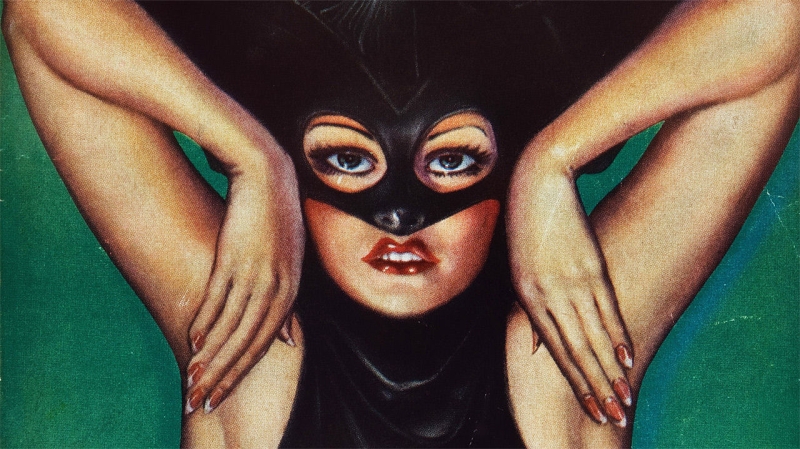
Best fiction and writing blogs

Howard

The best fiction and writing blogs, compiled by reh

This edition features the best author interviews on the Internet. Enjoy!

Jacqueline Seewald: Interview With D.K. Christi 
A Writer’s Path: How Mark Lawrence Became Published
Fantasy Faction: Chris Evans Interview
The Paris Review: Michel Houellebecq Defends His Controversial New Book
No Wasted Ink: Author Interview: Jamie Maltman
Warrior Scribe: Writing dark fantasy, martial arts and travel with Alan Baxter

I resolve to be very bad this year

… and very good. It depends on what I’m aiming for at the moment.

Now that I’ve had a chance to digest all the advice and resolutions of various writers and writing coaches, I’ve decided what advice I intend to follow and what advice I will violate.

For starters, a number of well-meaning gurus counsel writers to finish what they’ve started. Only they say it like this: “Finish that manuscript! And eat your broccoli!”

No doubt they mean well. And there are times when you have to buck up and WORK at getting words onto the screen (or paper). But when a project just doesn’t work for you, there comes a time when you have to admit you took a wrong turn. Why keep on working to complete a piece that you know in your gut is a waste of time?

Another way I intend to be bad is to be more open to artistic expressions I once rejected or was afraid to approach. The “bad boys” (and girls!) of literature have something to say, and many of them say it damned well. For example, I just finished Charles Bukowski’s Ham on Rye, and loved it. He’s a writer who, from what I’d read ABOUT him, I just knew I’d despise. Boy, was I wrong. Ham on Rye is honest, gritty, vivid literature.

We all need a little crazy in our lives. In Act V, Scene 1 of my favorite Shakespeare play, A Midsummer Night’s Dream, Theseus offers these observations about the little spoonful of insanity that makes art come alive:

Lovers and madmen have such seething brains,
Such shaping fantasies, that apprehend
More than cool reason ever comprehends.
The lunatic, the lover and the poet
Are of imagination all compact:
One sees more devils than vast hell can hold,
That is, the madman: the lover, all as frantic,
Sees Helen’s beauty in a brow of Egypt:
The poet’s eye, in fine frenzy rolling,
Doth glance from heaven to earth, from earth to heaven;
And as imagination bodies forth
The forms of things unknown, the poet’s pen
Turns them to shapes and gives to airy nothing
A local habitation and a name.

As Hippolyta acknowledges, that interplay of madness and craft can yield “something of great constancy” that is both “strange and admirable.”

But fear not; I only intend to flirt with the dark side, not elope with it. I’ll be good, too, in the coming year — I’ll continue to set writing goals, blog often, and keep myself mentally and physically sharp by getting outdoors more often and exercising. It’s good to have both feet planted on the ground. However, the idea is not to stay planted, but to have a good foundation from which to explore and grow.