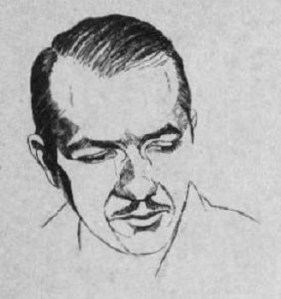
 “A human being should be able to change a diaper, plan an invasion, butcher a hog, conn a ship, design a building, write a sonnet, set a bone, comfort the dying, take orders, give orders, cooperate, act alone, solve equations, analyze a new problem, pitch manure, program a computer, cook a tasty meal, fight efficiently, die gallantly. Specialization is for insects.” — Robert A. Heinlein
All posts by Mike
KZine Now In Paperback!
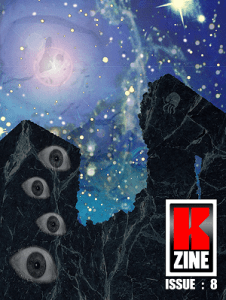 KZine is a British publication specializing in science fiction, horror, fantasy, and crime stories for Kindle. It’s now also offering paperback editions on Amazon, including issue eight, which features one of my stories.
The reviewer at Wizzley Magazine wrote that he “was impressed by the high quality of all eight stories” in that issue, and had this to say about my contribution, “Spell Check”:
“Jordan has accidentally created a creature that has invaded her house. She turns to an old customer, Floyd, for help. This is a quaint magical story, a little bit sad and a little bit scary.”
And here’s a 5-star Amazon reader review:
“Mike’s story is great; very clever, well-described, and quite creative, about an unwitting conjurer. Then I read the whole issue. Really impressed with the quality of the stories here. I liked them all, but also especially remember “Pickman’s Motel.” I’m an HP Lovecraft fan, and this story did a great job building on Lovecraft’s ‘Pickman’s Model.’ “
Darci Lynne’s Three Secrets for Writers
I’m guest-blogging today at Sue Vincent’s Daily Echo web site. Check it out!
Best Fiction and Writing Blogs

The best fiction and writing blog posts from around the ‘net, all guaranteed to make you a beloved literary legend. Compiled by Mark.
G. Edward Smith – Busting Myths About Writing & Writers
Jim Harrington – What Do Editors Want?
M. L. Davis – Writer Worries and How to Beat Them
Jack Cunningham – Too Many Characters?
Ash Reed – The importance of writing short stories
K. L. Wagoner – Writing Character Emotions Just Got Easier
Mickey Mason – How to Read Like a Writer
Mark Twain – 12 Timeless Writing Tips
Woman at War
 Last night, the Charlotte Film Society screened a fascinating movie titled Woman at War. It’s the tale of a music and yoga teacher who’s determined to sabotage an aluminum plant in the Icelandic wilderness.
Halla, the protag, wages war against a noisy, smelly, and sprawling collection of gritty metal cubes and towers unnaturally plopped onto the mystical Icelandic grassland. Add in the aromatic hydrocarbons and mutagens the plant belches out, and it’s easy to understand why a person who cherishes nature would take up arms against such a monstrosity. Business leaders and the government see the plant as an economic blessing; Halla sees one of William Blake’s dark Satanic mills.
Despite the film’s issue-packed premise, it doesn’t preach. Halla ranges the Icelandic grassland like Artemis with her bow, fulfilling her self-appointed role as the modern-day protector of nature. As is appropriate for a Greek goddess stand-in, she’s followed by a chorus that not only reflects her emotional reactions, but also provides comic relief.
The film is much more than a plea for clean air. Nearly surrounded by the police, Halla is rescued by a gruff farmer who becomes her accomplice. The two quickly realize they’re most likely related. So the movie’s primary conflict is between those with deep ties to their land and foreign investors who care only for the raw materials the land can produce. It’s the local and ancestral versus the global and rootless.
Woman at War was a hit at the Cannes Film Festival but failed to snag an Academy Award. If it comes to a local art cinema, check it out. It’s a hidden gem that deserves a wider audience.
Quote of the day
 “The point I would make is that the novelist and the historian are seeking the same thing: the truth — not a different truth: the same truth — only they reach it, or try to reach it, by different routes. Whether the event took place in a world now gone to dust, preserved by documents and evaluated by scholarship, or in the imagination, preserved by memory and distilled by the creative process, they both want to tell us how it was: to re-create it, by their separate methods, and make it live again in the world around them.” Shelby Foote, author and historian
How writers win

Lifting is at once highly solitary—a solo sport in which most of your time is spent in competition with yourself—and highly communal. Even as each person pursues their own interior quest, the weight room makes everything public.
Sound familiar? We can attend writing workshops, go to critique groups for advice, meet with beta readers and benefit from other people’s expertise, but the act of getting the words right and putting them down is a solitary act. And yet, it’s communal, too, because our ultimate goal is to communicate something meaningful and personal to others.
More important, the lifter or boxer or runner cannot help but compare themselves to others. This can be instructive, but it can be a trap, too, not just for the athlete but for the writer:
When we look at the person lifting next to us, all we see is the weight on the bar and how easily they can move it. We get a rough, visual sense of how their size compares to ours but we don’t see how long they have been training in the sport or how intensely. We don’t see the other factors in their lives—work, health, money—which can contribute or detract from their success.
It’s the same in writing. We see only the results, not the work: snapshots of success with all the necessary failures left out beyond the frame.
Admit it (I will!) — we see other writers and wonder why we can’t get published. Why did such-and-such get a lucrative publishing contract while I can’t even get a poem published in a non-paying literary magazine?
That’s when the sports connection comes in. When you feel that you’re not succeeding, you need to remember that the real contest is the old you versus the you you’re becoming. Like Oliver Sacks realizing he had only fooled himself about what he thought was his best effort in weightlifting, the writer should strive for nothing more than to make himself better than he used to be. Failure is NOT having your manuscript rejected; failure is when you stop trying.
As Sacks realized, there’s always something new we can explore. Try a new genre, read a book on improving your writing style, sharpen your grammatical skills. That’s winning, and there’s nothing quite like discovering how many ways there are to win.
Quote of the day
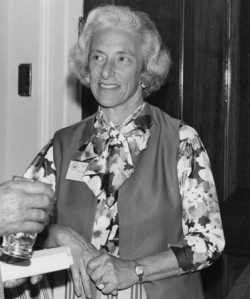 “It has been said that if the protagonists of Hamlet and Othello were reversed, there would have been no tragedy: Hamlet would have seen through Iago in no time and Othello would not have hesitated to kill King Claudius.” – Barbara Tuchman, from The March of Folly, p. 231
Two Tolkiens, One Better World
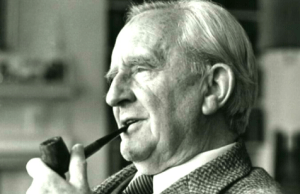 Bradley Birzer reminds us that J.R.R. Tolkien’s son Christopher contributed much to his father’s legacy. It took him four years to compile and edit The Silmarillion before it was ready for publication, and other works, from the elder Tolkien’s modernization of Beowulf to the latest work, The Fall of Gondolin, demanded years of patient scholarship.
But in the same article, Birzer also points out how J.R.R. Tolkien gifted the world with his astonishing and profound creations, works that grew out of Tolkien’s personal losses and the soul-numbing trauma of war. Tolkien’s world-building not only helped him overcome the spiritual and emotional pain caused by his excruciating experience at the Somme, but has inspired countless readers as well.
What makes Tolkien so timeless is that his tales are much, much more than feel-good fables that end with the happy moral “You can do it!” And there’s more going on in Tolkien than the observation that “Fairy tales are more than true – not because they tell us dragons exist, but because they tell us dragons can be beaten.”
Tolkien’s insight into human nature is that there is such a thing as human nature, and that it springs from roots deeper and mightier than we can understand. While murder and greed and depravity certainly exist, we possess within us timeless ties to countless generations before us, generations whose courage and tenacity are part of us even when we forget them. As Birzer notes:
“Those familiar with The Lord of the Rings know how often the stories of the Elder Days appear at critical moments in the trilogy. When the Ringwraiths are about to attack the hobbits and Aragorn on Weather Top, the ranger tells the ancient and timeless story of Beren and Lúthien, almost as a preparatory prayer in anticipation of battle. Galadriel, in a moment of confession, admits she has lived in Middle-earth since before the fall of Gondolin. When Sam and Frodo wonder what their fate is as they approach Mount Doom, they compare their own experiences with those of a previous age, recognizing that they exist in the same story, just at a later time.”
This, I think, is another aspect of Tolkien’s enduring appeal. In an age that threatens to overwhelm us with mindless distractions, we need to remember our connections to those we love in the present and to those of the past who sacrificed so much so that we could live to carry the flame into the future.
—————
* Yes, it’s been some time since I posted. I’ve been up to my eyeballs in last-minute edits of my latest book, and am now in the process of polishing it for publication.
* The quote about fairy tales and dragons was first coined by G. K. Chesterton and re-worded by science fiction writer Neil Gaiman.
WHY ARE WRITERS DRAWN TO BOXING?
 “All the great poets should have been fighters,” Muhammad Ali once said. “Take Keats and Shelley, for an example. They were pretty good poets, but they died young. You know why? Because they didn’t train.”
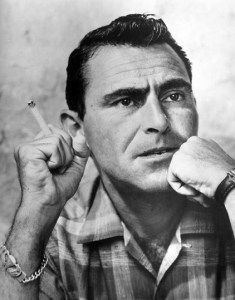
Ali had a point, but that jab missed its target. Not only were both Keats and Byron handy with their fists, many writers have found themselves attracted to sparring. Rod Serling, who got his nose broken while boxing, wrote the screenplay for Requiem for a Heavyweight, THE classic tale of both the allure and mental and physical hardships of professional fighting.
Josh Rosenblatt, a writer, ex-boxer, and former editor-in-chief of Fightland, suggests the seemingly disparate arts of writing and fighting have much more in common than one would think:
At the root of the sympathetic connection between writing and fighting lies solitude. Fighters have their trainers and cornermen and opponents, and writers have their editors and publishers and subjects, but in the end both are out there on their own, wrestling with themselves every time. Ask any trainer and they’ll say a fighter’s greatest obstacle isn’t his opponent but his own fear. The same is true for writers. The terror of physical destruction and the terror of the blank page are the same thing.
I think all who’ve struggled with the writing craft can identify with that observation.
I’ll add another thought on how the disciplines of sparring and writing can interact and enrich each other. Both help sharpen one’s awareness of the world around us. One cannot enter the ring with a rigid, prefabricated plan that cannot be altered when circumstances change. As General Kutuzov reminded his officers in War and Peace, “Before a battle, there is nothing more important than a good night’s sleep.” Alertness trumps planning in a world full of surprises.
And it’s the same with writing. We need outlines, but as the story evolves and grows, we have to listen to our characters and modify the narrative as circumstances dictate. That’s the key to crafting a story that feels fresh and alive.
Finally, as Ali noted, staying in shape is vital, especially for wordsmiths who sit for hours in front of a computer.
 M.C. Tuggle, Writer