All posts by Mike

Adventures and mishaps in science fiction, fantasy, and mystery

Getting the words right

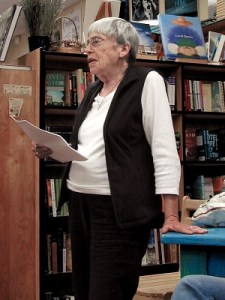
Ursula K. Le Guin
By Gorthian – Own work, CC BY-SA 3.0, https://commons.wikimedia.org/w/index.php?curid=31670340
Writers, whether new or seasoned, know well the central struggle of the craft, which is, as Ernest Hemingway put it, “Getting the words right.”

When you nail it, there’s nothing like it. The scene that sizzles, the story that moves readers — that’s what we live and work for as writers.

To me, no other fictional work has better captured the promise — and risk — of language than Ursula K. Le Guin’s classic, “A Wizard of Earthsea,” which tells the story of a boy learning the art of wizardry. The boy’s aunt, a dabbler in spell-making, introduces young Duny to the mystical relationship between the entities of our world and the names by which we know and influence them:

She praised him, and told him she might teach him rhymes he would like better, such as the word that makes a snail look out of its shell, or the name that calls a falcon down from the sky.

“Aye, teach me that name!” he said, being clear over the fright the goats had given him, and puffed up with her praise of his cleverness. …

When he found that the wild falcons stooped down to him from the wind when he summoned them by name, lighting with a thunder of wings on his wrist like the hunting-birds of a prince, then he hungered to know more such names and came to his aunt begging to learn the name of the sparrowhawk and the osprey and the eagle. To earn the words of power he did all the witch asked of him and learned of her all she taught, though not all of it was pleasant to do or know. pp. 4-5

Young Duny (later to be known as Ged) learns that the purpose of developing his power is to enhance and protect life. One of the themes of Le Guin’s riveting tale is the danger that a wizard can misuse that power if it is wielded carelessly.

The point, of course, is that the power of language is not only real, but necessary for a full life as a human being in society and the world. When used thoughtfully, language connects and anchors us. I like the way Joe Moran of Liverpool John Moores University expresses the process in this Literary Hub article:

For the American writing teacher Francis Christensen, learning to write was also about learning to live. He believed that teaching his students how to write a really great long sentence could teach them to “look at life with more alertness.” It should not just be about ensuring that the sentence is grammatically correct, or even clear. The one true aim, he wrote, was “to enhance life—to give the self (the soul) body by wedding it to the world, to give the world life by wedding it to the self.” He wanted his students to become “sentence acrobats” who could “dazzle by their syntactic dexterity.”

“To give the world life by wedding it to the self.” Beautiful. Such moments make the rejections and rewrites worth it.

Sakura: Intellectual Property

SakuraZachary Hill had just finished the rough draft of Sakura when he suddenly died. Zach’s friends and family were naturally devastated. But two of his friends, both authors, did what only writers could do for Zach and his widow, and that was to polish the manuscript and get it published. Another friend and author, Larry Correia, is getting the word out to sci-fi/fantasy fans:

Zach was a very good friend of mine and one of the all around coolest people I’ve ever met. He finished the rough draft of this novel three days before he died suddenly from a pulmonary embolism.

Paul Genesse and Patrick Tracy are talented authors, who were also friends of Zach’s, and they vowed to finish his last book and get it out there because Zach thought it was the best thing he’d ever written.

No matter how good you are, rough drafts still need lots of work, and working with Zach’s brother Josh, and a great team of artists (it is beautifully illustrated) and editors, they did a fantastic job. They’ve received no compensation for this. It was done as a labor of love, and all the royalties go to Zach’s widow, Makenzie.

What a beautiful thing to do. Please pass the word about Sakura: Intellectual Property to other writers and readers.

The master of the first line

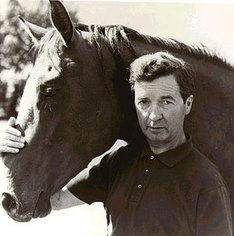
Dick Francis

I’ve long admired the works of Dick Francis, whose horse-racing yarns captivated readers and critics for over four decades. As the title suggests, his books lured readers who may not have been horse enthusiasts (myself included!), but who found themselves snared by a seductive opening. And once lured, readers couldn’t help turning page after page thanks to the author’s passion for his topic, his flawed but resilient characters, and engrossing writing.

As this CrimeReads article explains, Francis authored over 40 international best sellers thanks to his natural talent as a storyteller, remarkable discipline, and a writing routine that included his wife Mary, who not only edited his manuscripts, but performed extraordinary research for his stories, including learning to fly a plane. (?!)

In my opinion, Dick Francis ranks up there with Mickey Spillane not only as a crime writer, but as a master of the first-person point of view. The first person, I think, provides both the flexibility and constraint that lets the writer achieve the depth of intimacy and detail that make a story come alive. By centering the writer around one character’s thoughts, feelings, and experiences, the first person helps focus the writer’s efforts by giving a place and a consciousness on which to anchor that story in both the writer’s and reader’s imagination.

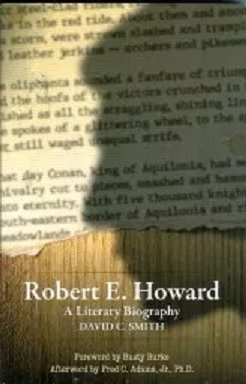
Robert E. Howard: A Literary Biography

Robert E. Howard Whether you’re a fan of fantasy fiction in general, or of Robert E. Howard in particular, or if you’re an aspiring writer who wants to learn what makes successful writers tick, you will enjoy David C. Smith’s Robert E. Howard: A Literary Biography.

David C. Smith is a prolific writer himself. In his latest work, he focuses on the complex and rich relationship between Howard’s life and thought and the spell-binding tales he gave the world. One of the strengths of this literary biography is the fact-filled account of Howard’s inspirational, yet tragic, development as a young man and author. Note: This is not a pseudo-psychological analysis, but an insightful and sympathetic exploration of an important literary figure backed by thorough research and genuine understanding.

Smith draws upon his own experience as a writer to flesh out the intellectual and emotional forces that shaped Howard and his works. Of Howard, the man, Smith observes:

His work is shot through with a relentless awareness of time, hurtfully so. This tragic appreciation is exhibited as powerfully in his writing as his acute awareness of the body — the weight of time, its passage and its cost to us. He grew up, of course, listening to recollections of the immediate past, frontier tales in which “the past is never past,” in Faulkner’s famous phrase. … Thus, what we get from Howard is not merely a story. Howard reports the facts. Right down to every bloody detail, each emotional pitch, all of the colors and moods — he reports the facts. Howard reminds us who we are. pp. 191-2

The portrait Smith creates sheds light on the enduring appeal of Howard’s most famous character, Conan:

Let enemies come, even demons and sorcerers; he will confront them and defeat them or go down trying. He is the natural man, ourselves begun again, reborn in a world as we secretly know our own world to be beneath its layers of hypocrisy and pretense. Conan is nothing if not honest in this regard and has no patience with the nonsense most of us accept as a matter of course. p. 134

The chapter examining the correspondence and resulting relationship between Howard and H.P. Lovecraft is itself worth the price of the book. Not only does it add to our understanding of Howard, it’s also a useful introduction to Lovecraft.

This is no hagiography. Smith does not close his eyes to Howard’s literary and personal stumbles. While Smith clearly admires Howard’s accomplishments, he constructs his case for a new appreciation of Howard out of a solid and broad body of research, with observations and critiques from friends, editors, and other writers who knew the man and the artist. The only fault I can detect in this otherwise remarkable and entertaining book is in the final chapter, “Legacy,” in which Smith slips into an over-the-top tone of wounded offense toward critics who dismiss Howard as a hack.

Having read Smith’s previous chapters, the reader will already be convinced how wrong those critics are.

Hither Came Conan: The Best Conan Story Written by REH Was….?

Robert E. Howard Whether you’re a long-time fan of Robert E. Howard or a newcomer, you’ll enjoy this series on Howard’s stories at Black Gate. I love the premise of this project:

Welcome to a brand new, Monday morning series here at Black Gate. Join us as a star-studded cast of contributors examine every original Conan story written by Robert E. Howard: and tell you why THAT is the best of the bunch. Read on!

Think Conan stories are for kids, or are little more than escapist fiction? Think again. Here’s a piece I wrote for the Abbeville Institute on the depth of meaning lurking in the shadows of Howard’s Conan tales. And the thought-provoking worldview Howard infused into these highly entertaining pieces are supercharged with forceful, visual writing reminiscent of Jack London, Ambrose Bierce, and Ernest Hemingway. As Stephen King put it, “Howard’s writing seems so highly charged with energy that it nearly gives off sparks.” Author James Scott Bell once said of Howard, “His writing was big and wild and full of action.” Enjoy!

Quotes of the day

heinlein and howard
“A dying culture invariably exhibits personal rudeness. Bad manners. Lack of consideration for others in minor matters. A loss of politeness, of gentle manners, is more significant than is a riot.”
Robert A. Heinlein

“Civilized men are more discourteous than savages because they know they can be impolite without having their skulls split, as a general thing.”
Robert E. Howard

BEST FICTION AND WRITING BLOGS

The best fiction and writing blog posts from around the ‘net, all guaranteed to make you a literary legend. Compiled by Mark Twain

Mark Twain
William R. AblanThe Blessing and Curse of Being a Pantser
GJ StevensInside the Publishing Industry
Colleen Cheseboro#Fairies, #Myths, & #Magic by Author, D. Wallace Peach
Timothy BurkhardtLocal comic-con returns after a two-year hiatus
A.R. JungTell don’t show…wait what?
Daniela ArkMeet the awesome blogger behind he Sci-Fi/Fantasy Books with Disability Masterlist!
Raimey GallantDon’t kill your darlings; shelve them
Mark TwainMark Twain’s Top 10 Writing Tips

Asimov’s 2019 predictions – fiction or fact?

Another genius of the last century, Yogi Berra, once quipped that “It’s tough to make predictions, especially about the future.” And that’s why we have to admire Isaac Asimov for getting so many things right, as this BBC article argues:

He foresaw the rise of computers, saying the complexity of society would make them “impossible to do without”, disrupting work and penetrating the home.

“To think that computers would take over the world was remarkably insightful at that time,” thinks Calum Chase, who writes both fiction and non-fiction books on the subject of artificial intelligence.

“Most bosses did not use computers in the 80s. It was their secretaries who had them and they would print out emails for the bosses to read. The internet was around but not many people knew about it.”

These days, Asimov’s predictions seem rather tame — well, OF COURSE computers are essential, not just in business, but in education, entertainment, and personal communications. But there was heated opposition to them when they first appeared.

Chase’s comments about the lowly status of computers in the ’80s bring back many memories. I worked for Jefferson-Pilot Corporation back then, a holding company for several life, health, and property insurance companies in Greensboro, North Carolina. My work with computers and a corporate-wide cost reduction program led to my transfer to the Organizational Development department, where we analyzed workflows, proposed more efficient and effective methods, and managed automation projects. That was one cool job.

I quickly learned that many of the managers we worked with wanted nothing to do with personal computers, which they viewed as glorified typewriters. In one of my projects, I mapped out a workflow process that eliminated the need for life insurance underwriters to dictate to a transcriptionist, who would then enter data into the mainframe (you know, a REAL computer). Instead, I proposed the underwriter directly enter the applicant and policy information into a local area network. The underwriting manager complained to my boss that I wanted to turn professional underwriters into secretaries.

After all, computers have a keyboard, and keyboards are for clerical workers!

Yes, times have changed. And Isaac Asimov saw a lot of what was coming. “Genius” is an over-used compliment these days, but I’d say he earned it.