All posts by Mike

Adventures and mishaps in science fiction, fantasy, and mystery

INFOGRAPHIC: A Map of the Literary Genres

ElectricLit has a downloadable map of all the literary genres plus representative books for each category. A few designations may be confusing — I’ve never thought of Southern Gothic as a branch of horror, and some may question putting C.S. Lewis’ The Lion, the Witch, and the Wardrobe under Christian rather than fantasy (most Christian novelists and readers would reject the magic in both Lewis’ and Tolkien’s works). But you’ll have a blast rambling around and even getting lost in this maze of literary geography. Enjoy!

Why would a character do that?

Over at Kill Zone, editor extraordinaire Jodie Renner discusses a fault she sees all too frequently in manuscripts she reviews:

Have you ever been reading a story when suddenly the protagonist does or says something that makes you think, “Oh come on! Why would he do that?” or “This is crazy. Why doesn’t she…?” or “But I thought he…!” or “I didn’t know he/she could [insert extraordinary ability].” The character seems to be acting illogically, to be making decisions with little motivation or contrary to his personality, abilities, or values.

Renner is right — there’s no better way to lose a reader than to force a character to do something brainless or out of character just to advance the plot. But it happens, and some writers get away with it. In my opinion, the worst example of a character suddenly behaving both out of character and illogically is in The Girl With the Dragon Tattoo.

SPOILER ALERT!

Lisbeth Salander, a plucky computer hacker, figures out that Martin Vanger is the serial killer she and journalist Mikael Blomkvist have been trying to identify. Meanwhile, Blomkvist has also figured out Martin is the killer, but the wily Martin captures Blomkvist and prepares to torture and kill him in his dungeon. Fortunately, Lisbeth sneaks into Martin’s dungeon just in time. Martin, who’s coldly and methodically killed dozens of victims, totally panics and RUNS AWAY from a 90-pound girl armed with — a golf club. Now, Martin’s in his fortress, with guns and other weapons all over the place, but for some mysterious reason, he decides to abandon it by running upstairs and out of the house to his Volvo. Okay.

But it gets worse! Lisbeth chases Martin on her little motorbike. As they race down the mountain, all Martin has to do is tap the brakes, and his pursuer would squish against the rear of his Volvo (which I think is Swedish for “Tank for Civilian Use.”) But no, instead our previously calculating and unflappable villain crashes and ends in a fiery wreck.

And millions found this believable? Give me a break!

An Aztec Midnight Reader in Mexico

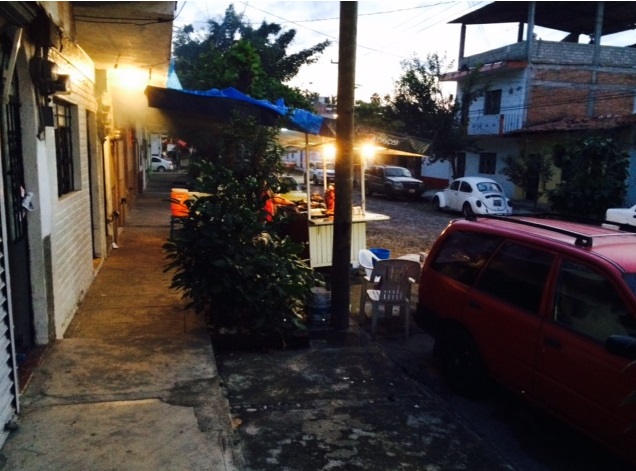
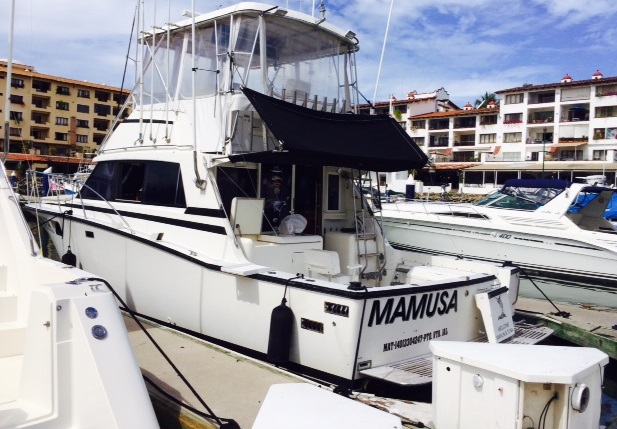
I received the following email and pics from a reader of Aztec Midnight currently vacationing in Mexico. I thought I’d share them:

Finished reading your book while down here in Mexico, Mike. You did your homework. Great story! And the street scenes are right out of your book.

Mexican Street Scene

In Puerto Vallarta for three weeks. Be back in Iceland, I mean Ohio next week. Going out on my friend’s boat Friday for a two day fishing trip.

PuertaVallartaBoat

Since you mentioned pulque in the book I thought you might like to know we’ve been drinking our own private stock we got up in Guadalajara.

Pulque

Keep up the good work! John

Thanks, John! I appreciate your comments. Enjoy your trip! (And careful with the pulque.)

Best Fiction and Writing Blogs

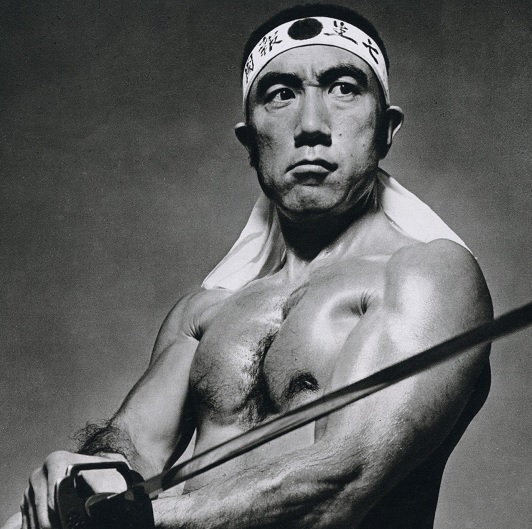
mishima
The best fiction and writing blog posts from around the ‘net, all guaranteed to make you a literary ninja. Compiled by yukio
 
James Scott Bell: Top Ten Things You Need to Know About the Writing Life
Publishing Insights: Writing Partnership & Blogging
Graham Moore: How to Write About Characters Who Are Smarter Than You
Tom Knighton: Captain Kirk’s duty and other considerations
Connemara James: 5 Websites to Help Aspiring Writers Publish, Not Perish
Nicola Alter: The 10 Popular Types of Fantasy Movies

Lovecraft and Howard and the Forces of Chaos

CthuluRising
I have an article up at the traditionalRIGHT blog:

Both Howard and Lovecraft saw civilization and order as not only fragile but necessarily short-lived. In the fictional worlds these imaginative writers created, the values and beliefs that made life possible had to be defended against forces of chaos that inevitably had the upper hand. What counted was the protagonist’s resolve and dedication.

Read the rest at traditionalRIGHT.

Creative Community & The Fear of Becoming “Normal”

Writing is viewed as a solitary activity. Some writers believe their isolation is what defines them, and even imagine that socializing would not only detract from their uniqueness, but diminish their creativity. Mingle with the herd, and you’ll become one of them. Call it the writer’s fear of becoming “normal.”

But these folks have it all wrong. We are social beings who need to interact with others. What’s more, social contact improves our craft, as this piece from PsychCentral explains:

As creative people, we need others to see the work we do (after all art is meant to be seen), to give us feedback and also to normalize some of the chaos that comes with the creative territory.

Aside from these internal benefits, being a part of a community of creatives can also expand your audience reach, increase the chances of doing collaborative work (in which you can discover a brand new part of yourself and a new method to create) and extend your creative network. A community can give you the opportunity to experience art and creativity from the various perspectives of all the other people surrounding you, at a collective level rather than the individual one you can provide for yourself.

I know I’ve benefited from my participation in the Charlotte Writer’s Club and my monthly critique group, as well as various writing workshops. Even when you’re stuck in the office, you can exchange views and ideas by posting comments on writing blogs.

Naturally, we also need time alone to think and create. The ideal is a balance of separateness and socialization.

Andrew Nelson Lytle advised us to “throw out the radio and take down the fiddle from the wall.” By that, he meant that art, entertainment, and companionship were not meant to be separate things. Art should be a social, interactive endeavor that not only engages everyone who  participates, but beckons all toward beauty and a sense of connectedness.  To me, that’s the ultimate aim of any art.

Quote of the day

“I’m not a really good writer, and I’m okay with that. What I do have is this ability to dissect my emotions and feelings, and write about my deepest secrets, about what terrifies me, about what I hate.” Cristian Mihai 

Now one could counter that the ability to capture your deepest secrets and fears with words is the definition of good writing.

Consider H.P. Lovecraft. His characterization and dialogue could be laughably bad, but his ability to construct scenarios and concepts that thrilled and challenged readers made him a giant among fantasy and horror writers.

Bottom line: We can’t be good at every aspect of life, or even good at every aspect of our chosen craft, but we can focus on what we love and make the most of what we have.

Stuck on your next move?

Chess

We’ve all been there. Despite your meticulous outlining, you find yourself stuck in your story and have no idea what your protagonist does next. How do you advance your plot?

Fear not. This is something every writer has to wrestle with. Even the pros admit to hitting an occasional road block. So whether a best-selling author or lowly scribbler, you have to deal with the occasional plot snag somehow. So I’ll share what I do.

My approach is two-fold: First, go back to your protagonist’s basic motivation. What does he want? Then imagine the worst that could happen to prevent him from achieving his goal. Throw that at him, and watch what he does. If you understand the protagonist’s history and heartfelt desire, you should be able to visualize how he’ll respond.

Read the rest at Alice Osborn’s blog, where I’m guest blogging today.