Blood & Thunder: A Review

I’ve just finished Blood and Thunder, Mark Finn’s literary biography of Robert E. Howard. It’s one of those books I hated to see end. Blood & Thunder is an entertaining and inspired introduction to one of the greatest fantasy writers who ever lived.

Finn stresses throughout this biography that Texas was a life-long influence on Howard. Finn, also a native Texan, knows what he’s talking about.

Howard’s unique voice has been described as robust, vivid, and dark. The sizable Anglo-Celtic population throughout the South, including Texas, accounts for much of this. As Howard wrote in a letter to H. P. Lovecraft:

“But no Negro ghost-story ever gave me the horror as did the tales told by my grandmother. All the gloominess and dark mysticism of the Gaelic nature was hers, and there was no light and mirth in her. Her tales showed what a strange legion of folk-lore grew up in the Scotch-Irish settlements of the Southwest, where transplanted Celtic myths and fairy-tales met and mingled with a substratum of slave legends.”

Another major but often overlooked influence on the future writer was the Western tall tale. The young man listened intently to his father, a small town doctor, who spun entertaining yarns for patients, family members, and friends. The chapter dedicated to the fine Texan tradition of the tall tale is titled “Authentic Liars,” a perceptive acknowledgement of the writer’s most crucial talent, the ability to tell a believable lie the audience will happily swallow.

The Texas young Robert E. Howard grew up in was barely a generation removed from the Wild West, and the boy was spellbound by first-hand accounts of Comanche raids and attacks by the Mexican rebel Pancho Villa, undoubtedly the inspiration for the bandits, kozaki, and Picts who brawled and stormed throughout the Hyborian kingdoms. Even Texas-sized rattlesnakes found their way into Howard’s stories (“The Scarlet Citadel,” for example.) As Finn puts it, “Conan, then, is much closer to the American frontier tradition than epic fantasy.”

The Texas oil boom not only overturned the state’s once-agrarian economy, but jolted the culture, and not in a good way. In a letter to H. P. Lovecraft, Howard wrote:

“I’ve seen old farmers, bent with toil, and ignorant of the feel of ten dollars at a time, become millionaires in a week, by the way of oil gushers. And I’ve seen them blow in every cent of it and die paupers. I’ve seen whole towns debauched by an oil boom and boys and girls go to the devil whole-sale. I’ve seen promising youths turn from respectable citizens to dope-fiends, drunkards, gamblers, and gangsters in a matter of months.”

Howard’s recurring theme of civilizational rot and downfall were not abstract notions; he experienced these things first hand. Like his friend and fellow writer H. P. Lovecraft, Howard viewed industrialization as a destructive, de-humanizing force.

It’s impossible to discuss Robert E. Howard without considering H. P. Lovecraft. The two masters corresponded extensively, and clearly influenced each other’s work. Howard set Conan in a Lovecraftian universe, complete with a number of Cthulhu mythos deities. But it was a reciprocal – and beneficial – relationship. Finn points out how Howard’s action-oriented style inspired Lovecraft, whose fiction tended toward the psychological, to include the well-done nighttime chase scene in “The Shadow Over Innsmouth,” one of Lovecraft’s greatest tales.

I cannot agree with all of Finn’s conclusions. For example, I winced at his assertion that Yasmina from Howard’s novella “The People of the Black Circle” is a “more fully realized” character than Belit from “Queen of the Black Coast.” C’mon! I applaud Finn’s rejection of L. Sprague de Camp’s unfair and uninformed opinion that Howard was a suicidal paranoid with Oedipal tendencies. However, to rebut de Camp by asserting Howard had no choice but to commit suicide is simply ridiculous.

All in all, though, this is a well-researched, intelligent, and sympathetic evaluation of Robert E. Howard’s life and legacy, one I highly recommend for both newcomers and seasoned fans.
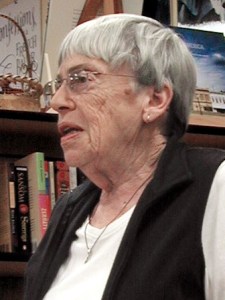
Quote of the day

“I find the short story much more intriguing because it encompasses, in a moment, everything that went before and supposes everything that will follow. It gives the reader the opportunity to exercise his or her chops in solving the mystery. It freezes up a moment in time, it freezes your imagination of a concept in a moment in time, and the short story has always seemed to be to me far more difficult and adroit and flexible than the novel. There are many great novels, and yet I see people writing trilogies and quatrologies and even five and six and eight volumes in a series, and I think, ‘Are they not re-chewing their cud?’ So I try to hit the gong the first time.” Harlan Ellison

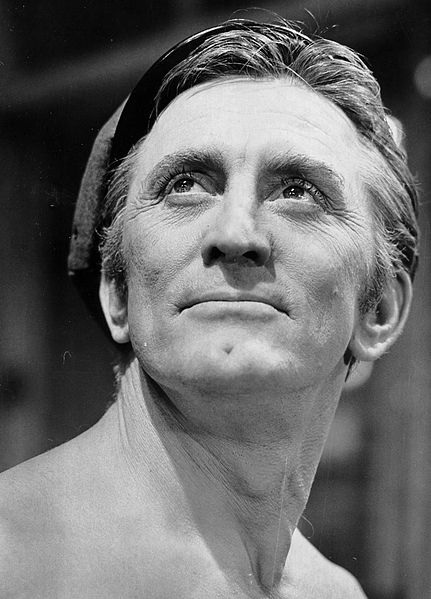
Quote of the day

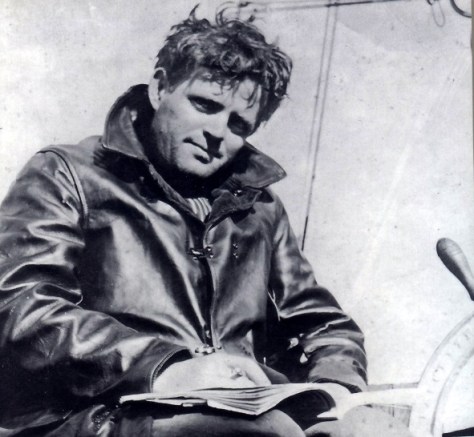
Jack London

“There is an ecstasy that marks the summit of life, and beyond which life cannot rise. And such is the paradox of living, this ecstasy comes when one is most alive, and it comes as a complete forgetfulness that one is alive. This ecstasy, this forgetfulness of living, comes to the artist, caught up and out of himself in a sheet of flame.” Jack London

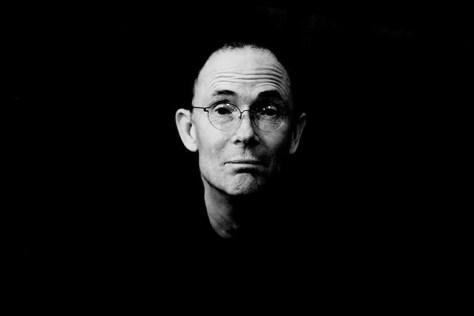
William Gibson, Cyber Rebel

Mention the term Southern fiction, and people typically think of the works of Flannery O’Connor, William Faulkner, Ron Rash, or Charles Frazier. The term evokes scenes of snowy-white cotton fields, simmering tension between characters sipping bourbon, or protagonists haunted by an aching nostalgia for a rural life long gone.

Most folks wouldn’t associate memory uploads, runaway AI systems, or megacorporations as proper subjects for Southern fiction. But maybe my article on cyberpunk author William Gibson might just change your mind. It’s the featured post over at the Abbeville Institute blog. Read it there, and comment on it here. Enjoy!

Happy 128th, J.R.R. Tolkien!

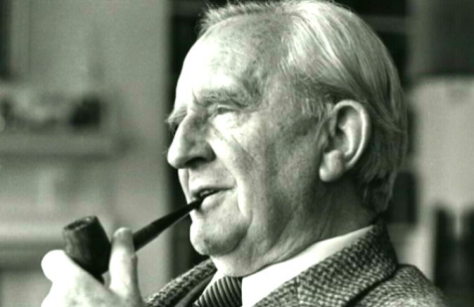
JRR Tolkien

From Shaun Gunner, the chair of the Tolkien Society:

After Bilbo left the Shire on his eleventy-first birthday in The Lord of the Rings, Frodo toasted his uncle’s birthday each year on 22 September. The Society continues that tradition by continuing to toast Tolkien’s birthday.

J.R.R. Tolkien was born in Bloemfontein [South Africa] on 3 January 1892, and we invite you to celebrate the birthday of this much loved author by raising a glass at 9pm your local time.

The toast is simply:

“The Professor!”

I will do that.

Tolkien’s works continue to exert influence not only because they tell exhilarating stories, but because, especially for me, they so beautifully capture the Norse, Celtic, and Christian traditions Tolkien sought to reclaim for the modern world.

The stakes, warns Tolkien, couldn’t be higher.

Mordor represents the self-defeating triumph of technology over nature. Gollum and the Orcs embody what the divorce from nature makes of those no longer in harmony with their organic ties to society and the natural world. When the lust for power and treasure erase our natural instincts to care for our homes and kindred, we will devolve into monsters. Our lovely world, threatened by poison and dictatorship, can be lost forever if we let it fall to those crazed by greed and envy.

9:00 PM folks. Be there.

It’s a Dark World, After All …

Dark World

The Fermi Paradox asks a simple but unsettling question: With so many worlds spinning through space, each potentially breeding countless, unknown forms of life, why haven’t any of them paid us a visit? After all, the Drake equation predicts 20 civilizations in our neck of the cosmic woods. Yet the Active Search for Extra-Terrestrial Intelligence program has transmitted a number of “Y’all come!” messages into space without receiving one lousy response.

So where is everyone? If our neighbors are too busy to drop by, why don’t they at least text us?

One explanation is the Dark Forest theory. It speculates that any species capable of beaming messages through space could be both formidable and hungry, so the wise strategy is to do what John Krasinski and Emily Blunt did in A Quiet Place — don’t make a sound, and hope the monsters don’t hear you.

But wait! That could work both ways. We’ve been telegraphing our presence for over a hundred years with radio and TV communications, completely oblivious to who or what may be listening in the dark corners of outer space. Have we doomed ourselves by giving away our position to megapredators? If so, why haven’t they landed in the middle of the Super Bowl with their bibs and eating utensils?

Here’s my explanation: Any aliens who receive our transmissions of “I Love Lucy” and “Friends,” or find our naked pictures in their inboxes, will surely conclude that only the baddest of bad-ass species would be so brazen. After all, what is a lion proclaiming when he shakes the trees with his blood-curdling roar? He’s letting everything within earshot know that the king of beasts is on the move. Get in my way at your own risk.

Feel safe now? That happy thought is my Christmas present. You’re welcome.

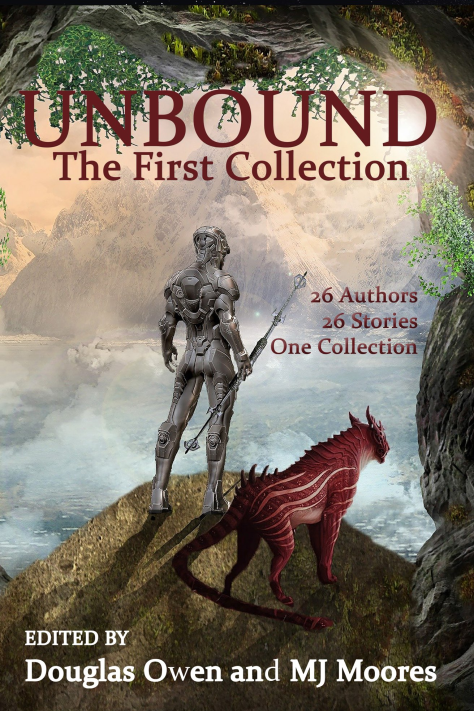
Unbound – The First Collection

Unbound

I was pleasantly surprised to see my short story “Hunting Ground” included in DAOwens Publications’ Unbound – The First Collection. It’s an exciting blend of fantasy and science fiction stories, featuring the themes of the successful Unbound series, including Lost Friends, Changed Worlds, and Goodbye Earth.

Here’s what one reviewer had to say: “I enjoyed M.C. Tuggle’s “Hunting Ground” for its unusual antagonist. CHANGED WORLDS (Unbound Book 2) is a great read for those wanting to spice up their lives with something new.” Ben A. Sharpton, author of 2nd Sight.

Available at Kobo. Check it out!

Adventures and mishaps in science fiction, fantasy, and mystery