Quote of the day
The Baptism of Time

There’s a powerful and alluring line in Haruki Murakami’s novel Norwegian Wood I’ve always loved: “I don’t want to waste valuable time reading any book that has not had the baptism of time.”
The character meant that in a limited sense; he felt only old books that had endured for generations were worth reading. But I would add that works that acknowledge and explore the deep and often inscrutable influence of the past are also “baptized of time” and make the most moving and inspirational reading. William Faulkner captured that insight perfectly in Requiem for a Nun: “The past is never dead. It’s not even past. All of us labor in webs spun long before we were born, webs of heredity and environment, of desire and consequence, of history and eternity.”
I’ve long believed the healing power of literature rises from its ability to let us see our deep connections to others, the world around us, and the cosmos. Rachel Carson once wrote that “To understand the living present, and the promise of the future, it is necessary to remember the past.”
Growing up around Civil War and American Indian sites, I absorbed a deep appreciation of the past, and that is reflected in the stories I write. My latest is “Making a Ton,” featured in the Minstrels in the Galaxy anthology, The protagonist, a pilot in the Asteroid Belt, reflects on his connections to the trailblazers who led humanity into space:
Ray stepped towards the window. “We got to this moon on the shoulders of giants,” he announced. “Pioneers, heroes, every one of them. Giving up would be an insult to their memory. They were men and women who roared into space in ships powered by chemical fuel that could’ve exploded and turned them to space dust. But they did it anyway. They were people with backbones, muscles, and scars, and courage. That’s what space travel is about, not technology. I feel like I’m with them when I’m piloting.”
Riveting adventures, echoes of lives lived well, and guideposts for discovering what makes us what we are — that’s the goal of all good stories.
Quote of the day

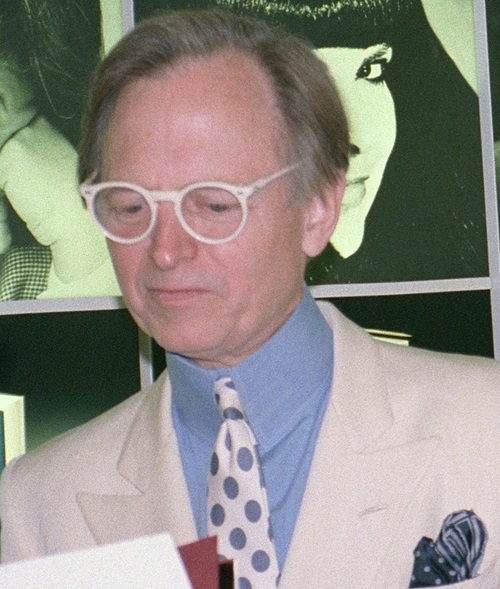
“The truth is always revolutionary.” Tom Wolfe
Making A Ton

Alpha Mercs has published Minstrels in the Galaxy, their latest anthology, and I’m pleased to say it includes my story “Making a Ton.” Editor Sam Robb was very kind in his acceptance letter: “Loved your story. Definite Larry Niven / Known Space vibes.”
The music of Jethro Tull is the theme for this unique anthology of twelve romping tales. I’ve always loved “Too Old to Rock ‘n’ Roll: Too Young to Die!” so it was a natural choice for my story “Making a Ton.”
And that cover art is truly a thing of beauty. Cedar Sanderson outdid herself.
The action in my piece unfolds at an ice mine on Saturn’s frozen moon Enceladus. (Yes, I’ve been there before. I find Enceladus endlessly fascinating.) Ray, an aging pilot who can’t find work, bets his life savings on a race against an alien who not only has a state-of-the-art ship, but an inborn talent for speeding through the Asteroid Belt.
What is Ray thinking? Does he plan to go out with a bang? Could this be the final take?
There’s only one way to find out.
Available on Amazon in Kindle or paperback.
Workforce Reduction

In Another Time Magazine has published my short story “Workforce Reduction.” In her acceptance letter, editor Agatha Grimke wrote, “This was very well written and a fun piece, and we really liked the way you told the story through executive emails.”
Thank you, Agatha! This is my first shot at epistolary fiction, and it was a blast to research and write. Not sure how you’d classify it — dark sci-fi? satire? Whatever you call it, I was extremely pleased how my observations on religion and current events dovetailed into the story arc.
“Workforce Reduction” draws on my days working in Organizational Development for an insurance company, where I analyzed workflow and designed new procedures. That’s where I first learned about Dr. Jerry Pournelle’s Iron Law of Bureaucracy. In addition to being a science fiction author, Pournelle was an influential OD scientist. His Iron Law says, “In any bureaucracy, the people devoted to the benefit of the bureaucracy itself always get in control.”
In other words, bureaucracies tend to become self-serving. I can attest to the accuracy of that law. Boy, can I ever. My story features creepy aliens and back-stabbing bosses, but Pournelle’s law is the real antagonist in this story.
Available now on Amazon in Kindle or paperback.
Only You and I Together

So thrilled to see my story Only You and I Together published at White Cat Publications. Kay DiBianca, the award-winning author of Time After Tyme, read it and commented, “Very moving.”
The inspiration for this story hit me when my brother and his wife joined me and Julie at the beach, the first opportunity we’ve had in years to spend a week together. We both commented on traits we saw in each other that reminded us of our departed father. Dad’s voice, mannerisms, and wry humor filled a room overlooking the ocean once again, recalling family vacations from long ago.
Later, it dawned on me that the two of us, in a way, had made our father come alive. So this is a story I put my heart into. I still get a little misty when I read it.
The title? I borrowed that from The Waste Land, which is fitting inspiration:
When I count, there are only you and I together
But when I look ahead up the white road
There is always another one walking beside you
My father witnessed the horror of war and death, and struggled the rest of his life to overcome PTSD. Despite that all-but-consuming torment, he made himself into a loving husband and father. He was the most decent man I have ever known. This story is for him.
Quote of the day

“Science is not only compatible with spirituality; it is a profound source of spirituality. When we recognize our place in an immensity of light years and in the passage of ages, when we grasp the intricacy, beauty and subtlety of life, then that soaring feeling, that sense of elation and humility combined, is surely spiritual.”
Carl Sagan
The Way of Writing

K.M. Weiland is one of my favorite writing coaches, and I never miss her posts. I learn something every time I check her blog. Her latest is on the craft of writing emotional fiction. She acknowledges it’s a difficult art, but there are good reasons for working to master it:
“The good news is that because fiction is an inherently emotional experience, it is well-suited to helping us access and process the very emotions we’re seeking to convey in our stories. … I recognize that my lifelong love of stories has certainly been influenced by their cathartic power to help me feel things in a safe container. For both readers and writers, stories offer the scientifically proven opportunity to expand the nervous system’s capacity to feel and process emotion—and, by extension, to experience life more expansively.”
That’s a worthy endeavor, one I’ve worked on for many years. But then came this:
“If you’re cut off from emotions, it’s because you’re cut off from your body. The act of vocally naming sensations helps promote a mind-body neural connection that makes it easier and easier to raise real-time emotional awareness.”
Absolutely. But why is this so?
The barrier to the emotional awareness that allows us to write honest, evocative fiction is the philosophical dualism that permeates the arts and sciences. Dualism asserts that mind and body are fundamentally different things unnaturally yoked together, with the rational mind trapped in an inferior, unintelligent body. That interpretation of human existence has been critiqued as “the ghost in the machine.” Charlene Spretnak, an ecowriter with compelling insights about the relationship between our bodies and the rest of nature, traces the development of dualism in her book The Resurgence of the Real:
“Rational thought could be exercised only if sealed off from ‘corrupting’ influences of the body (sensations, emotions, desires) and if properly isolated from ‘lowly’ nature. Plato felt that we, that is, our minds, are imprisoned in the dumb matter of our bodies.”
Plato believed the mind was a supernatural entity that made humans separate and above the rest of nature. Nature, according to dualism, is inherently inferior, worthy only of contempt and exploitation. Descartes cast this notion in concrete when he asserted that the mind defines humans. Sensations and emotions, rather than instant, crucial alerts from a knowing body, were regarded as confused, irrational reactions which should be ignored.
I examined the impact of dualism in my latest story, “Due Diligence.” Yes, it’s fantasy, but it gave me the freedom to explore what the unnatural separation of mind and body does to one’s ability to cope and find meaning.
The latest developments in neuroscience show us that thinking is grounded in the body. We now know much more about how neural networks in the brain store and retrieve memories. And if dualism were correct about the mind being fundamentally separate from the body, why are there so many studies confirming that physical exercise strengthens our ability to remember and solve problems?
The art of writing is more than a craft or a hobby, it’s a path toward making oneself and the world around us a little better. I love the way Weiland put it:
“Learning how to write emotional fiction is, at its core, a journey into the heart of our shared humanity. It is not just an artistic endeavor; it’s an exploration of the human experience.”
The Magic of Words

Years ago, the opening scene of A Wizard of Earthsea captured my imagination and hooked me into this little classic. All who appreciate the power and beauty of words can’t help but feel the wonder Duny experiences as his gift for magic expands with his mastery of language. When his aunt, a witch, tells Duny the “true name” of falcons, he discovers this gives him control over them. This whets his appetite for more:
“When he found that the wild falcons stooped down to him from the wind when he summoned them by name, lighting with a thunder of wings on his wrist like the hunting-birds of a prince, then he hungered to know more such names. … To earn the words of power he did all the witch asked of him and learned of her all she taught, though not all of it was pleasant.” p. 5
Ordinary mortals feel the same rush when they learn the names of things. My eyes always tear up when I watch the water scene from The Miracle Worker. Anyone who isn’t moved when young Helen Keller learns that words represent reality has a heart of stone. Leicester Hemingway wrote that by the time his brother Ernest was eight, he “knew the names of all the birds, all the trees, flowers, fish, and animals found in the Middle West.” Knowing the names of things connects you to them. It elevates and empowers you.
As beautiful as this truth is, it isn’t romanticism, but hard practicality. Faithful communication was our distant ancestors’ most important adaptation to a harsh environment, as Robert Ardrey illustrated in The Social Contract:
“The bipolar nature of hominid society … became the cradle of language as we know it. Things had to be told. A hunter was injured, a child was sick. Hunters returning empty-handed had to tell apologetically of the big one that got away. Leopards menacing the home-place had to be described by the women, numbered, placed on the map if the group was to be defended.” p. 327
That’s why telling the truth evolved into an ancient virtue. Lying not only disrupted social bonds, but also threatened survival. Accurate, truthful communication alerted one’s family and neighbors to both dangers and opportunities.
Modernity hasn’t changed this basic fact. Writers offer the world an ideal of precise transmission of ideas and emotions. That’s what Ernest Hemingway meant when he reminded himself that he had to write “the truest sentence that you know.” In other words, a writer must discipline himself to express his truth with conviction and stand by his words.
Clear, honest communication remains a goal for the individual and society. Ezra Pound once declared that “Good art cannot be immoral. By good art I mean art that bears true witness, I mean the art that is most precise.” Asked what he would do if he were governor, Pound’s mentor Confucius vowed to “rectify the names.” By “rectify,” he meant to restore, to purify, to correct, so that words would correspond to reality. That’s a discipline, an art, and a calling.