Manly Wade Wellman: The Voice of the Mountains

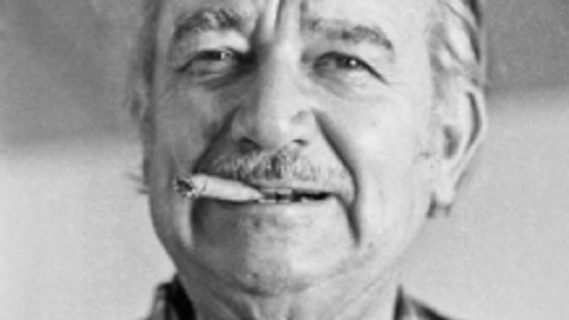
Manly Wade Wellman

My article on Manly Wade Wellman, once known as “the dean of fantasy writers,” is featured on the Abbeville Institute’s blog:

Manly Wade Wellman never penned an autobiography, despite the fact he published 500 stories and articles, won the World Fantasy Award and Edgar Allan Poe Award, and even edged out William Faulkner to win the Ellery Queen Mystery Magazine Award in 1946.

Yet, in one of his most famous short stories, Wellman did reveal how he must have seen himself throughout his career, from a crime reporter for The Wichita Eagle, to Assistant Director of the WPA’s Folklore Project in New York City, and finally as “the dean of fantasy writers.” In “The Desrick on Yandro,” the protagonist, John the Balladeer, has to sing for his supper to a group of “ladies and men in costly clothes.” Confident and entertaining despite his modest attire and outsider ways, John charms the crowd with forgotten classics, including “Rebel Soldier.” Like John the Balladeer, Manly Wade Wellman was a rustic but worldly singer of old ballads, as well as a walking, talking ambassador and promoter of traditional Southern culture wherever he went.

Read the rest at the Abbeville Institute, and Like here.

A Bhikku’s Tale

A Bhikku's Tale

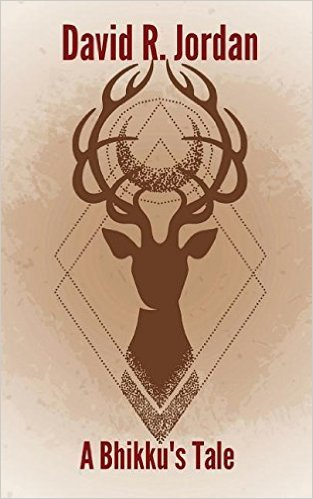
Here’s a new work worthy of your attention. Irish writer David R. Jordan’s second novella is out, and it’s a blast. I’m not sure exactly how to classify A Bhikku’s Tale, other than to say it’s packed with surprises, humor, and action.

Set in an alternate Ireland called Inis Fail (Isle of destiny), the central character is an easy-going monk, or bhikku, named Reilly. Though he spends most of his waking hours meditating, he’s not averse to the temptation of cigarettes and good, strong drink, or wearing Star Wars tee shirts on occasion.

But Reilly’s blissful world gets shaken when the Green Man brings terrible news: Sam the Sybarite (the spirit of luxury) is spreading the news of a marauding Chinese dragon bringing terror and destruction among the peasants and nearby townspeople. Reilly and the Green Man decide to visit the horned god Cernunnos, where they run into Sam, who verifies the news, and adds that Morpheo, the bringer of sleep and dreams, is riding the dragon. But why would a normally benign god do such a thing?

The four decide they need help if they’re going to confront Morpheo and stop him and his dragon. They recruit a shaman named Murray, a girl ghost named Tracy, and a snake. The team finds and, thanks to their mighty snake, destroys the dragon. But while they were preoccupied with the dragon, Morpheo managed to steal part of Cernunnos’ horn, giving the deranged, power-mad god control over nature. The threat is now worse than ever.

As I said, it’s a tough story to pigeonhole. Twisted fairy tale? A romping mash-up of several world mythologies? Read and enjoy this novella and decide for yourself. Whatever you want to call it, it’s thoughtful and entertaining.

A Bhikku’s Tale is now available on Amazon.UK

How being pessimistic about writing can make you a better writer

Here’s some counter-intuitive but sound advice from an accomplished author.

lissapelzer's avatarYet Another Crime Book Blog

Positive thinking is all over the place and for one good reason – it sells. Telling someone that they can control their own good fortune by simply deciding to think positively is a beautiful idea. And you know what? You think positive – you feel positive. It works, we’ve all experienced it, but isn’t that a little like saying, if you imagine the colour blue you will see the colour blue?

More and more, the evidence is stacking up. Positive thinking can make you happy for a short time, but it can also stop you from reaching achievable goals too.

09-positive-thinking.w710.h473.2x.jpg

Positive thinking alone won’t secure you the job you want that was otherwise unattainable or save a failing relationship. Positive thinking can make you appear to others as a confident and outgoing person, but most jobs and relationships soon dissolve that illusion, leaving positive thinkers in a worse position than…

View original post 705 more words

Unbound II: Changed Worlds now in paperback!

Unbound II

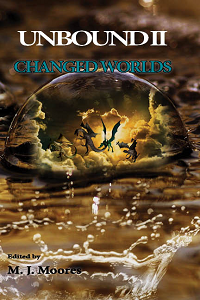
This anthology is a mind-blowing collection of science fiction and fantasy tales. Here’s what Ben A. Sharpton, author of 2nd Sight, had to say about this unique anthology: “I enjoyed M.C. Tuggle’s “Hunting Ground” for its unusual antagonist… CHANGED WORLDS (Unbound Book 2) is a great read for those wanting to spice up their lives with something new.”

Unbound II: Changed Worlds is now available in paperback from Amazon and from the publisher, Science Fiction and Fantasy Publications.

Kindle version also available at Amazon.

Hitting that Submit Button

Hitting that Submit Button

Posting has been light lately, but it’s because I’ve been busy with my latest manuscript. For me, getting that first draft down is tough. However, I love revising. (Weird, huh?) I really think I could revise a piece forever, continuously getting charged up from finding boo-boos here and tightening up my prose there.

My wife, who is also a strict critic and proofreader, recently suggested the real reason might be more than the pleasure of “getting the words right,” as Hemingway described the process of revision — it might also be fear of taking that frightening leap of submitting my work.

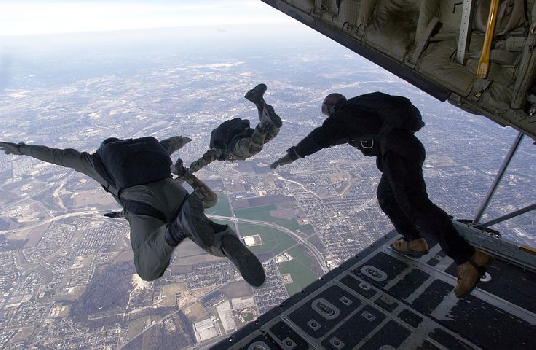
Yikes! She’s probably on to something. I’ll admit it IS scary to hit that submit button. For me, it’s at least as terrifying as that first backward jump in rappelling, or seeing the earth vanish from under your feet when you launch yourself hang gliding. And I’ll also admit to still being touchy about rejection even though intellectually, I know that’s part of the game. Hey, it hurts to offer your heart and have it pushed aside. But again, that’s the nature of the beast.

Here’s a no-nonsense reminder of that cardinal rule of the writer’s life, from alto at Matters of the Art:

You will be rejected. Often. Get over it early, because it never really goes away. Though realize you are not alone. In the course of my MFA, while researching for an assignment, I stumbled upon an article about author rejections. The New Yorker, The Paris Review, The Atlantic, Fiddlehead, and every other high end lit rag has rejected every single famous writer out there countless times. It doesn’t matter who you are. Raymond Carver, Joyce Carol Oates, Alice Walker, all know the sting of rejection.

If misery loves company, I guess knowing you have some high-caliber company eases the hurt just a bit.

BTW, I heartily recommend alto’s article. It’s sound advice I wish I’d read decades ago, not just on dealing with rejection, but on other vital truths about writing.

Anyway, I finally let go and hit that “Submit” button. My latest wip is out there, swimming upstream in a digital slush pile.

Thomas Bowdler’s Revenge!

Shakespeare censored

Shakespeare’s Romeo and Juliet had a happy ending. In Hamlet, Ophelia accidentally drowned. And when Lady Macbeth gazed upon her guilty hand, she cried, “Out, crimson spot!”

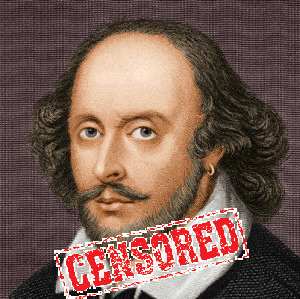
Doesn’t sound quite right, does it? But those are some of the edits Thomas Bowdler made to render Shakespeare less violent and less frightening. Bowdler’s 1818 The Family Shakespeare removed what Bowdler called “those words and expressions… which cannot with propriety be read aloud in a family.”

In fact, Bowdler’s work was appreciated in Victorian times, and poet Algernon Charles Swinburne credited Bowdler for making Shakespeare approachable for children. But today, the word “Bowdlerize” signifies the reworking of a piece to make it less offensive, but also weaker and less effective.

Before we start feeling superior to those stuffy old Victorians, we need to pay attention to a growing neo-Bowdler campaign to tone down text that could offend. Sadly, some publishers are resorting to “sensitivity readers” whose explicit job is to Bowdlerize manuscripts:

Before a book is published and released to the public, it’s passed through the hands (and eyes) of many people: an author’s friends and family, an agent and, of course, an editor.

These days, though, a book may get an additional check from an unusual source: a sensitivity reader, a person who, for a nominal fee, will scan the book for racist, sexist or otherwise offensive content. These readers give feedback based on self-ascribed areas of expertise such as “dealing with terminal illness,” “racial dynamics in Muslim communities within families” or “transgender issues.”

The Chicago Tribune story cites the case of author Veronica Roth, whose novel Carve the Mark was denounced “for its portrayal of chronic pain in its main character.”

That’s sad. It’s a rough-and-tumble world out there, and if you can’t handle viewpoints that challenge your sensibilities, you’re in for some rude shocks.

I see this as yet another symptom of a society that’s self-segregated itself into prickly, snarling little dens of conformity. Too many people see the world through a pre-fabricated lens and as a result, cannot cope with views from outside their cocoons. If all you know of the world comes from Fox News or Huffington Post, you feel you must condemn all who fail to uphold the One True Way.

Get away from that computer. Go outside. Talk to real people. At the very least, dare to consider ideas from outside your “Favorites” list.
Jack Kirby is Still King!

thor

I loved this tribute from playwright John Ostrander:

What makes Jack Kirby the King? For me, it’s this.

Imagination – The word “prodigious” comes to mind. So many concepts, so many characters, bear his mark. So many styles of stories. From the spires of Asgard to the weird distortions of the Negative Zone to the brutal cityscapes of Apokolips, to Ego the Living Planet, no one could top his visuals.

Storytelling – His figures leaped off the page. The panels couldn’t contain the events on them. Even standing still, they vibrated with potential power. There was energy to burn on his pages. You felt them as much as you read them. You couldn’t read the story fast enough and when one issue was done you wanted the next one right now.

Artistry – Okay, his anatomy was not always perfect. And every woman’s face looked the same. He was still one of the best ARTISTS that ever drew a comic because comics are about storytelling and no one beat Kirby as a storyteller.

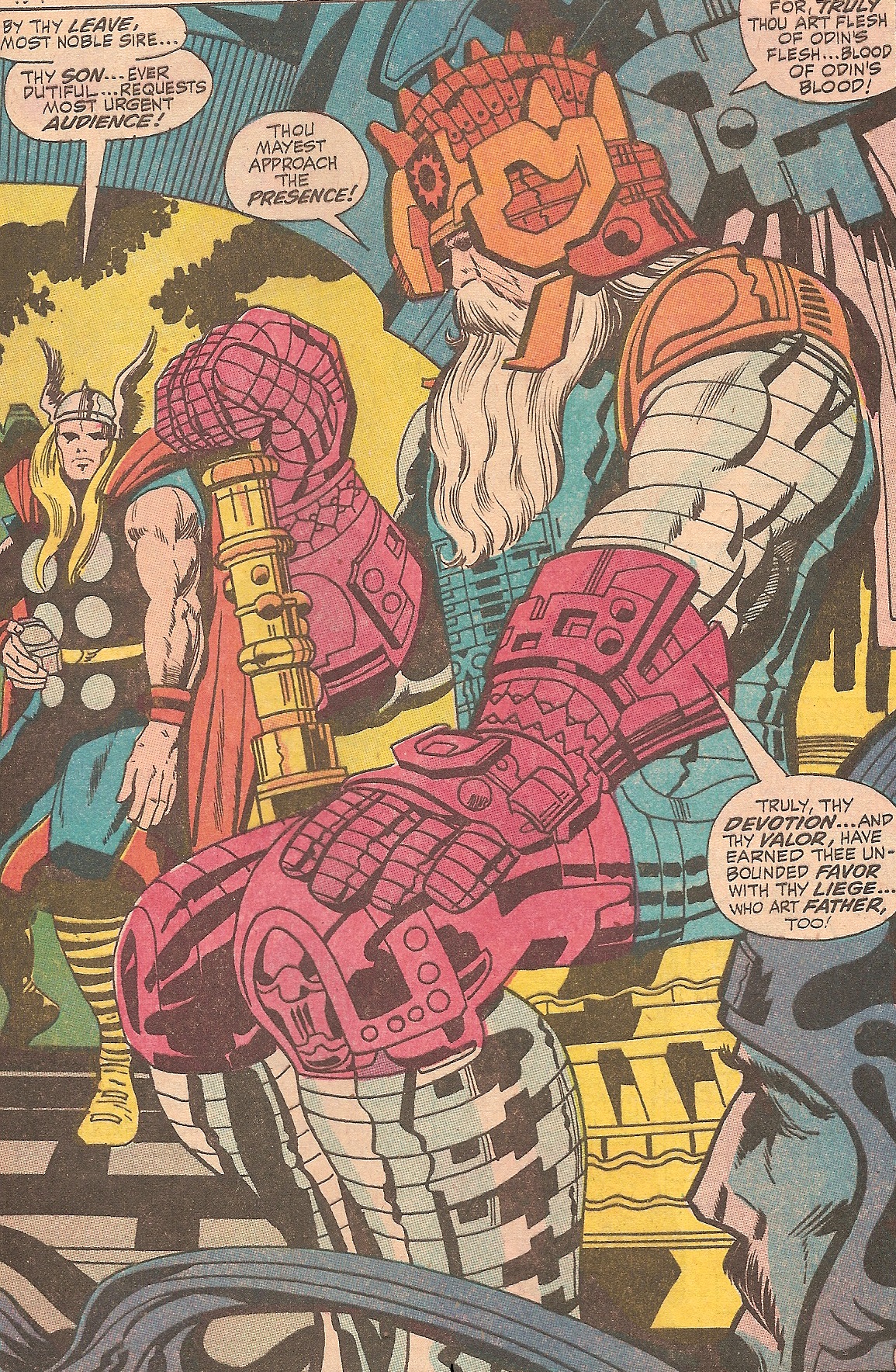
The featured image is a scan from my copy of The Mighty Thor # 159, from December, 1968. It’s a perfect example of the barely contained power that animates all of Jack Kirby’s illustrations. You can feel the tension in this scene: Thor, despite his earth-shattering might, approaches his father Odin with the most profound respect — and more than a little bit of fear. As well he should: Odin could rage and roar like no other monarch in comicdom.

I have no doubt Marvel Comics in its Silver Age strongly influenced me. Stan Lee and Jack Kirby definitely expanded my vocabulary, often forcing me to set my latest comic down to riffle through the dictionary to discover the meaning of what I’d just read. And the high quality of the stories and characterization I encountered in those comics, as well as the heroic subject matter, whetted my appetite in grade and high school for Beowulf, Shakespeare, science, and history.

Side note on the scanned picture of Thor: At the tender age of 31, barely a year after getting married, I sold my comic book collection. My wife and I needed money for a down payment on a house, and the stern lesson of 1 Corinthians recited at our wedding still reverberated in my ear: “When I was a child, I spoke as a child, I understood as a child, I thought as a child: but when I became a man, I put away childish things.”

So it was time to let go of Spiderman, Daredevil, the Fantastic Four, and the X-Men. But I held on to three of my favorite issues of Thor. I’ve found the best way to move forward is to hold on to a few pieces of a beloved past.

Unbound II: Changed Worlds

Hunting Ground

Award-winning DAOwen Publications has just released its latest anthology, Unbound II: Changed Worlds.

Unbound II Changed Worlds

It features my story “Hunting Ground,” which is set in a brooding wetland in rural North Carolina. I grew up in the country, and the farm next to ours had a two-acre marsh where I stomped and rambled and dreamed away many an afternoon. It teemed with exotic plants, frogs, copperheads, and dark, mysterious pools. Now those were the days …

In my story, police discover the body of a fracking engineer buried near the marsh where he’d been working, and they arrest an anti-fracking activist who’d threatened him. Buddy Vuncannon, the defendant’s attorney, discovers the marsh hides a bizarre secret that could clear his client — if there were a way he could prove it in court.

My fascination with all things swampy and a Science Alert article about a mysterious stretch of land near Lake Michigan inspired the story. “Hunting Ground” is lively and entertaining, but its topic is serious. Fracking involves pumping a cocktail of chemicals and water deep underground where it cracks open layers of shale to unleash natural gas. The threat to the local water supply is profound.

Exposing the truth about fracking is all well and good, but the real goal is to renew respect and appreciation for nature. No one understands this better than poet/novelist/activist Wendell Berry. In his fiction and essays, Berry argues that the excesses of industrialism, from environmental piracy to the over-concentration of wealth, can be countered only by a rebirth of affection for the local, by which he means love and loyalty for the land we live on and for the people we live with.

Here’s how the National Endowment for the Humanities describes Berry’s literary/political mission:

In the debate that set Thomas Jefferson against Alexander Hamilton—and rural farms against cities, and agriculture against banking interests—Berry stands with Jefferson. He stands for local culture and the small family farmer, for yeoman virtues and an economic and political order that is modest enough for its actions and rationales to be discernible. Government, he believes, should take its sense of reality from the ground beneath our feet and from our connections with our fellow human beings.

And it is my passionate belief that one way we can strengthen or even restore those connections is through a good story. I hope you enjoy “Unbound II: Changed Worlds.”

Why kids can learn more from tales of fantasy than realism

Fantasy learning

Deena Weisberg is a senior fellow in psychology at the University of Pennsylvania. Her specialty is “imaginative cognition,” which studies how imagination boosts one’s ability to learn. Her research demonstrates that children absorb new material taught in the context of a fanciful scenario better than they do when it’s presented in more realistic terms. In a recent edition of Aeon, she challenges herself with a question she’s grappled with before: Why do fantastical stories stimulate learning?

What can be going on? Perhaps children are more engaged and attentive when they see events that challenge their understanding of how reality works. After all, the events in these fantastical stories aren’t things that children can see every day. So they might pay more attention, leading them to learn more.

A different, and richer, possibility is that there’s something about fantastical contexts that is particularly helpful for learning. From this perspective, fantastical fiction might do something more than hold children’s interest better than realistic fiction. Rather, immersion in a scenario where they need to think about impossible events might engage children’s deeper processing, precisely because they can’t treat these scenarios as they would every other scenario that they encounter in reality.

They must consider every event with fresh eyes, asking whether it fits with the world of the story and whether it could fit within the laws of reality. This constant need to evaluate a story might make these situations particularly ripe for learning.

Writers of every genre know that a fresh metaphor adds to a reader’s interest and enjoyment. But Weisberg is arguing that there’s more to fantasy stories than just another metaphor. It appears that the act of forming impossible scenarios in one’s mind focuses more of our mental resources and forces us to pay greater attention than ordinary, representational stories of the day-to-day.

In a world where the day-to-day assaults and surrounds us on television, on our phones, and on our computers, the allure of the fantastical is compelling. Maybe even necessary. It would explain why the speculative inspires so many hit movies, TV series, and books these days.

This is hardly revolutionary. We’ve long realized that children learn better when learning is mixed with play — and children are teaching themselves about the world when they invent their own styles of play. Songs, skits, and stories are entertaining and effective learning media.

And hey, if it’s good for the kids …

Adventures and mishaps in science fiction, fantasy, and mystery