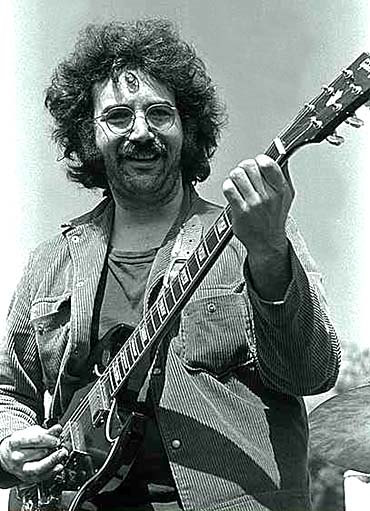
“Bill, play full value. Make four beats be a really full four beats. Don’t rush to the end of the bar.” Jerry Garcia to Grateful Dead drummer Bill Kreutzmann
Not Bulwer-Lytton
No, this isn’t from the infamous but beloved Bulwer-Lytton Fiction Contest:
“As my FBI forensic psychologist husband put it last night while I was cooking dinner in our historic Cambridge home that was built by a well-know transcendentalist, ‘You’re being tricked, Kay.'” — Patricia Cornwell, Red Mist, p. 5.
Reading that sentence makes my head hurt. As much as I admire Patricia Cornwell, she and her editor let that turkey slip through the cracks. Yes, even the great ones flub it sometimes.
Quote of the Day
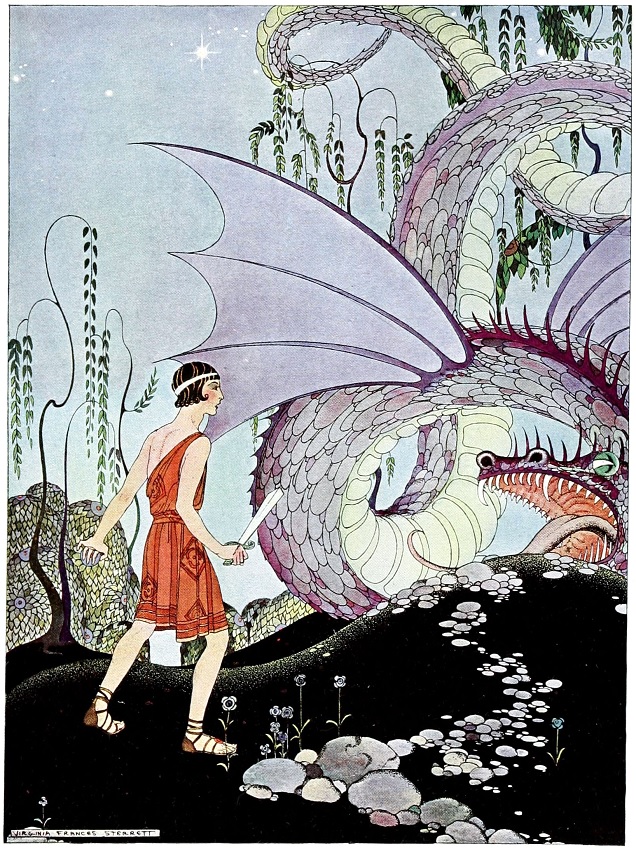
“Just because there’s a dragon in the book doesn’t mean the story isn’t based on reality.” – Jeff VanderMeer
Contagious Magic
While researching Appalachian Folk Magic for my latest wip, I read Sir James Frazer’s The Golden Bough. In his chapter “The Principles of Magic,” I encountered this:
“If we analyze the principles of thought on which magic is based, they will probably be found to resolve themselves into two: first, that like produces like, or that an effect resembles its cause; and, second, that things which have once been in contact with each other continue to act on each other at a distance after the physical contact has been severed.” (p. 12)
Frazer refers to this principle, which he calls “Contagious Magic,” in his discussion of spells around the world that involve the use of hair or nail clippings to exert control over the owner. Even things that were once close, and not necessarily part of the body, can be used because a bond still exists. For example, in Mecklenburg, Germany, practitioners of folk magic believed a coffin nail driven into a footprint would make the person who made the print go lame.
Frazer, with his usual scholarly contempt, dismisses such thinking while painstakingly documenting other examples of it.
But now we have quantum mechanics, which says to folks like Frazer, “Not so fast.” From the Encyclopedia of Science:
“Identical twins, it’s said, can sometimes sense when one of the pair is in danger, even if they’re oceans apart. Tales of telepathy abound. Scientists cast a skeptical eye over such claims, largely because it isn’t clear how these weird connections could possibly work. Yet they’ve had to come to terms with something that’s no less strange in the world of physics: an instantaneous link between particles that remains strong, secure, and undiluted no matter how far apart the particles may be – even if they’re on opposite sides of the universe.”
Erwin Schrödinger, in a letter to Albert Einstein, called this phenomenon “entanglement”:
“When two systems … enter into temporary physical interaction … and when after a time of mutual influence the systems separate again, then they can no longer be described in the same way as before, viz. by endowing each of them with a representative of its own. I would not call that one but rather the characteristic trait of quantum mechanics, the one that enforces its entire departure from classical lines of thought. By the interaction the two representatives [the quantum states] have become entangled.”
Einstein dismissed Schrödinger’s ideas as “spooky action at a distance.” (And isn’t that what magic is all about?) But it’s for real. Today, IT researchers are studying how to create super computers that can exchange data instantaneously through entangled components despite being separated by thousands of miles.
Spooky, indeed.
Best Fiction and Writing Blogs
The best fiction and writing blog posts from around the ‘net, all guaranteed to make you a literary cult figure. Compiled by lovecraft
Alice Osborn – How the Right Kind of Criticism Makes You Grow
Rick Lai – The Foundations of “The King In Yellow” and “The Necronomicon”
Steven Ramirez Writers, Start Building Your Brand Early!
The Book Blogger – The New Fatherland?
A.D. Martin – 10 Tips For Better Writing!
Fergus McCartan – Interview with Age of Iron author Angus Watson
Purpleanais – The Night Owl and Tolkien
Nurse Kelly – Be The Peace
Once Upon A Time – Living in Fairy Tales
The Alchemist’s Letter
Call it synchronicity. Or whatever you want. But I came upon this video after witnessing one of the saddest things I’ve ever seen. While visiting my father in the rest home last weekend, his roommate’s ex-wife visited. She didn’t seem to care my father and I were in the room as she announced to her former husband she wanted to see him one last time before he died.
The man didn’t remember her. She told him they were once married.
“Why aren’t we still married?”
“Because you kept screwing around.”
“Oh.” He thought for a moment. “Is it okay if I hug you?”
“Yes,” she said.
She hugged him and walked out the door.
Then today I saw this:
From the artist’s website:
A visually rich, darkly inventive fairy tale directed by former Student Academy Award® finalist Carlos Andre Stevens.
Starring 2-time Academy Award® nominee John Hurt (V for Vendetta, Alien, Hellboy, The Elephant Man, Midnight Express) and up-and-coming star Eloise Webb (Cinderella, The Iron Lady).
Be sure to maximize the video. It’s gorgeous and richly detailed.
The Alchemist's Letter from Carlos Stevens on Vimeo.
We squander so much in life, don’t we? Even our memories.
Cuernavaca: a tourist destination in hell?
I’ve long been fascinated with American Indian culture, and have quite a collection of artifacts. My interest inspired my short story Gooseberry (now free on the publisher’s web site) and Aztec Midnight. So it was especially gratifying to see this generous review on Amazon (and from a “Book Goddess” with a PhD!):
As a professor of American Indian Studies, I’m always wary about misrepresentation of of diverse Indian peoples and cultures. I have no qualms about Tuggle’s research for his novella, Aztec Midnight.It’s packed with action, starting ominously. We discover that Dr. Jon Barrett and his university librarian wife Susanna, are in Cuernavaca for two reasons; she to take a Spanish immersion class and he to find and identify a mysterious Aztec knife. An archaeologist, he specializes in the history of pre-Columbian weapons at the University of Texas in Austin. What Susanna does not know is that he is working for the US Department of State on a mission to help stop drug cartels.
Further plot description would be a spoiler, so it suffices to say that Susanna is kidnapped by a powerful drug cartel. It wants the knife, used far in the past for a sacred ritual in which the hearts are ripped out of those to be sacrificed. It has deadly magical powers, and the leader of the cartel wants to use it to destroy the Mexican government. Jon must choose between rescuing his wife or losing her if he does not deliver. His narrative speeds up as he has only five hours to find Susanna. He is chased, jailed, and then abducted by the cartel.I won’t reveal the astonishing ending.
Tuggle also excels in description. Although Cuernavaca sounds like a tourist destination in hell, his rendering of the population is sympathetic and colorful. The author may not realize he has created a power couple worthy of more adventures. The seemingly nerdy professor and his wife are courageous and smart; they deserve a series of their own. I’m looking forward to a sequel!
Best Fiction and Writing Blogs
The best fiction and writing blog posts from around the ‘net, all guaranteed to make you a literary adventurer. Compiled by ernie.
Sue Vincent- 10 Places to Find Ideas
Katie McCoach – What To Do After Writing The First Draft of Your Novel
Alice Osborn – How to Enjoy a Poem: Happy Poetry Month
Jack Sutter – Making Artful Choices
Alysha Kaye – On Teaching and Writing
E.K. Preston – Best Opening Lines of All Time
A.D. Martin – So, I Binge-watched Daredevil on Netflix
Jeff Wills – Changing Our Mind
Quote of the day
“We are, as a species, addicted to story. Even when the body goes to sleep, the mind stays up all night, telling itself stories.” – Jonathan Gotschall
Cthulhu in Foxholes?
My wife and I went to the Sensoria Celebration of the Arts Festival at Central Piedmont Community College in Charlotte yesterday. We thoroughly enjoyed Molly Manning’s presentation on her latest book, When Books Went to War, which tells the story of the massive and successful effort to provide desperately needed books to America’s fighting men during WW II.
In 1943, the War Department and the publishing industry devised a simple and brilliant plan to provide reading material to millions of men in the U.S. armed forces. The first step was to study standard issue military uniforms and determine the appropriate size for a book that would be easy to carry yet still readable. The end result was the Armed Services Edition book, which was smaller and much lighter than a standard hardbound book. Here’s a picture of some on display at the CPCC library:
Funny thing, I noticed a copy of Lovecraft’s The Dunwich Horror, and decided I had to sneak a picture. But while I was there, I did not notice the letter beside it. I was delighted when I downloaded the picture to my laptop and read it. Here’s my transcription:
2-16-46
Gentlemen,
My brother, now serving in the occupational army in Germany, asked me to see if I could secure for him through you the following special editions for soldiers:
Max Beerbohm “Seven Men”
H.P. Lovecraft Anthology
Algernon Blackwood Anthology
He writes that these small volumes have been published by you and he is extremely interested in them but cannot locate them in the vicinity; if possible he would like to own them. He says I couldn’t send a nicer gift as far as books are concerned than those three little books.
Your help would be much appreciated. I would be happy to cover expenses.
Sincerely yours,
Dr. A.C. Klay
That gives you an idea of just how important great stories are to morale. And it suggests the depth of Lovecraft’s appeal.
120 million of these little books went to both the European and Pacific theaters, where they were devoured by eager, grateful GIs. These books introduced a lot of young men to literature, and boosted the careers of Hemingway and F. Scott Fitzgerald. They also made possible the paperback book industry that followed the war. Paperbacks were revolutionary. They were the eBooks of their time. (And I like eBooks!)
Wouldn’t you love to have a copy of that ASE edition of the Lovecraft anthology? Wow.