Alan Alda and E.O. Wilson Talk on Creativity

E. O. Wilson is one of the most important and influential scientists of our age. His work on the deep foundations of human nature and behavior has inspired many in the arts and sciences – just to name one example, the fruitful new discipline called evolutionary psychology is impacting many areas, including marketing, politics, and education. His latest book, The Origins of Creativity, promises new insights into the creative process.

In the video linked above, Alan Alda interviews E. O. Wilson about the dynamics between the individual and society that inspire creativity:

Alan Alda: The campfire was the place that drew them. Maybe it was just the pleasure of looking at the flames, maybe it was to compete, maybe it was actually toasting marshmallows… but they told stories. That sounds to me like a tremendous engine for empathy.
E.O. Wilson: The important thing is to see what the groups really were when they gathered around the firelight as opposed to the sunlight, and to know what they were really saying, and what was talked about all around.
A.A.: During the day it was mostly workaday things: what are we going to eat, how are we going to get it.
E.O.W.: But what they were doing by the firelight—talking and singing and story-telling—was what made us human.
A.A.: Creativity is tied in with empathy. One way of looking at it is that originality is a group experience, as solitary as it might seem. How do you feel about that?
E.O.W.: The creative process tends to be an individual endeavor, but it often comes about when a very small group—often just two people or three people, are together and they’re toying with a problem. But there has to be a proper apportion of credit within the society that did this individual work.

The thrust of Wilson’s life work is that the division between the arts and sciences are neither natural nor helpful. His latest work promises new pathways between the two, a venture guaranteed to generate lively conversations and further discoveries.

The Real Conan

Robert E. Howard

What accounts for the enduring popularity of Robert E. Howard’s most famous creation, Conan of Cimmeria? Author John C. Wright offers this perceptive analysis:

Conan is somewhat more deep and complex than the cartoon image of a brute in a bearskin loincloth found the popular imagination, with a dancing girl clutching his brawny thigh and a devil-beast dying under his bloody ax. The theme and philosophy he represents is not the product of adolescent neurosis (as certain bitter critics would have us believe) but of somber, even cynical, reflection on the age of the world, the costs of civilization, and the frailty of man.

Howard, despite his lack of formal education, was well-read and intellectually curious. The worldview behind his Conan stories is broad, well-crafted, insightful, and still worthwhile for the modern reader. Wright’s introduction is an invaluable introduction to one of the great writers of our age.

Storytelling: It’s about Going Primal

We’ve talked about the paleo diet and lifestyle before, but here’s a great post on the vital role paleo plays in the stories we enjoy reading. The post, by author E J Randolph, appears at Jami Gold’s blog, one of the best writing resources on the web. Check it out:

The evolutionary imperative at the level of our genes is to “eat, survive, and procreate.” Our brains evolved to solve the obstacles to these goals, and the same basic brain functioning operates today in every sphere of our lives—including writing. … For a story to ensnare our attention though, we need a big problem to solve. We are interested in how others solve problems in different situations. We may need that knowledge. It is imperative we remember or are told which berries are poisonous, which plants are edible, where the best places to hunt are.

We are riveted by big problems. The bigger the problem, the better the story.

Absolutely! As James Bell counsels, every effective story has to be about death. It doesn’t have to be about physical death; a protag can grab and hold our attention if he’s confronting other forms of death, such as professional death, or the death of a relationship. (Of course, since making a living and personal relationships are vital to one’s survival, those struggles indirectly involve physical death.)

Our goal is to craft a story that enchants readers with beauty and emotion. Evocative details that trigger the senses as well as believable, interesting characters are important, but most important is a realistic threat the protag must face. Pull those elements together, and you’ve created a story that slush pile editors and readers will love.

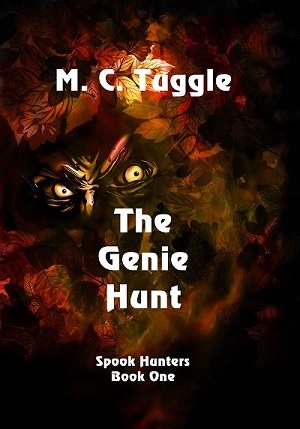
A Review: THE GENIE HUNT

The Genie Hunt

I am honored by this kind review from author K. D. Dowdall:

M. C. Tuggle’s The Genie Hunt is so engaging that I could not put it down. I continued reading it until the end, without stopping. It is not often that I want to reread a novel that I just finished reading. It is that good. It is a rather unique story about a lawyer, a reformed law-breaker, a kidnapped Genie, and a crime. It is a story about a friendship under duress, life-threatening danger, and a who-done-it mystery. The writing is superb, smooth transitions through scenes, characters that are so real that I was sure I knew them. It was the great dialogue, however, that moved the story along, including, strong pacing and time elements, that rang true.

Please read the rest at K. D. Dowdall’s blog, and click the “Like” button.

The Resurgence of the Real

There’s no doubt in my mind that the modern world is an ill-fitting cage for its human captives. Basic needs for social interaction, exercise, and a sense of connection to the wider universe are left behind in a mad rush for consumption, mindless pleasure, and false security.

Our lemming-like pursuit of immediate gratification and “convenience” has cut us off from the most basic of human needs. Philosopher and author Romano Guardini identified this self-made disconnect as the source of the gnawing fears and doubts that plague modern existence:

Modern anxiety… arises from man’s deep-seated consciousness that he lacks either a ‘real’ or a symbolic place in reality. In spite of his actual position on earth he is a being without security. The very needs of man’s senses are left unsatisfied, since he has ceased to experience a world which guarantees him a place in the total scheme of existence.

James C. Scott, a political scientist and anthropologist at Yale, argues we’re in an Anthropocene Age, characterized by homo sapiens’ disproportionate influence on nature. That influence, says Scott, is not only harming other species, but our own as well. Scott’s main point is that we got ourselves and our fellow Earthlings in the fix we’re in when we started clustering around cities. Sadly, the comfort and security of cities and the nation-states they spawned was a cruel illusion. The hierarchies that profited from the creation and management of the nation-state increasingly demanded control over lives and property to perpetuate themselves. However, those ruling hierarchies were inherently unstable, often breeding foreign and domestic wars to impose or consolidate their power.

Richard Adrian Reese notes what was lost when hunter-gatherers surrendered to the forces of centralization:

Scott focused on southern Mesopotamia, because it was the birthplace of the earliest genuine states. What are states? They are hierarchical societies, with rulers and tax collectors, rooted in a mix of farming and herding. The primary food of almost every early state was wheat, barley, or rice. Taxes were paid with grain, which was easier to harvest, transport, and store than yams or breadfruit. States often had armies, defensive walls, palaces or ritual centers, slaves, and maybe a king or queen.

What to do? We can re-humanize ourselves by better understanding what our bodies and souls really need, and by modifying our lifestyles to meet those needs. The first step, however, is to open our eyes to the addictions that have enslaved us and realize there is a better way.

Famous Literary Battles: Flannery O’Connor versus Charles Bukowski

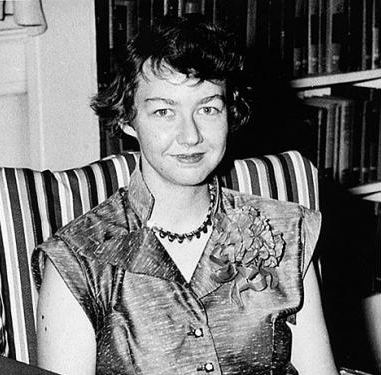
Here’s a battle every writer faces: What do you do when you can’t find your muse? We’ve all been stuck when the words just won’t come. What to do? Even when we consult the experts, we can’t get a definitive answer. Here are two extreme approaches to the problem, each from an accomplished author. First, let’s hear from one of the greatest voices in Southern literature, and one of my favorites, Flannery O’Connor:

Flannery O'Connor

“I must do do do and yet there is the brick wall that I must kick over stone by stone. It is I who has built the wall and I who must tear it down. I must force my loose mind into its overalls and get going.” – Flannery O’Connor

Then there’s this from poet, novelist, and literary bad boy Charles Bukowski:

Bukowski

“You don’t try. That’s very important: not to try, either for Cadillacs, creation or immortality. You wait, and if nothing happens, you wait some more.” – Charles Bukowski

So – when you’re hit with a bad case of writer’s block, should you damn the torpedoes and do SOMETHING, ANYTHING, or do you wait for inspiration?

Bukowski felt that a writer shouldn’t ruin a perfectly good piece of paper with overworked, forced attempts at self-expression, advising instead to let the psychic pressure build within until the words “come bursting out of you.” On the other hand, farm owner Flannery O’Connor saw writing like any other chore, which required rolling up one’s sleeves and wading into the task and not quitting until it was done.

I think the real lesson here is that writing, like any other artistic endeavor, is a craft and calling defying all formulas. Effective personal expression demands a personal approach, and discovering your own requires dedication and effort and plenty of wrong moves. As for myself, I can go for agonizing weeks researching and plotting and outlining before I dare put down the first word. Even then, it takes a while until I gain insights into characterization, setting, and crucial plot points. Then, gradually, momentum builds, and, when it works, I’m absorbed in a half-formed world that slowly reveals what I must do to help finish it.

Bottom line? Until the writing lifestyle helps you discover your own particular approach, remember the counsel of author Elissa Schappell: “The muse only shows up when you put your ass in the chair.”

BEST FICTION AND WRITING BLOGS

Edgar Allan Poe

The best fiction and writing blog posts from around the ‘net, all guaranteed to make you a literary legend. Compiled by ed.

Diana PeachWorld-building: From Imagination to Reality
Evan DeHavenThe Stupidity of Removing Shakespeare
D. E. HaggertyTips for making your blog title catchy
Angie DokosThe Best Things About Reading
AquileanaPsychopomps in Mythology
Dan AlatorreFinish One Story, Don’t Chase Ten
Edgar Allan PoeHow to write a short story

Adventures and mishaps in science fiction, fantasy, and mystery