The British Library

Isaac NewtonSir Isaac Newton memorial at the British Library.

Wish you could explore the world’s largest library whenever you wanted? Imagine being able to leaf through ancient books, view online exhibitions, and feast your eyes on some of Britain’s most treasured objects. Can you think of a better way to inspire your next story?

You can do just that, and you don’t have to leave home. This resource pretty much tumbled into my lap in the form of an email request from the British Library:

Hello Mike,

My name is Bryn Roberts and I’m contacting you on behalf of the British Library. I noticed recently that you have a mention of Bald’s Leechbook on the following page: https://mctuggle.com/2015/03/31/the-1000-year-old-solution/

This text is now featured as one of our online exhibits, available for all to browse on our website: http://www.bl.uk/onlinegallery/onlineex/illmanus/harlmanucoll/m/011hrl000000055u00001000.html

The manuscript is unique and sadly can no longer be handled very often due to its partly damaged state, which means it crumbles upon contact. Viewing the document electronically is now the most viable approach for those interested in it, and we have made it available to all via our website.

We would be very grateful if you could include a link to it in your article so your readers can access the original version and discover the text for themselves.

Do you think this might be possible?

Many thanks for your time.

Kind Regards,

Bryn Roberts

How could anyone refuse such an elegant and polite request? I updated my original post on the rediscovery of medical cures from the time of Beowulf. Since that post is nearly a year old (that’s ancient history on the Internet) I thought I’d also link the address in today’s post. Enjoy!

Best Fiction And Writing Blogs

Raymond Chandler

The best fiction and writing blog posts from around the ‘net, with advice and inspiration guaranteed to make you a literary legend. Compiled by ray.

A. J.HumpageThe Writer’s Essential Checklist
Nicola AlterGreat Books About Writing
Andrew Heisel – In Search of the Novel’s First Sentence
Becca PuglisiHow (and Why) to Write a Logline For Your Story
James Scott BellWho Are You Trying To Delight?
Abbie LuBook Door Lookbook A project both your inner bibliophile and supervillain will love.
Raymond ChandlerTen Commandments for Writing a Detective Novel

Quote of the day

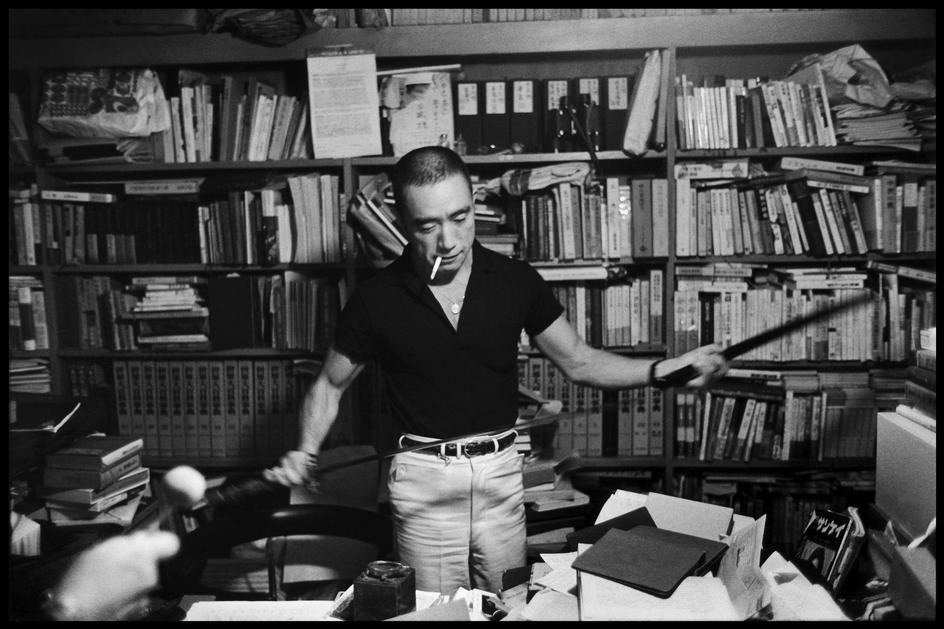
MishimaOffice

“It’s convenient to have a science fiction and fantasy section, it’s convenient to have a mainstream literary fiction section, but these should only be guides, they shouldn’t be demarcated territories where one type of reader belongs and another type of reader does not belong.” – David Mitchell

The Mysterious Presence of Tom Bombadil

Tom Bombadil

Why did J.R.R. Tolkien stick this odd figure into The Lord of the Rings? What’s Tom Bombadil’s purpose in the story?

No doubt he’s a mysterious character. Elrond, the Lord of Rivendell, confesses he knows nothing about Bombadil. Gandalf calls Bombadil “the eldest and fatherless,” and the dwarves refer to him as “the ancient” or “belonging to the ancient past.”

But theologian Dwight Longenecker argues that Bombadil is central to the theme of Tolkien’s sweeping epic, which unites Christian themes with pre-Christian European myths. Longnecker sums up Bombadil’s role in this gorgeous, remarkable paragraph:

Tom Bombadil, like paganism, is there before everything else. He represents therefore the primitive and natural instinct in man. He stands for the Neanderthal gazing in wonder at his sister the moon and his brother the sun. He points to the rustic soul connecting silently with every living thing and knowing that there is something and someone beyond. He is the child trembling at the thunder and smiling with spring rain. As such he stands for mankind, formed from the earth at one with the earth and all that is within it. He is at one with nature and at the same time the steward of creation. Tom Bombadil is simply Tom Bombadil, but if he must be compared to anyone else in the Christian cosmos, then he and Goldberry are Middle Earth’s quaint and beautiful echo of Adam and Eve.

Understanding Bombadil helps us better appreciate Tolkien’s work. By honoring and even celebrating pagan Europe, Tolkien declared that the pagan past is not some gross error or accident, nor a dead realm to be shunned or forgotten, but a vital part of who we are today. The past, says Tolkien, is full of wisdom and genuine feeling we moderns can re-discover and appreciate.

Tolkien’s theology was decidedly different from fundamentalists, such as the Puritans, who intellectualized religion and sought to “purify” themselves and the rest of society of traditional practices and beliefs. In their zeal to rid the world of its backward and sinful ways, the Puritans hung their fellow citizens as witches. How different is that mindset from today’s fundamentalists in ISIS and the Taliban, who have also declared war on what they see as a sinful, fallen world? Whether they’re blasting pre-Islamic statues or butchering “infidels,” they’re acting on their belief that the existing order must be destroyed so the One True Way can prevail.

And aren’t we guilty of the same thing when we beat ourselves up for past mistakes? Or for having made the wrong choice long ago? I’ve always believed that theology and philosophy arise from one’s self-image. Those who loathe themselves are often unforgiving toward others. Accepting your whole self means, as Dickens put it, living “in the Past, the Present, and the Future.” It’s the first step toward self-forgiveness, which leads to forgiving and loving others.

Why ‘The Force Awakens’ Is the ‘Star Wars’ Movie We Needed

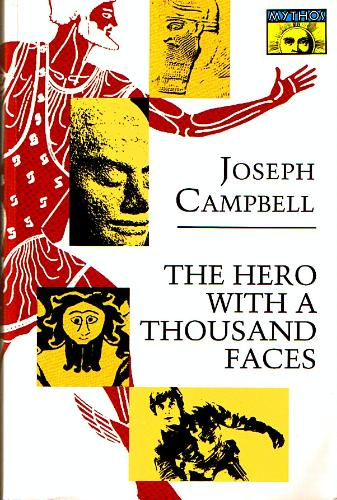
Joseph CampbellReprint of Campbell’s classic with Luke Skywalker on the cover.

Some folks have criticized The Force Awakens for drawing too heavily on Star Wars: A New Hope. Writing in The Rolling Stone, David Ehrlich argues that these critics are missing the point. In The Force Awakens, Abrams is “making new” a tale that inspires and excites with each retelling:

The original 1977 movie was innovative in many respects, but it was derivative by design. In creating a galaxy far, far away, Lucas effectively draped his imagination over a constellation of yarns so familiar that they seem to have spun from the marrow of our bones. Its alchemy is nothing if not well documented: A New Hope combined the plot of Akira Kurosawa’s The Hidden Fortress with the widescreen scale of Lawrence of Arabia and the Saturday morning spectacle of serials like Flash Gordon and Buck Rogers. With his 20th-century influences well in hand, Lucas then poured them like molten metal into the iron mold of the hero’s journey as laid out by Joseph Campbell, who traced the origins of modern narrative arcs back to the beginning of civilization. “I wanted a contemporary version of the myth and the fairy tale,” Lucas said in a Los Angeles Times interview published days before Star Wars first hit theaters in 1977.

Whether we’re talking about Beowulf, the Iliad, or Indiana Jones, such stories resonate because, as Ehrlich puts it, “they seem to have spun from the marrow of our bones.” Campbell stripped the heroic myth down to its barest essentials:

A hero ventures forth from the world of common day into a region of supernatural wonder: fabulous forces are there encountered and a decisive victory is won: the hero comes back from this mysterious adventure with the power to bestow boons on his fellow man.

The heroic myth, then, is about leaving behind what was once comforting and familiar, confronting new challenges, and finding one’s place in a world that has changed in many ways, some good, some bad. But the hero now knows he can survive and thrive in that world. Sounds like growing up, doesn’t it?

We’re all miracles

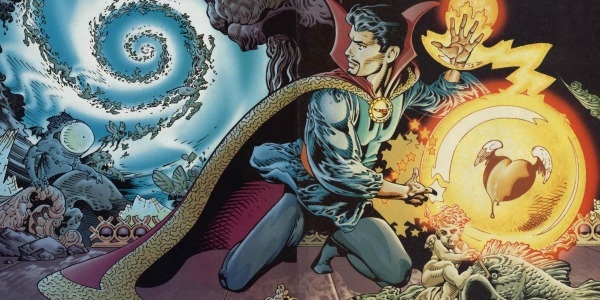
Dr. Manhattan

Sometimes it takes a brush with personal tragedy to open our eyes to the surprising beauty and resilience of life. Author A. E. Stueve experienced this. His online account of what he and his family recently endured, and what he learned about himself and the stark but elegant reality we too often fail to grasp, is a must-read.

Swordmaker Instructed In Dreams

Swordmaker

The latest Ancient Origins features Chen Shih-Tsung, a passionate modern-day citizen of Taipei who’s revived the ancient Chinese art of fine swordcasting:

Chinese legends tell of a kind of infallible sacred sword, forged from meteorite material, that gave its bearer an apparently supernatural advantage over his opponents. The creation of such a sword seems beyond the capabilities of ancient technology, but modern sword-maker Chen Shih-Tsung has revived the art successfully—guided, he says, by instructions imparted to him by celestial beings.

In making the swords, one’s heart has to be incredibly calm, Chen explained. He sits in meditation for an hour before starting a grinding session. Casting swords of this kind has an irreplaceable human and spiritual element.

Chen is in the process of teaching his sons how to grind swords, and it sits on their shoulders to carry on the tradition.

It’s a heavy weight, too. The tradition of swordcasting is enormously significant to Chen. “The value of a masterpiece sword can never be calculated in money terms,” he explains. “It is an invaluable treasure which ought to be an heirloom for future generations to admire and cherish.”

Chen embodies Charles Dickens’ prescription for how a humane and fulfilled person should live: “in the Past, the Present, and the Future.” By reviving an old tradition, he has “made it new,” thereby enriching and expanding the present with “an invaluable treasure” that will inspire future generations. That’s quite a feat.

Benedict Cumberbatch as Dr. Strange

Dr. Strange

Now this should be fun! Benedict Cumberbatch stars in what’s being promoted as the most “mystical, magical Marvel movie ever.”

Dr. Strange was one of the lesser-known of the Marvel comics heroes, but as a kid, I bought many Strange Tales, which featured the “master of the mystic arts.” The character blended the superhero genre with Western and Eastern mysticism. Through high school and college, I found Dr. Strange as fascinating and surprising as Carlos Castaneda’s Don Juan, and maybe a little more accessible.

The spells Strange cast opened doors to alternate universes whirling with unknown worlds, mind-bending vistas, non-Euclidean structures, and beings that looked like they’d sprung from Picasso’s nightmares. And like James Bond, the good doctor often duked it out at Euclidean, but exotic venues. Stonehenge was the site of one spell-casting shoot out with an evil sorcerer. Loved it! No doubt many Boomers intrigued by the psychedelia that energized the worlds of Dr. Strange can’t wait for a nostalgic return. I know I can’t.

And no matter what other characters he plays, none will have a name as cool as “Benedict Cumberbatch.”

Winter Solstice in Ancient Ireland

Meet Newgrange, an architectural, archaeological, and spiritual wonder of Neolithic Ireland:

Newgrange predates the great pyramids at Giza in Egypt by some 500 years and Stonehenge by about 1,000 years. When it was built, sunrise on the shortest day of the year, what we now call December 21, entered the main chamber precisely at sunrise. Experts say it is not by chance that the sun shines there.

The structure of the passage tomb was buried in earth for many centuries, until archaeologist M.J. O’Kelly began excavating it in 1962. He worked there until 1975. In 1967, he saw for the first time in thousands of years the dawn sunlight striking into the chamber on December 21. The light enters a perfectly placed window and hits deep in the tomb where the human remains were found.

O’Kelly wrote in his notes: “The effect is very dramatic as the direct light of the sun brightens and casts a glow of light all over the chamber. I can see parts of the roof and a reflected light shines right back into the back of the end chamber.”

One thing the ancients had that we have in such short supply was a sense of connectedness, an emotional bond with our fellows and the great yonder. Imagine the thrill the ancient Irish felt when that beam of sunlight shot through the window into the main chamber where the remains of their dead resided. In that moment, the Irish worshipers felt powerfully linked to both the distant sun and long lost ancestors. The Winter Solstice sunrise merged the believer, time, and space.

That’s even more exciting than a Playstation for Christmas …

The Name of the Whatever

Philosopher Stone

“I read in a book once that a rose by any other name would smell as sweet, but I’ve never been able to believe it. I don’t believe a rose WOULD be as nice if it was called a thistle or a skunk cabbage.”
― L.M. Montgomery, Anne of Green Gables

Selecting a character’s name is the first step in making that character come alive. Of course, no one has done a better job than Charles Dickens, who gave the world Uriah Heep, Polly Toodle, Wilkins Micawber, and, of course, Ebenezer Scrooge.

This article on iconicity, the harmony of a symbol (word) and its meaning, suggests that evocative naming is the key to understanding the world around us:

The oldest documented discussion about iconicity and its role in constructing words is the Cratylus dialogue of Plato 1997. In the dialogue, Socrates is asked whether names belong to their objects “naturally” or “conventionally.” Though Socrates admits that convention and usage play a role in the creation of names, he confesses that he prefers the view “that names should be as much like things as possible” (pp. 433–435).

So of course the character’s name is essential to understanding that character. That’s one of the key elements I focus on when outlining a new story. I felt good about the name Jon Barrett in Aztec Midnight, and with Cam Taylor in Cameron Obscura.

I’ve always been fascinated with word play, especially with people’s names. In college, the Resident Assistant of our dorm hall was Curtis T—–. His job was to monitor our behavior, which included making sure no young ladies were still in our rooms after 1:00 AM, a job he seemed to enjoy a little too much. I gave him a name that stuck until he graduated, even though he quit being an RA his sophomore year: Curtis Interruptus, a nickname we pronounced with a Bronx accent.

Adventures and mishaps in science fiction, fantasy, and mystery