Tag Archives: writing

On Trains As Writing Spaces

Train StationHere are some interesting insights on the writing process from author Panio Gianopoulos. I wholeheartedly agree with this:

The exaggerations of the arts notwithstanding, there can be something meditative about riding a train. It’s both soothing and inspiring to feel the steady rhythmic rush of its passage, the thundering momentum as you race past a sun-flecked pastoral landscape and, when you briefly intersect a city, the sudden appearance of buildings rising and falling like the perforated notes on a player piano roll.

One of the reasons I haven’t posted lately is because I’m immersed in my latest project, which has taken on a life of its own. Looks like it’s going to evolve into a novel. I started it back in June, when my wife and I took a meandering vacation from Charlotte to New Orleans to New York. We flew to New Orleans, but took Amtrak the rest of the way. Yes, that’s a lot of time on the rails, and what Gianopoulos says about the rhythm of the rails stimulating the creative process is true. The train rolled mile after mile, and I wrote page after page. And even though the trip is done, the experience generated momentum I’m still drawing from.

Gianopoulos makes another powerful point about the creative process, one that seems counter-intuitive but nevertheless true. Commenting on how productive he is on short train rides, he observes that constraints actually spur him on:

On weekends, once the children have been anesthetized with iPads and I’ve ducked up into our attic with my laptop, I find that somehow I get less writing done in two hours. I’ll get lured into answering emails or researching online, frittering away the brief time before my children demand actual live parenting from their father (the nerve!). Many days, I don’t even make it to the attic; I’ll get distracted by laundry or the mail or yard work, telling myself I can always write later. Having all day to do it, however, means I never end up doing any of it—not even 35 minutes. Perversely, I’m more creatively productive on my busiest workdays. There is something about the entrapment of the space and the temporal limitation of the train ride that animates me. I don’t think I’m alone in this. We are a weird species. Give us vastness and we wilt. Corner us and we thrive.

I’m guilty of this as well. On days when I’m relatively free to write, I often fritter away my time, while during brief writing opportunities, I’m far more productive. In fact, one of the lessons I’ve learned is that getting away from what I imagine to be my optimal working environment often energizes me.

As Gianopoulos says, humans are a weird species. And then there’s that sub-species called writers …


Stories as Flight Simulators

Charles Chu recently reviewed Jonathan Gottschall’s The Storytelling Animal: How Stories Make Us Human. Gottschall, a distinguished fellow in the English department at Washington & Jefferson College in Pennsylvania, analyzes literature from the perspective of Darwinian evolution.

What E. O. Wilson did for sociology, and Deena Weisberg for psychology, Jonathan Gottshall has done for literature. The resulting insights are both fascinating and useful.

Gottshall notes that every human society tells and passes down stories, and not just histories of actual events. Since imaginative tales are universal, he argues, storytelling must be essential to survival. People everywhere must deal with problems, the key concept behind what some have called Gottshall’s Grand Unified Theory of literature:

Stories the world over are almost always about people (or personified animals) with problems. The people want something badly — to survive, to win the girl or the boy, to find a lost child. But big obstacles loom between the protagonists and what they want. Just about any story — comic, tragic, romantic — is about a protagonist’s efforts to secure, usually at some cost, what he or she desires.

As Kurt Vonnegut put it, “Every character should want something, even if it is only a glass of water.”

But wait a minute! If fiction is an evolutionary adaptation, surely some cultures could find it advantageous to avoid wasting the tribe’s time on stories about things that never happened. Wouldn’t it be more practical to spend that time perfecting survival skills? Not so, says Gottshall:

“Like a flight simulator, fiction projects us into intense simulations of problems that run parallel to those we face in reality. And like a flight simulator, the main virtue of fiction is that we have a rich experience and don’t die at the end. We get to simulate what it would be like to confront a dangerous man or seduce someone’s spouse, for instance, and the hero of the story dies in our stead.”

The stories every human culture tells about itself are a vital part of that culture, and the most basic requirement for a successful culture is teaching the next generation how to survive. So the acid test “survive or die” is the core of not only Darwinian evolution, but of good storytelling. That’s why James Scott Bell advises writers that EVERY plot must be about death:

That’s what great fiction is about—how a character transforms when forced into conflict (I contend that to be great, the conflict must be life or death—death being physical, professional, or psychological/spiritual. This includes thrillers, romance, literary…any genre).

Conflict — critical conflict — is the heart of a good, rousing tale. It reveals character, opens our eyes to the world around us, and even manages to teach us a thing or two about ourselves.

Quote of the day

Key to success“It’s important to understand as writers or as anything else, that ‘no,’ as destructive as it is, is much less powerful than ‘yes.’ You can get turned down a hundred times by agents and publishers and have your dreams crushed and strewn across the landscape. Get out that broom, dustpan, and epoxy, put everything back together, and try again. And again. One ‘yes’ will outweigh each ‘no’ and will blow them away.” – Joe Hartlaub

Best fiction and writing blogs

The best fiction and writing blog posts from around the ‘net, all guaranteed to make you a literary legend. Compiled by Ambrose Bierce.

P. S. Hoffman13 Smart Shortcuts to Write Brilliant Characters
Dina Al-MahdiBe your own muse
Raimey GallantNegative space, as important to author marketing as it is to writing
M. L. DavisWriters: Don’t Edit Away Your Voice
Cath HumphrisIs there anything new in the writer’s tool kit?
l. t. garvinWriting book blurbs
kakymcOn Writing Dangerously
Sierra AyonnieWhat makes a good short story?

Learning to see

Cavern

Ursula Le Guin once told a class of aspiring writers, “We are the raw nerve of the universe. Our job is to go out and feel things for people, then to come back and tell them how it feels to be alive. Because they are numb. Because we have forgotten. We have forgotten our rituals. Our tribal practices. There is no more tribe. We don’t know how to tell our elders our dreams around the morning fire. There is no morning fire. We can’t receive insight from the mothers.”

That is the writer’s goal, to reawaken others to what it means to be human in an age that’s severed us from nature, memory, and connections. If we’re to tell others how it feels to be alive, we must first feel it ourselves. No doubt writers, like other artists, pursue their craft because they naturally notice details and patterns their friends often miss, and want to express their insights to others. But just as we constantly improve our craft, we must also hone our senses.

I’ve found that physical exercise, especially martial arts, is an effective way to sharpen the senses and unify mind and body. But if you’re unable to make it to the gym or dojo, there are alternatives. In 10 Tests, Exercises, and Games to Heighten Your Senses and Situational Awareness, Brett and Kate McKay offer some excellent resources to boost your powers of perception.

I was especially impressed by the McKays’ comments about the different roles of the senses in experiencing the world around us. Writers should be aware of how our senses inform us about our surroundings and arouse certain emotions. For example, while sight is vital, our sense of hearing is wired more directly to the primal areas of the brain, and therefore trigger emotional responses more directly and profoundly. Smell and taste stir both emotions and long-term memories — Marcel Proust’s madeleine episode from Swann’s Way is one famous literary example.

So when we translate our impressions of the world in our writing, we should take advantage of as many senses as possible to make our stories more realistic, believable, and enjoyable.

Quote of the day

Picture by David Shankbone

“In order to be clear it is necessary to at least consider the possibility that we actually may not be. It requires stepping outside of one’s self, reading a sentence as if we were another person (not us) who didn’t understand, and even sort of admire the newly minted gold on the screen or the page. It requires a kind of humility, an ability not to take everything personally and to separate ourselves from our work. Clarity is not only a literary quality but a spiritual one, involving, as it does, compassion for the reader.” Francine Prose

For more thoughts on the social value of literature, see here and here.

Best fiction and writing blogs

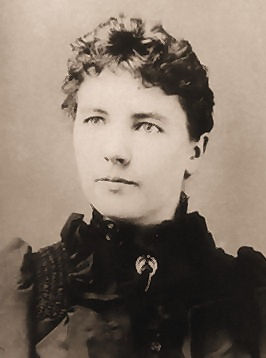
Laura Ingalls Wilder

The best fiction and writing blog posts from around the ‘net, all guaranteed to make you a literary pioneer. Compiled by Laura Ingalls Wilder.

K. M. WeilandWriting as the Art of Thinking Clearly: 6 Steps
Hamilton PerezHow to Give Up Writing and Other Bad Habits
Tamara DrazicOutlining
D. Wallace PeachMy Bossy Muse
Nicola AlterKnocking People Out: Easier in Fiction Than In Real Life
Didi OviattThe Why #amwriting
Jacqui MurraySeries or Not a Series–How do You know?
J. C. Wolfe3 Pieces of Advice No Writer Should Ever Forget

… and a special bonus!

Adam RoweScience Fiction And Fantasy Book Sales Have Doubled Since 2010

Patience Is A Virtue

Patience is indeed a mindset you MUST develop if you’re going to write. Love the Rousseau quote, “Patience is bitter, but its fruit is sweet.”

evie gaughan's avatarEvie Gaughan

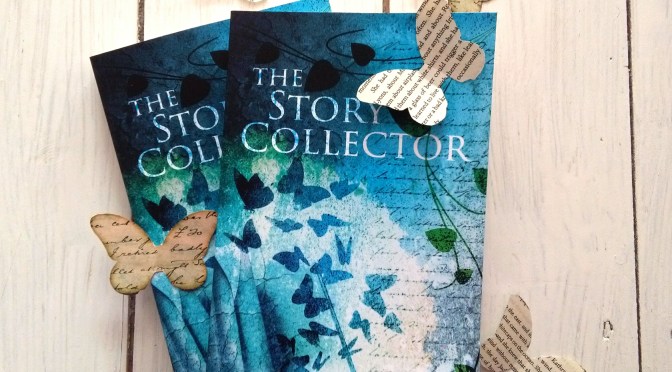
IMG_20180316_160150

There are many skills that an author needs to learn in this business of pub, patience being the most important.  Patience with yourself, as the magical story in your head makes its way stumbling and lurching onto the page with all the grace and skill of a toddler.  Patience with the world when it doesn’t immediately recognise your brilliance.  Patience with agents and publishers while you await their response to your submission.  And now, for me, a new kind of patience while I wait for my book to be released.

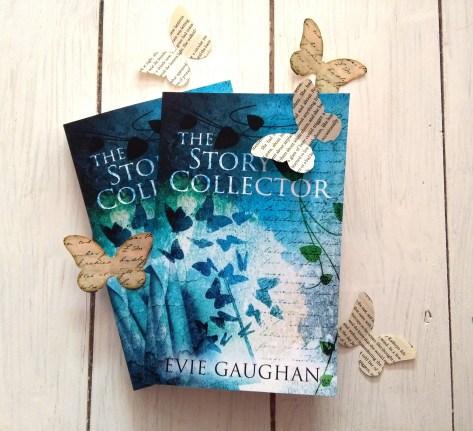
IMG_20180410_093419

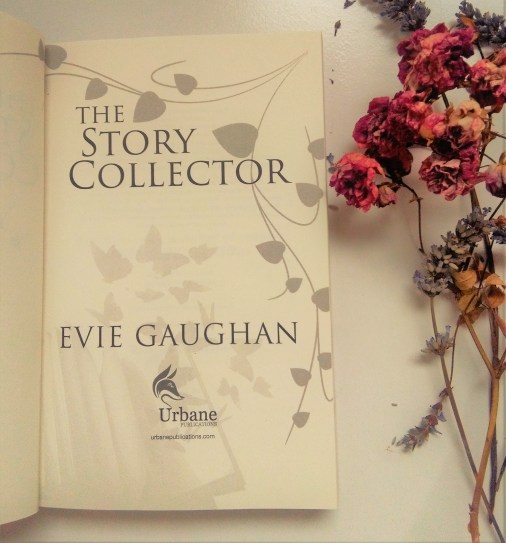
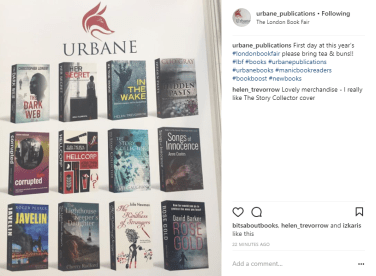
The advance reader copies have been sent out and happily, joyously, wondrously, the feedback is good 🙂  Editors and publications have been contacted, copy sent in.  The blog tour has been arranged.  And as we speak, my book (along with those of my fellow Urbanites) are being showcased at The London Book Fair.  THE LONDON BOOK FAIR!

lbf2lbf

As Jean-Jacques Rousseau…

View original post 261 more words

Best Fiction and Writing Blogs

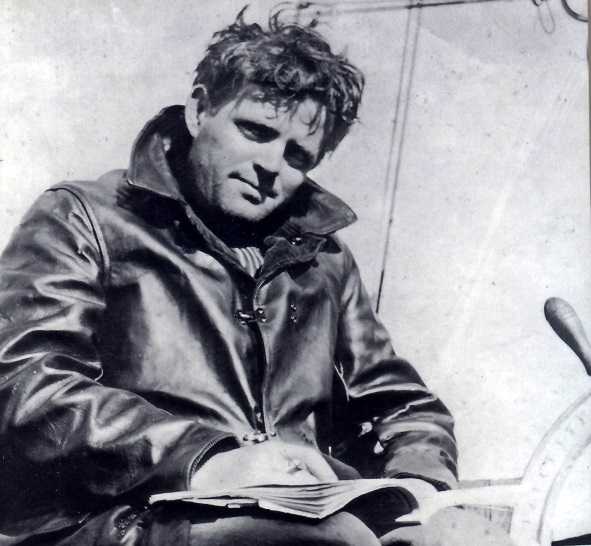
Jack London

The best fiction and writing blog posts from around the ‘net, all guaranteed to make you a literary swashbuckler. Inspired by jack.

Jean M. CogdellWrite like a professional – get the chapters right
Sarah A. HoytWriting About Death
James Harrington Character Creation
Brenda Davis HarshamTop Ten Blogging Rules
D. E. HaggertyHow to get the writing done despite distractions
Cristian MihaiBuilding a personal brand as an artist
M. L. S. WeechWhy some covers just don’t look right
Nic Schuck Getting testimonials