“A successful writer is one who finishes what they start while striving to improve their craft. It’s as simple as that. And the only one who can stop you from doing this is you.” – Hugh Howey
“A successful writer is one who finishes what they start while striving to improve their craft. It’s as simple as that. And the only one who can stop you from doing this is you.” – Hugh Howey

“Writing well is simple. Just picture an ideal reader giggling with delight and gasping with awe, and work backwards from there.” – Geoffrey Miller, evolutionary psychologist

The best fiction and writing blog posts from around the ‘net, all guaranteed to make you a literary legend. Compiled by ed.
Diana Peach – World-building: From Imagination to Reality
Evan DeHaven – The Stupidity of Removing Shakespeare
D. E. Haggerty – Tips for making your blog title catchy
Angie Dokos – The Best Things About Reading
Aquileana – Psychopomps in Mythology
Dan Alatorre – Finish One Story, Don’t Chase Ten
Edgar Allan Poe– How to write a short story
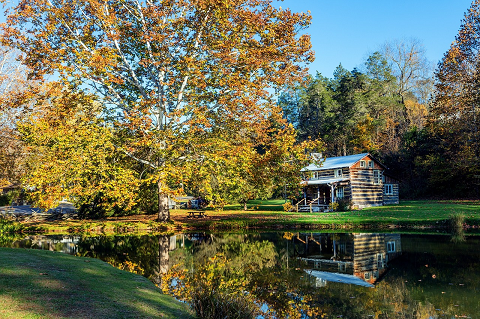
What poets and mystics have taught for centuries has been confirmed in a study at Surrey University: We experience deep connections to beloved physical spaces that cannot be replaced by abstractions or symbols. From The Guardian:
The poet WH Auden is credited with first coining the word “topophilia” to describe a strong emotional pull to a special place.
Now scientific research, using cutting-edge brain imaging, suggests Auden was on to something. According to a study commissioned by the National Trust, people experience intense feelings of wellbeing, contentment and belonging from places that evoke positive memories far more than treasured objects such as photographs or wedding rings.
A Functional Magnetic Resonance Imaging (fMRI) study commissioned by the NT set out to “understand this visceral but intangible feeling more deeply”.
The power of special places exerts a magnetic pull on us. What would motivate people to labor for generations to construct Stonehenge, or the Cahokia Indian Mound? What strange fire spurs warriors to defend their homeland against invaders against impossible odds? Even in this age of global mobility, there burns in all of us a need to connect with the sacred and the sentimental. It’s basic to our identity.
Ecology activist and writer Charlene Spretnak has this to say about the vital role natural places play in the human psyche:
Even children who have been schooled in modernity’s radical discontinuity between humans and nature often have a profound engagement with a natural place — a summer camp, a grandparent’s farm, or a hideaway spot near home. Throughout their lives they carry in their minds that sense of place, a place they came to know with a child’s deep capacity for personal response …
In the modern worldview, the sense of place was no longer to be important. After all, modern society lives on top of nature. Modern furniture and modern architecture (the International style) are liberated from any “constraining” references to community, tradition, or place. Yet the importance of place, both for its subtle influences on the human and for its relevance as an ecosocial frame of reference, is now making itself felt. The resurgence of place is also behind hundreds of thousands of community-based alternatives to the dominance of the global economy. p. 27, The Resurgence of the Real
Certain locales acquire meaning from our cherished memories of the people and events of which we were once a part. No wonder we’re able to rediscover contentment, a sense of belonging, and wellbeing from them — those memories are an essential part of who we are. MRI scans reveal that returning to these places affects the same part of the brain that processes deep emotions. This research confirms old truths we have too long denied or ignored.
Wouldn’t it be nice to get rid of wolves? With those nasty predators gone, nature would be perfect — the forests and grasslands would be serene homelands. Gentle herbivores wouldn’t have to worry about being eaten.
So in many areas, the wolf was hunted down almost to extinction. But over time, subtle, unhealthy changes took place in the wilderness no one could understand. The above video tells the story of what happened when wolves were reintroduced into the northern Rocky Mountains. Turns out the big, bad wolf is an essential part of the greater ecosystem. By killing off diseased elk, wolves forced the overall elk population to adapt, making the elk faster, stronger, and healthier. And without the elk fearlessly eating their way through valleys and gorges, plants that help maintain riverbank integrity flourished once again. This in turn enabled greater biodiversity as other animals returned.
What appears frightening and brutal can be the source of beauty and wonder. That’s the mystery nature continues to teach us. Growing up on a farm, I read Jack London and Robert E. Howard, whose severe yet captivating visions of nature made perfect sense to me. In college, I discovered Robert Ardrey, Konrad Lorenz, and E. O. Wilson, who popularized the science that examined the role aggression plays in shaping animal behavior and ensuring the survival of the strong and beautiful. Without the yin and the yang, there is no viable whole. Each needs the other.
“Siberian Khatru,” a classic Yes song by Jon Anderson, Rick Wakeman, and Steve Howe, could be the wolf’s theme song:
Sing, bird of prey;
Beauty begins at the foot of you. Do you believe the manner?
“Perhaps what distinguishes artists from regular folks is that for whatever reasons, their imaginative drive is less inhibited; they have retained in adulthood more of that five-year-old’s fantasy than others have.” – Leonard Bernstein

From Infogalactic: The Hobbit, or There and Back Again is a fantasy novel and children’s book by English author J. R. R. Tolkien. It was published on 21 September 1937 to wide critical acclaim, being nominated for the Carnegie Medal and awarded a prize from the New York Herald Tribune for best juvenile fiction. The book remains popular and is recognized as a classic in children’s literature.
What makes The Hobbit and The Lord of the Rings so memorable is that the world Tolkien creates is wondrous, terrifying, and fascinating, yet instantly recognizable. The reader soon discovers that underneath the text, a learned, wise, and benevolent soul is joyfully at play with profound truths. I think Tolkien’s works best illustrate the insight that effective fiction reveals only the tip of the iceberg, stimulating the reader to discover for himself the story’s deeper meanings. Tolkien the scholar was an authority on ancient myths and languages, yet also a modern man who had seen war and knew the dark and bright crevices within the human soul. Tolkien the writer crafted an entertaining tale that guides the reader toward a vision that inspires both caution and hope.
That’s quite an achievement.

There is no doubt in my mind that modern society traps its subjects in an unhealthy and unsuitable environment. That stark realization motivates many of my stories (see here and here, for example). The most disturbing symptom of how toxic our culture has become is the increasingly acerbic mutual distrust evident in current politics. Little wonder so many feel depressed, powerless, and alienated.
Rather than utilizing technology to better our lives, we let it rule us. Distracted by smart phones, buffeted by inescapable sensory overload, and hobbling our discourse in 140-character outbursts at each other, we’re incapable of understanding our own inner selves, much less that of others.
Fortunately, the tonic for the condition we find ourselves in is close at hand — if only we would use it, as this eye-opening piece in big think proclaims:
Research shows that reading not only helps with fluid intelligence, but with reading comprehension and emotional intelligence as well. You make smarter decisions about yourself and those around you.
All of these benefits require actually reading, which leads to the formation of a philosophy rather than the regurgitation of an agenda, so prevalent in reposts and online trolling. Recognizing the intentions of another human also plays a role in constructing an ideology. Novels are especially well-suited for this task. A 2011 study published in the Annual Review of Psychology found overlap in brain regions used to comprehend stories and networks dedicated to interactions with others.
The beauty of it all is that when you read, you gain more than just the knowledge contained in the text. The very act of reading builds “white matter” in the brain, thereby boosting the brain’s interconnectivity and ability to function more efficiently.
In the United States — yes, the United States — 1 out of 4 children grow up without learning to read. That’s intolerable. Want to do your part to make the world a better and happier place? Read, and do what you can to help others read.
And if you really get ambitious, and have the nerve to try it, write something beautiful.
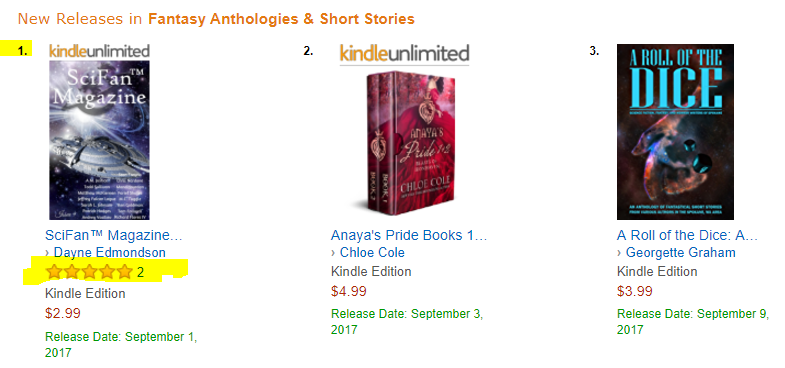
UPDATE: #1 New Release for Fantasy Anthologies on Amazon!
The latest issue of Sci-Fan Magazine, which includes my story “Fate’s Daughters,” just hit the Amazon bestseller list. It’s currently #12 in its genre, comfortably ahead of some hack named George R.R. Martin, who’s at #15.
My deepest thanks to my beta readers and supporters.
I have to share this excellent post from author J.C. Wolfe. No “fluffy stuff” here — these are real but often overlooked plusses of the writing life. Enjoy!
 M.C. Tuggle, Writer