
Hurricane Florence has left us dazed, confused, and waterlogged. As bad as it was, the shifting forecasts and endless revisions of the storm’s projected path only made it worse. Florence was supposed to march through North Carolina and douse Raleigh, instead, it hit Wilmington and slowly churned its way through South Carolina, spinning off tornados and flooding low-lying areas. Here in Charlotte, trees are down and many roads and yards are under water. Now comes the clean up. Yuck.
It wasn’t supposed to be this way. Back in the heady days of the Enlightenment, learned individuals imagined they could predict and control both man and nature through science. French scholar Pierre-Simon de Laplace assured fellow scientists they could one day predict the exact movements of tides and storms — in fact, he went so far as to claim that the movement of every atom could be calculated.
Now we have both private industry and government departments armed with Cray supercomputers that can guzzle meteorological data from all over the world, digest it faster than Laplace ever dreamed, and spit out detailed predictions.
Problem is, those details are often wrong — just as we’ve just seen with Hurricane Florence.
A long, long time ago, I worked in the insurance industry as an analyst and project manager. Pretty handy with a computer, a long-time weather buff, and an instructor of statistics, I served on the North Carolina Rate Bureau’s Property Committee a number of years, where I studied long-range weather forecasts. Our mandate was to recommend and justify future rate proposals based on expected weather patterns. To make a long story short, I learned quickly that despite all our efforts, we were only guessing at future trends.
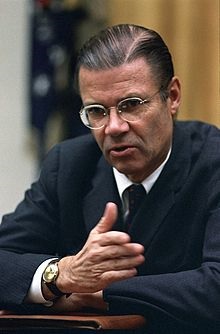
More famous experts have performed as badly, even worse. Barbara Tuchman’s “The March of Folly” chronicles the greatest miscalculations in history, including America’s conduct of the Vietnam War. Robert McNamara, the US Secretary of Defense under Kennedy and Johnson, was a whiz kid with a degree from Harvard Business School. Here’s how Tuchman summarizes McNamara’s mindset:
“Precise and positive, with slicked-down hair and rimless glasses, McNamara was a specialist of management through ‘statistical control’ … his genius for statistics left little respect for human variables and no room for the unpredictable.” (p. 285)
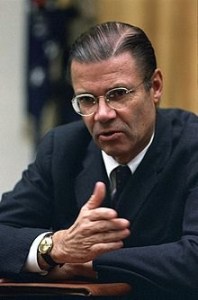
The military establishment Secretary McNamara guided was all too receptive. The commander of the US forces in Vietnam from 1964 to 1968, the years of escalation and certain victory, was William C. Westmoreland. Though later denounced as the “most disastrous American general since Custer,” Westmoreland was not ill-prepared for the job. He’d graduated West Point with the highest rank possible, first captain, and was America’s youngest major general ever. And he’d studied statistics at — Harvard Business School. In fact, his reliance on “kill statistics” overstated American success in Vietnam, setting up both the American military and public for a nasty confrontation with reality.
If US leaders had listened to historians rather than statisticians, and recognized that Vietnam’s ancient animosity against China precluded Communist Chinese control of an independent Vietnam, they could have avoided a tragedy. Instead, they relied on the dehumanizing scientism of B.F. Skinner to “stress” the Vietnamese into acting “rationally.” Despite the odds, first against the French, and then the Americans, the Vietnamese prevailed.
Sadly, those who would reduce people to a logical, globalized, and disconnected existence aren’t going to let a few tragic failures stop them. But no matter what they say or do, numbers alone cannot define humanity or nature. Humans stubbornly refuse to surrender purpose, identity, and emotional fulfillment. And we are not without weapons. Literature is a wild, throaty howl of defiance to those who would reduce us to formulas or pawns in their ideological schemes. And that’s a fact we can be sure of.






 We need more places like this. After driving nearly 200 miles from Charlotte down I-74, much of which is garrisoned by countless installations of Burger This and Taco That, we were ready for something that wasn’t standardized and sterile.
 The air around the Lily Pond smelled deliciously earthy and rich.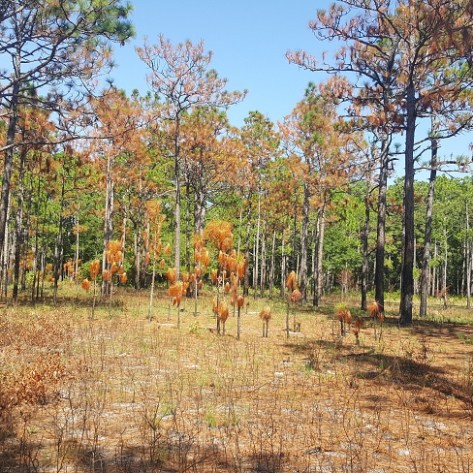
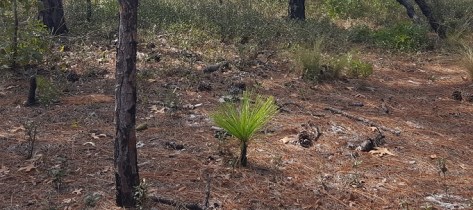

 Last night, the

 M.C. Tuggle, Writer